New way to make malaria medicine also first step in finding new antibiotics
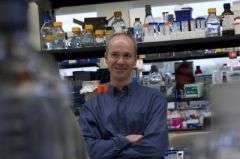
University of Illinois microbiology professor William Metcalf and his collaborators have developed a way to mass-produce an antimalarial compound, potentially making the treatment of malaria less expensive.
Metcalf set out to understand how this compound, one of a group known as phosphonates, is made in nature by bacteria. He was interested in that process partly because some phosphonates have antibiotic properties. Recently, Metcalf and his lab successfully identified and sequenced the genes and identified the processes by which bacteria make this particular phosphonate compound (FR900098).
His results are reported in the August 25 issue of Chemistry & Biology.
Although the compound has already been chemically synthesized, that is a costly process. By knowing how this phosphonate is biosynthesized, it can now be inexpensively mass-produced by harnessing the cellular machinery of bacteria.
"Malaria is a problem in Third World countries that can least afford expensive medicines, and many antibiotics are expensive," Metcalf said.
Efforts are already underway by Metcalf's colleague, chemical engineering professor Huimin Zhao, to engineer E. coli strains to overproduce FR900098, which can then be harvested for medicine.
In addition, says Metcalf, knowing the genes and understanding the pathway that bacteria use to make this antimalarial means the genes can be manipulated to make the compound even more effective against the malaria parasite while remaining harmless to people.
This effort to help treat malaria is just one facet of a major undertaking to find new antibiotics. Last year Metcalf and his colleagues at the U. of I.'s Institute for Genomic Biology, chemistry professor Wilfred van der Donk, Zhao, chemistry professor Neil Kelleher, and biochemistry professor Satish Nair, received a $7.3 million grant from the National Institutes of Health to investigate just this. Jo Handelsman of the University of Wisconsin rounds out the research team.
The need for new antibiotics is at an all-time high because multi-drug resistant bacteria are appearing even outside hospital settings. Consequently, infections that used to be easily curable have become more difficult to treat. For example, tuberculosis has become so resistant to antibiotics that soon "they'll send you to Arizona to drier air, like they did before they had antibiotics," Metcalf said.
In the case of malaria, the World Health Organization's "World Malaria Report 2008" estimates that "half of the world's population is at risk of malaria, and an estimated 247 million cases led to nearly 881,000 deaths in 2006."
Resistance to classic drugs such as chloroquine and sulphadoxine-pyrimethamine is on the rise, and mosquitoes also are developing resistance to insecticides.
"In my opinion malaria is the biggest single infectious disease problem in the world," Metcalf said.
The World Health Organization now advocates treating malaria with multiple antibiotics simultaneously, to combat the parasites' ability to develop resistance.
"In an infection, the chances are high that one in 10 million parasites in the patient's body will become resistant to a given drug," Metcalf said. "Now, if a patient takes a second drug simultaneously, one in 10 million parasites also becomes resistant to that drug. However, the odds that the same parasite will develop a resistance to both drugs is one in 10 million times one in 10 million, or 10 to the 14th."
This combination therapy approach is how HIV-AIDS, tuberculosis and other diseases are now treated. In the case of malaria, combination therapy both cures the patient and prevents wider infection, since an uninfected mosquito can acquire (and spread) the parasite by biting an infected person. But in many places where malaria is endemic, this approach is not used, in part because of the cost of medicine.
By making medicines more affordable it increases the chances that they will be used in the most effective way possible, that is to say, in combination with one another.
Metcalf became interested in anti-malarial medicine because of his interest in phosphonates, molecules that contain direct chemical bonds between carbon and phosphorus atoms (as opposed to the carbon-to-oxygen-to-phosphorus bonds that are found in most biological molecules containing phosphorus). As a doctoral student he characterized how microbes metabolized phosphonic acid in glyphosate, known commercially as RoundUp. He began to wonder where this class of compounds comes from and how it is made in nature.
In addition to sequencing the genes that make FR900098, Metcalf and his colleagues are focused on determining just how many naturally occurring phosphonic acids, or phosphonates, there are that have useful antibiotic, antifungal or anti-cancer properties.
The scientific community has known since the 1970s that bacteria routinely produce these types of phosphonates, in a kind of natural biological warfare.
"If you are a bacterium and you can kill off your neighbors you're better off yourself. It's kill or be killed," Metcalf said.
However, until now no one has done a systematic search for phosphonates in nature. Phosphonates work by disrupting biological pathways that use phosphate esters and organic acids. Each phosphonate disrupts a particular pathway. For example, FR900098 inhibits the pathway that creates isoprenoids, building blocks for important cellular components. When the parasites that cause malaria were discovered by others to have a pathway that FR900098 could disrupt, researchers saw a way to put the compound to good use. That same biosynthetic pathway does not exist in animals, which have a different way of making isoprenoids.
Understanding these pathways "opens the door to finding other antibiotics in this class of compounds. The more we can understand about these pathways the better we can find unknown phosphonates with antibiotic properties," Metcalf said.
His lab has developed a directed strategy to clone and sequence the genes that are required for phosphonate synthesis in bacteria, making the search efficient and exhaustive. Metcalf is optimistic that he and others will be able to mine phosphonates for other antibiotics.
"We've grown up in the Golden Age of antibiotics," he said. "But now kids can come home with an infection in their arm that can't be treated. And what happens if you can't treat it? You may have to amputate the arm. This is no joke; we better find new treatments."
Source: University of Illinois at Urbana-Champaign


