Emissions rising faster this decade than last
September 26, 2008
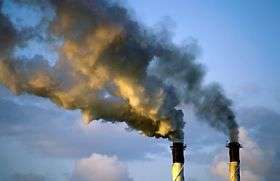
Image credit – Gregory Heath , CSIRO. Emissions of carbon dioxide from human activities have been growing about four times faster since 2000 than during the previous decade.
The latest figures on the global carbon budget to be released in Washington and Paris today indicate a four-fold increase in growth rate of human-generated carbon dioxide emissions since 2000.
“This is a concerning trend in light of global efforts to curb emissions,” says Global Carbon Project (GCP) Executive-Director, Dr Pep Canadell, a carbon specialist based at CSIRO in Canberra.
Releasing the 2007 data, Dr Canadell said emissions from the combustion of fossil fuel and land use change almost reached the mark of 10 billion tonnes of carbon in 2007.
Using research findings published last year in peer-reviewed journals such as Proceedings of the National Academy of Sciences, Nature and Science, Dr Canadell said atmospheric carbon dioxide growth has been outstripping the growth of natural carbon dioxide sinks such as forests and oceans.
The new results were released simultaneously in Washington by Dr Canadell and in Paris by Dr Michael Raupach, GCP co-Chair and a CSIRO scientist.
Dr Raupach said Australia’s position remains unique as a developed country with rapidly growing emissions.
“Since 2000, Australian fossil-fuel emissions have grown by two per cent per year. For Australia to achieve a 2020 fossil-fuel emissions target 10 per cent lower than 2000 levels, the target referred to by Professor Garnaut this month, we would require a reduction in emissions from where they are now by 1.5 per cent per year. Every year of continuing growth makes the future reduction requirement even steeper.”
Source: CSIRO
-
Big trees face 'dire future'
Feb 09, 2012 |
5 / 5 (2) |
0
-
All set and ready to glow
Feb 07, 2012 |
5 / 5 (1) |
1
-
For businesses, going green brings in greenbacks
Jan 30, 2012 |
5 / 5 (3) |
3
-
Food crops damaged by pollution crossing continents
Jan 30, 2012 |
4.4 / 5 (17) |
21
-
Carbon storage in tropical vegetation: New map to help developing nations track deforestation, report on emissions
Jan 29, 2012 |
5 / 5 (7) |
0
-
Engineers build first sub-10-nm carbon nanotube transistor
Feb 01, 2012 |
4.9 / 5 (31) |
30
-
Something old, something new: Evolution and the structural divergence of duplicate genes
Jan 31, 2012 |
4.6 / 5 (7) |
1
-
The hidden nanoworld of ice crystals: Revealing the dynamic behavior of quasi-liquid layers
Jan 30, 2012 |
5 / 5 (3) |
1
-
Stock market network reveals investor clustering
Jan 27, 2012 |
3.9 / 5 (23) |
8
-
Of microchemistry and molecules: Electronic microfluidic device synthesizes biocompatible probes
Jan 26, 2012 |
5 / 5 (1) |
0
-
Discrepancy between oxygen and carbon-dioxide levels
23 hours ago
-
where gems are found in the world
Feb 09, 2012
-
Wind Waves in Reservoir ~ Wind run-up and Wind set-up
Feb 08, 2012
-
Balance of oxygen in the atmosphere
Feb 01, 2012
-
The case for a methanol-based economy
Jan 30, 2012
-
Weather in a rotating cylinder
Jan 25, 2012
- More from Physics Forums - Earth
More news stories
Humans may have helped the decline of African rainforests 3000 years ago
(PhysOrg.com) -- Large areas of rainforests in Central Africa mysteriously disappeared over three thousand years ago, to be replaced by savannas. The prevailing theory has been that the cause was a change ...
NASA sees wide-eyed cyclone Jasmine
Cyclone Jasmine's eye has opened wider on NASA satellite imagery, as it moves through the Southern Pacific Ocean.
Space & Earth / Earth Sciences
3 hours ago |
not rated yet |
1
NASA sees Giovanna reach cyclone strength, threaten Madagascar
Tropical Storm 12S built up steam and became a cyclone on February 10, 2012 as NASA's Terra satellite passed overhead. Residents of east-central Madagascar should prepare for this cyclone to make landfall ...
Space & Earth / Earth Sciences
3 hours ago |
not rated yet |
0
Could Venus be shifting gear?
(PhysOrg.com) -- ESAs Venus Express spacecraft has discovered that our cloud-covered neighbour spins a little slower than previously measured. Peering through the dense atmosphere in the infrared, the ...
Space & Earth / Space Exploration
11 hours ago |
5 / 5 (7) |
7
|
Mars Science Laboratory computer issue resolved
(PhysOrg.com) -- Engineers have found the root cause of a computer reset that occurred two months ago on NASA's Mars Science Laboratory and have determined how to correct it.
Space & Earth / Space Exploration
12 hours ago |
4.7 / 5 (6) |
3
|
Google users warned of threat to smartphone wallets
Users of Google smartphone wallets were being warned on Friday that there is a way to crack pass codes intended to thwart thieves from going on illicit shopping sprees.
Anonymous knocks CIA website offline (Update)
The website of the Central Intelligence Agency was inaccessible on Friday after the hacker group Anonymous claimed to have knocked it offline.
Complex wiring of the nervous system may rely on a just a handful of genes and proteins
Researchers at the Salk Institute have discovered a startling feature of early brain development that helps to explain how complex neuron wiring patterns are programmed using just a handful of critical genes. ...
New error-correcting codes guarantee the fastest possible rate of data transmission
Error-correcting codes are one of the triumphs of the digital age. Theyre a way of encoding information so that it can be transmitted across a communication channel such as an optical fiber o ...
The power of estrogen -- male snakes attract other males
A new study has shown that boosting the estrogen levels of male garter snakes causes them to secrete the same pheromones that females use to attract suitors, and turned the males into just about the sexiest ...
Putting the squeeze on planets outside our solar system
(PhysOrg.com) -- Using high-powered lasers, scientists at Lawrence Livermore National Laboratory and collaborators discovered that molten magnesium silicate undergoes a phase change in the liquid state, abruptly ...
Sep 26, 2008
Rank: 3 / 5 (4)
Sep 28, 2008
Rank: 3 / 5 (4)
Whats my prize, a trophy?