Synchrotron could help save the Tassie devil
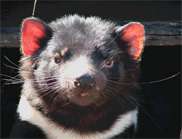
(PhysOrg.com) -- Australia’s new $A200m synchrotron in Melbourne could contribute to the fight to save the Tasmanian devil from the outbreak of facial tumour disease currently decimating devil populations, according to Dr Jeff Church from CSIRO Textile and Fibre Technology in Geelong.
Dr Church says he will use the synchotron to see if the disease causes any biochemical changes in the devils which could be detected in their hair before the disease becomes apparent.
“If we find a consistent change, it could lead to the development of a test which will allow detection of the cancer before the tumours become evident,” he says. “This would make any quarantine strategy easier to establish, as well as much more efficient.”
The idea is based on Australian research showing disease-related changes in the composition of human hair. The suggestion is that similar changes could occur in Tasmanian devils’ hair when the facial tumour disease is triggered. “But, the theory needs to be fully tested,” Dr Church says. “It might work or it might not.”
The synchrotron’s infra-red beamline combined with a microscope and spectrometer – which detects how different materials absorb and reflect the radiation – can be used to determine if the composition of hair differs between diseased animals and healthy ones.
“The infra-red spectrum tells us about protein and fat structure and whether it’s changing,” Dr Church says. “But the technology to do such work using a synchrotron is comparatively new, and the Australian facility is one of relatively few around the world where it is available.
“If a diagnostic test for the facial tumour disease using the synchrotron does look possible, only having a machine nearby would make it viable. Having to queue-up for time on a synchrotron at least nine hours flying time from Tasmania – more likely further – would make the whole thing very difficult, particularly in terms of biosecurity concerns because we would need to transport biological samples between different countries.”
Dr Church is one of hundreds of scientists scheduled to use the Australian Synchrotron, which was officially opened in Melbourne yesterday.
Provided by CSIRO


