Microscopic version of the CT scan reveals secrets of bone formation
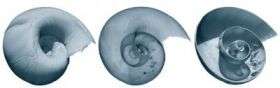
A new version of the computerized tomography (CT) scan, which revolutionized medical imaging during the last 25 years, is giving scientists precious new information about how Mother Nature forms shells, bones, and other hard structures in animals ranging from guppies to mice. That information on "biomineralization" could form a knowledge base for understanding bone loss in humans and even snaring the Holy Grail of regenerative medicine — discovering how newts, starfish and other animals regrow amputated body parts.
Those are the observations in a new overview of the field scheduled for the November 12 issue of ACS' Chemical Reviews. In the article, Matthias Epple and Frank Neues describe ongoing research in which scientists use X-ray microcomputer tomography to study biomineralization, the process in which animals form bones, shells, and other hard structures. Microcomputer tomography is the high-resolution version of conventional CT. Like a CT microscope, it constructs three-dimensional images of structures in bones and shells too small for viewing with regular CT.
The article provides a sweeping overview of current research involving X-ray microcomputer tomography, and the implications for medicine, design of new materials, and other fields. "It is of interest in modern materials science to synthetically mimic these inorganic structures to create new coatings, materials or instruments for practical application," the article states. "We are convinced that this method will be of high future value to study the spatially different mineralization processes in mineralizing animals and plants."
Article: "X-ray Microcomputer Tomography for the Study of Biomineralized Endo- and Exoskeletons of Animals"; dx.doi.org/10.1021/cr078250m
Source: ACS


