Philips develops ultrasound-activated microbubbles for localized delivery of cancer drugs
September 30, 2008 Philips develops ultrasound-activated microbubbles for localized delivery of cancer drugs

Enlarge

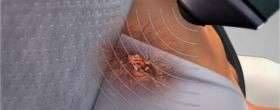
Scientists at Philips Research are developing a localized drug delivery system based on ultrasound and microbubbles that are partially filled with cancer drugs.

(PhysOrg.com) -- Philips is developing an ultrasound-based drug delivery technology that is designed to increase the effectiveness and reduce the side effects of chemotherapy treatment for certain types of cancer.

The system proposes the use of drug-loaded microbubbles, no larger than red blood cells, that can be injected into the patient’s bloodstream, tracked via ultrasound imaging, and then ruptured by a focused ultrasound pulse to release their drug payload when they reach the desired spot.

Because the drugs would only be released at the site of the diseased tissue, the patient’s total body exposure to them could be limited. For certain types of treatment – for example, chemotherapy for breast cancer – this could help to reduce unpleasant side effects.

The use of microbubbles in conjunction with medical ultrasound imaging is not new. However, at the moment in clinical practice, microbubbles are only used as contrast agents for example to highlight blood in the ultrasound images – an application that relies on the fact that microbubbles reflect ultrasound much better than blood or soft tissue.

The drug delivery technology being developed by scientists at Philips Research continues to utilize the contrast-enhancing capabilities of microbubbles to help ultrasound operators to locate tumors – based on their density and the fact that tumors typically grow a recognizable network of small blood vessels around themselves. What’s new is that it then shatters the shells of the microbubbles in these blood vessels using a focused high-energy ultrasound pulse. As a result, the drugs contained in the microbubbles are released directly inside the tumor.

Philips is working with several academic partners, including the University of Virginia (USA) and the University of Muenster (Germany), to refine the technology. Clinical institutions, such as The Methodist Hospital in Houston (USA), are also actively researching this new and exciting field of ultrasound mediated drug delivery.

“More and more, patients are demanding treatment options that allow them to maintain their quality of life during the treatment regime, without sacrificing treatment efficacy,” comments King Li, MD, Chair of the Department of Radiology at the Methodist Hospital in Houston (USA) and Professor of Radiology, Weill Cornell Medical College (USA). ”The non-invasive nature of ultrasound mediated delivery is a step in this direction. Work at our and other institutions using ultrasound for drug delivery and treatment guidance has shown the potential of this technology in pre-clinical studies.”

Provided by Philips


print this article email this article download pdf blog this article bookmark this article     Stumble it Digg this share on Facebook retweet share on Reddit add to delicious
Rate this story - 4.8 /5 (5 votes)


September 30, 2008 all stories

Comments: 0

4.8 /5 (5 votes)
  • Stumble this up

  • Digg this

  • share this

  • hide
  • Related Stories


  • hide
  • Relevant PhysicsForums posts

  • 23 Years in a Vegetative State....or not?
    created Nov 25, 2009
  • Has the H1N1 vaccine been scientifically proven to work?
    created Nov 24, 2009
  • nesfatin
    created Nov 22, 2009
  • Obsessive Compulsive Disorder
    created Nov 20, 2009
  • More from Physics Forums - Medical Sciences

Other News

An end to sleep problems? Researchers discover enzyme behind effects of sleep deprivation

Medicine & Health / Research

created 14 minutes ago | popularity not rated yet | comments 0

There is hope for those who miss one night too many or whose children keep them up at night. The unwelcome effects of a bad night's sleep - forgetfulness, impaired mental performance - can be dealt with by reducing the concentration ...


Ginkgo biloba doesn’t prevent cardiovascular events but may have potential peripheral artery disease benefits

Medicine & Health / Research

created 38 minutes ago | popularity not rated yet | comments 0

(PhysOrg.com) -- Ginkgo biloba didn’t prevent cardiovascular death or major events such as heart attack and stroke in people age 75 and older, but the herb may affect peripheral vascular disease, according to research reported ...


Implant-based cancer vaccine is first to eliminate tumors in mice

Implant-based cancer vaccine is first to eliminate tumors in mice

Medicine & Health / Cancer

created 19 hours ago | popularity 4.7 / 5 (22) | comments 4

(PhysOrg.com) -- A cancer vaccine carried into the body on a carefully engineered, fingernail-sized implant is the first to successfully eliminate tumors in mammals, scientists report this week in the journal ...


Brain's endocannabinoid signaling pathway kept in check by two enzymes

Medicine & Health / Research

created 16 hours ago | popularity 4 / 5 (4) | comments 1

(PhysOrg.com) -- A research team has shown that blocking the degradation of two naturally occurring cannabinoids in the endocannabinoid signaling pathway of the brain produces marijuana-like behavioral effects in mice, according ...


Scientists find emotion-like behaviors, regulated by dopamine, in fruit flies

Medicine & Health / Neuroscience

created 20 hours ago | popularity 5 / 5 (3) | comments 0

Scientists at the California Institute of Technology have uncovered evidence of a primitive emotion-like behavior in the fruit fly, Drosophila melanogaster. Their findings, which may be relevant to the relationship betwee ...