Nutritionists show what beans are worth
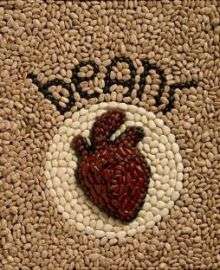
Consider a natural alternative the next time you reach for that cupcake or soda as an afternoon snack. This snack leaves you feeling full, gives you energy, and simultaneously fights “bad”—LDL—cholesterol.
Eat some beans. Donna Winham suggests eating a half cup of beans every day. Pick your favorite legume: pinto, navy, kidney, baked, or garbanzo beans.
“Beans have more protein and fiber than any other vegetable,” says Winham, an assistant professor of nutrition at Arizona State University’s Polytechnic Campus.
Beans are complex carbohydrates. They also contain lots of disease-preventing phytochemicals. Winham is also quick to point out that beans are officially a vegetable. They are now specifically listed on the USDA’s food pyramid.
“Some beans are also high in folate. Folate is a naturally occurring B vitamin involved with cellular growth and cell turnover,” she explains. “Just a half cup of beans each day can supply as much as a third of the recommended amount of folate in the diet.”
Winham isn’t full of beans when it comes to nutrition. Her familiarity with beans is based on many projects conducted with colleague Andrea Hutchins of the University of Colorado.
“Our goal was to determine the effects of bean consumption on risk factors for coronary heart disease and diabetes mellitus,” Winham says. What the researchers discovered among the group of mildly insulin-resistant adult participants was surprising, even to them.
By consuming a half-cup of pinto beans per day, participants lowered their total cholesterol and LDL cholesterol by more than 8 percent. That is a significant achievement, Winham says, even by medical standards.
“Many of our study participants experienced a 10 percent reduction in total serum cholesterol. That’s the equivalent of decreasing your risk for heart disease by 20 percent,” Winham explains. “And these numbers were achieved just by consuming beans. Participants were asked not to change anything else—including their exercise routines and other aspects of their diets.”
The study stretched over 24 weeks. Participants were instructed to add half-cup servings of three items to their diets. They added pinto beans, black-eyed peas, and carrots. The carrots served as a placebo. Each item was consumed separately for eight-week intervals.
“The quantity was chosen based on recent U.S. dietary guidelines,” Winham says. “The guidelines suggest that adults should consume three cups of legumes per week—or a half cup per day.” The beans could be eaten at lunch, breakfast or dinner.
“I had pinto beans for breakfast or dinner in a burrito, tostada, or warmed out of the can with onions, green chile peppers, and tomatoes,” says Esther Martinez, a 58-year-old study participant. “I always had fresh salsa on hand for my favorite: beans fresh out of the pot.”
Martinez was labeled as pre-diabetic prior to beginning the study. She experienced a 5.1 percent drop in her total serum cholesterol. Today, she has no cholesterol or diabetes issues.
However, Winham says that the overall study results did not show significant changes in glucose and insulin concentrations among those in the mildly insulin-resistant group. But those results did clearly reveal pinto beans as the winner among the two tested beans.
Black-eyed peas had less effect on cholesterol. But Winham says a closer look at the data indicated that some participants seemed to be less compliant in eating the black-eyed peas as compared to pinto beans.
“We hope to re-test the black-eyed peas,” Winham adds. She says that black-eyed peas are less familiar to consumers and possibly more difficult to incorporate into daily recipes.
Winham and Hutchins were encouraged by the positive results of their initial experiment. So they conducted a second study.
Participants in the second study were asked to eat a half-cup of vegetarian baked beans each day over an eight-week period. They also were asked to eat a half-cup of carrots as a placebo. The scientists wanted to see if the navy beans, cooked in a brown-sugar sauce, provided results similar to those found in the first study.
“Everyone in this second study had total cholesterol in excess of 200—the cutoff for borderline high,” says Winham. Participants had blood samples taken on a periodic basis, same as in the pinto bean study. Each person completed dietary and physical activity records. They were instructed not to change their usual behavior.
The findings? Eating a half-cup of vegetarian baked beans each day lowered total cholesterol by 6 percent. Winham says that LDL cholesterol level for participants was lowered by 5 percent. Risk for coronary heart disease decreased by 6 to 10 percent. Again, the scientists observed no significant changes in insulin or glucose levels.
So, how exactly do beans cause cholesterol levels to drop so dramatically?
Winham and Hutchins don’t know for sure. They think a plant fiber in the beans functions to reduce cholesterol absorption.
Ben Fasano is 59. He says his experience participating in both studies has made him more aware of his legume consumption. Fasano experienced a 9.17 percent decrease in total cholesterol after participating in the pinto bean study.
“Before taking part in these studies I used to eat about a can of beans a week. Now I eat about two cans.”
“A 9 percent drop in total cholesterol is substantial,” Winham says. “Particularly if you consider that many other foods are advertised as lowering cholesterol by a matter of a few points. Ben and many others had a 20-point drop or more.”
Pinto beans are Fasano’s favorite. But he says he now also eats garbanzo and kidney beans as well. Similarly, Martinez has added lima beans, white beans, and mixed beans to her diet.
“Beans are fairly easy,” says Winham. “You can pop canned or frozen beans into soups, salads, and other items, or use them as a side dish.”
The ASU scientist recommends a steady consumption of beans. Don’t eat the recommended three-cup serving at one sitting.
“The benefits are not the same if you eat a whole can at one time.”
The researchers also recommend replacing potatoes in your diet with beans. “Swap them out,” Winham says. White potatoes are the most frequently consumed vegetable in America. Most of those are eaten as French fries.
“And vary your beans,” she adds. “Have some split pea soup. Eat some black beans or chickpeas. Try some pinto beans.”
The lesson learned from the studies?
“Legume consumption compares favorably to other more traditional interventions like drug therapy, especially for individuals in the borderline risk categories,” Winham explains. “A diet that incorporates beans might be as productive as taking a statin drug.”
Winham says everyone can benefit from eating beans—not just people at risk for heart disease or diabetes. Not quite ready to give up your afternoon piece of cake? Then try some kidney beans on your dinner salad.
“Whether your beans are in sauce, or a can, steamed or cold—just eat them. Eat the beans,” she says.
Provided by ASU


