Novel publishing approach puts textbook in more hands
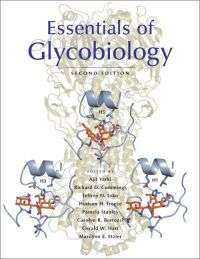
For the first time, a new edition of a major textbook will be simultaneously released in print and free online in a novel approach to publishing that permits the textbook to reach a wider audience.
Essentials of Glycobiology, the largest and most authoritative text in its field, will be freely available online beginning October 15, through collaboration between the Consortium of Glycobiology Editors, Cold Spring Harbor Laboratory Press, and the National Center for Biotechnology Information (NCBI), a division of the National Library of Medicine (NLM) at the National Institutes of Health (NIH). Fittingly, the release of the book follows soon after the October 14th celebration of International Open Access Day (http://openaccessday.org/), which will highlight prior successes in providing such open access to research journals.
"This is an innovative development in the distribution of an established textbook that we hope will benefit readers, authors and editors, and the publisher," says Ajit Varki, M.D., the book's executive editor and a leader of the Consortium of Glycobiology Editors, which initiated the project. Varki is Professor at the University of California, San Diego. The Consortium also includes Professors Richard Cummings, Emory University; Jeffrey Esko, UC San Diego; Hudson Freeze, Burnham Institute for Medical Research; Pamela Stanley, Albert Einstein College of Medicine, New York; Carolyn Bertozzi, UC Berkeley; Gerald Hart, Johns Hopkins University School of Medicine; and Marilynn Etzler, UC Davis.
The second edition of Essentials of Glycobiology is being simultaneously released online and in print, in an effort to reach a broader audience in a timelier manner. "This approach ensures that everyone, from the layperson to the high school student to the graduate student in a developing country, has free access to the knowledge the book contains, while increasing awareness of the availability of a printed edition that may be more suitable for some readers' requirements," said Varki.
"The book's editors and Cold Spring Harbor Laboratory Press, which has published the book in print, are interested in learning how best to deliver information of the kind this textbook contains," added John Inglis, Ph.D., Cold Spring Harbor Laboratory Press's Executive Director and Publisher. "NCBI has created an online version of the book that is well-designed for scholarly reference and can be enriched with links to associated resources. We will be tracking its usage and how readers of the site respond to the availability of a print version, for both research and teaching purposes."
Geared towards graduate students, advanced undergraduates, and professional researchers, Essentials of Glycobiology is the largest, most authoritative volume available on the structure, synthesis, and biology of glycans (sugar chains), molecules that coat cell surfaces and proteins and play important roles in many normal and disease processes. The book is written and edited by leaders in the field of glycobiology who have extensive research and teaching experience. The back cover of the book features laudatory comments from eight Nobel laureates.
The online version of Essentials of Glycobiology is freely available from the NLM/NCBI Bookshelf—a collection of biomedical books and other materials that have been adapted for online use—at http://www.ncbi.nlm.nih.gov/bookshelf/br.fcgi?book=glyco2. This version will be fully searchable, and there are plans to provide links to not only current, related resources in PubMed/MEDLINE, the most commonly used biomedical literature database, but also to other relevant Internet sites. The online format will also enable the editors to periodically revise and update the text, in collaboration with the Press and NCBI.
UC San Diego already has a history of pioneering such open access to scientific publications. In 1996, the then San Diego-based editorial board of the Journal of Clinical Investigation made it the first well-known scientific journal to publish all articles free online. Philip E. Bourne, Ph.D., Professor in the Skaggs School of Pharmacy and Pharmaceutical Sciences at UC San Diego, founded SciVee, an open-access website that provides community web services and video resources for researchers of all levels to create and share scientific data using compelling new multimedia resources. Dr. Bourne was one of the two featured speakers on Open Access Day, along with Richard Roberts, Ph.D., of New England Biolabs, joint winner of the Nobel Prize in Physiology or Medicine 1993 and a pioneer in supporting taxpayer access to publicly funded research.
The first edition of Essentials of Glycobiology, published in print in 1999, was released online as part of the NCBI Bookshelf in 2003. The content of the second edition of Essentials of Glycobiology has been completely updated and expanded to reflect the new findings and extensive progress in the field of glycobiology that has occurred since the first edition appeared nearly 10 years ago.
"Hundreds of people every week have continued to look at the first edition of Essentials of Glycobiology online," wrote David Lipman, M.D., NCBI Director, in the preface to the new edition. "These readers are geographically dispersed, including from parts of Africa, South America, and Asia. The audience is also educationally dispersed: the book is referenced in Wikipedia, university libraries all over the world list and link to the electronic book, and major Internet search engines index the content."
While the first edition focused primarily on vertebrate glycobiology, the second edition reflects the fact that glycosylation is universal, that all cells in all species—from eubacteria and archaea to arthropods and vertebrates—are coated (both inside and out) with a dense array of various sugar molecules. The roles of glycans in human physiology and disease, including cancer, are also emphasized. Finally, the growing field of glycomics is introduced. Glycomics aims to understand, on a more global scale, how collections of glycans govern specific biological processes.
Source: Cold Spring Harbor Laboratory


