UCLA develops safer, more effective TB vaccine for HIV-positive people
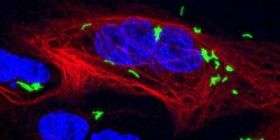
UCLA scientists engineered a new tuberculosis (TB) vaccine specifically designed for HIV-positive people that was shown to be safer and more potent than the current TB vaccine in preclinical trials.
A more effective TB vaccine may help curtail the global spread of the disease, especially in HIV-positive people, for whom tuberculosis is the leading cause of death worldwide.
"The AIDS and tuberculosis epidemics are now so intertwined in many parts of the world that we can't win the fight against one of these diseases without also taking on the other," said Dr. Marcus Horwitz, principal investigator and professor of medicine and microbiology, immunology and molecular genetics, David Geffen School of Medicine at UCLA.
The current vaccine against tuberculosis, called BCG, is administered to newborns in most countries in the world. However, in HIV-positive people, the vaccine can cause serious and even fatal disease later in life if HIV weakens the immune system, allowing the vaccine to multiply unchecked and spread throughout the body.
To address this problem, Horwitz and his team used an innovative method to limit the number of times the new vaccine can replicate in the body -- just enough to stimulate the immune system to produce T cells to fight future infection with the tuberculosis bacillus, but not enough to overwhelm the immune system if it subsequently becomes weakened by HIV.
Published in the November edition of the journal Infection and Immunity, the scientists' research demonstrated that the new vaccine better protects guinea pigs from tuberculosis than the current vaccine. Guinea pigs are highly susceptible to infection with Mycobacterium tuberculosis, the bacterium that causes most cases of tuberculosis in humans, and they develop tuberculosis remarkably similar to the disease in humans. The researchers also showed that the new vaccine is much safer than BCG in a severely immunocompromised animal host – mice with Severe Combined Immunodeficiency (SCID mice) that completely lack an immune system.
While the vaccine could be administered to anyone, it is specifically designed to be given to HIV-positive newborns and adults whose immune systems are still relatively intact and are therefore able to mount a good immune response to the vaccine, including persons on antiretroviral therapy.
The next step according to researchers is to test the vaccine in humans. It will take several years of further study before the vaccine is available to the public.
In devising the new vaccine, Horwitz and his team modified the current BCG vaccine, which is a weakened form of a bacterium closely related to the one that causes tuberculosis. First, to make the vaccine more potent and induce a stronger immune response, the scientists engineered the vaccine so that it would produce large amounts of a key protein of Mycobacterium tuberculosis, called mycolyl transferase.
Second, to make the vaccine safer, the team altered the BCG vaccine so that it was only capable of multiplying a few times after it was injected into the body. To do this, the researchers eliminated the vaccine's ability to acquire iron from the host; iron is an essential nutrient for the vaccine to multiply. Technically, researchers used a genetic "knock out" technique to render iron-scavenging molecules called siderphores inoperative. The new recombinant BCG vaccine was named rBCG(mbtB)30.
The scientists then preloaded the new vaccine in the lab with just enough iron to allow it to replicate a few times in the host. When this stored iron was used up, the vaccine was no longer able to multiply.
"This is one of the first vaccines developed to replicate only a few times in the host and the first to do so by eliminating the vaccine's ability to acquire iron in the host," said Michael V. Tullius, study author and assistant researcher, division of infections diseases, UCLA Department of Medicine.
"Preloading the vaccine with a specific amount of iron allows us control over the vaccine's safety and effectiveness in the host," said Horwitz, also a specialist in infectious diseases.
The authors note that since iron is a key nutrient needed by all bacteria to thrive, this approach may be applicable to other live bacterial vaccines for diseases such as anthrax, tularemia and Legionnaires' disease.
About 2 billion people in the world harbor Mycobacterium tuberculosis, mostly in a latent state, and about 9 million people develop active tuberculosis each year. Approximately 12 million people throughout the world are infected with both Mycobacterium tuberculosis and HIV -- about a third of all persons infected with HIV. These co-infected people have the greatest susceptibility of developing active tuberculosis, the major opportunistic infection in AIDS patients.
"Tuberculosis is of the biggest concern to people with HIV. At the same time, the only existing tuberculosis vaccine, BCG, should not be used in people with HIV, because it poses a health risk by itself," said Ulrich Fruth, Ph.D., Initiative for Vaccine Research, World Health Organization. "It would be wonderful news if this new vaccine - if it can be shown to be safe and effective in people with HIV - could help overcome this catch 22."
Source: University of California - Los Angeles


