Researchers explore use of fat cells as heart attack therapy
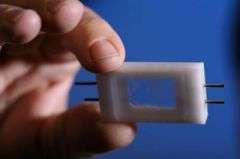
For those of us trained to read nutrition labels, conventional wisdom tells us that fat isn't good for the heart. But a team of University of Houston researchers has set out to use fat cells to beef up heart muscles damaged by heart attack – and they're using an out-of-this-world device to do it.
While associate professor Stanley Kleis and his research team at the Cullen College of Engineering's department of mechanical engineering aren't advocating a fried-food free-for-all, they do see the promise of using adipose-derived stromal cells (ADSCs), which are found in fatty tissue, as a therapy for heart attack patients.
When a patient has a heart attack, the heart cells do not get enough oxygen-rich blood, and some of them die, leaving behind damaged tissue. The ADSCs are a bit like stem cells, because they have the potential to develop into different types of cells, and they can produce chemicals that may protect or rejuvenate heart muscles.
"If we can show this conclusively, then we can develop a procedure that doctors can use to inject the cells into a heart attack patient's heart and can either protect or even help regrow the heart muscles," Kleis said.
One tool the research team is using is a tiny, state-of-the-art "bioreactor" that Kleis developed during the past few years with Sandra Geffert-Moore, who at the time was a doctoral student. The palm-size bioreactor originally was envisioned as a long-term cell culture system for use on NASA's unmanned spaceflights, Kleis explained.
"The smaller size was important for the use on a rocket – as was the need for a completely autonomous operation and a self-contained environment," he said.
Kleis, who has worked with NASA for more than 20 years to enhance the functionality of its bioreactors, said that this particular device, like many inventions initially designed for use in space, has broad applications here on Earth – not the least of which is in the treatment of heart attack patients.
With its own pH and temperature controls, he said, the device has great potential for studying the introduction of ADSCs into a cell culture of cardiomyocytes, or heart muscles.
"While several studies have reported therapeutic effects after injections of different types of stromal and stem cells, the common beneficial factor or factors remain unclear," Kleis said. "This is precisely what we would like to use the bioreactor to study – to find out how the stromal cells work."
In recognition of the invention of the bioreactor, the space agency named Kleis this spring as the winner of its Patent Application Award, which carries a $500 purse issued under the NASA Space Act, a program that honors scientific and technical contributions that help to achieve the agency's aeronautical, technology and space goals.
While conducting research for her dissertation, Geffert-Moore used the bioreactor with ADSCs provided by collaborators at the Texas Heart Institute, Kleis said, and her results demonstrated reduced injury to the cardiac muscle. She deprived canine cardiomyocytes of oxygen for 24 hours, introduced the stromal cells and then cultured the combination of cells for another 24 hours under normal oxygen levels.
"It is this re-oxygenation phase that normally does damage to the cardiomyocytes. But, with the stromal cells present we see a reduction in cell damage," Kleis explained. "The cardiomyocytes not treated with ADSCs showed apoptosis – programmed cell death – at 15 percent; whereas, the ones that were co-cultured showed it at 3 percent."
Kleis said his team is planning additional studies to identify more precisely the mechanisms involved in reducing cell death using the ADSCs.
"What we want to do from here is to identify the growth factors present in the co-culture that are not present or at the same levels in the normal culture," he said. "We can then try to get similar damage reductions using just the growth factors to see if we can develop a drug treatment rather than having to do co-cultures."
Holley Love, a graduate student on Kleis' team, offered a more practical take on the stromal cells, which can be harvested through liposuction: "One of the major benefits to working with ADSCs is that they can be taken from fat quite easily. And who wouldn't mind giving up a little bit of fat? The cells are quite hardy as well."
Meanwhile, the patent honor puts Kleis' research team in the running for the NASA Space Act Board Award, which includes a prize up to $100,000 to support its research using the bioreactor and ADSCs.
Source: University of Houston


