Researchers change focus on threatened species
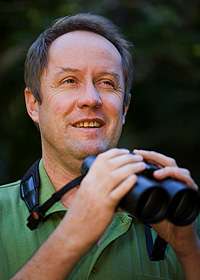
(PhysOrg.com) -- University of Queensland-led research is suggesting new ways to protect threatened species. Professor Hugh Possingham, director of UQ's Ecology Centre, and colleagues from the French National Institute of Agriculture (INRA) and the University of Melbourne, used mathematical modelling and artificial intelligence methods to help make better decisions about managing cryptic threatened species.
Their work will help threatened species managers to decide when they should stop managing species they haven't seen for a long time, and switch to looking – and then when to stop looking and give up.
“There are many species of threatened animal and plant that have not been seen for some time,” Professor Possingham said.
“These cryptic species present a major intellectual, costly and controversial challenge for managers.
“A lot of threatened species are cryptic, the question is how do you know how to best protect them.”
His group reached the conclusion that assuming the species was still around, even though it had not been seen for some time, was the most cost-effective strategy.
"It's really about what do you do for a cryptic species if you haven't seen it for a long time," colleague Eve McDonald-Madden said.
"What was counter-intuitive was the length of time you should keep managing the environment. We showed that often you should manage for a lot longer than we expected without seeing the species."
Ms McDonald-Madden said there were a number of factors that influenced just how long conservationists should wait before starting to search for a species, including the value of the species, how easy it is to find the species and of the chance it goes extinct.
“The bottom line, however, was that money should be spent first in managing the environment to give a threatened species the best chance of survival, rather than engaging in efforts to survey for its presence,” she said.
“Thus, the optimal strategy is first to invest in active protection.”
In their paper, which was published this week in the journal Proceedings of the National Academy of Sciences, the researchers used a population of the Sumatran tiger as an example of a threatened species that is difficult to sight, but may or may not have become extinct in some areas.
Professor Possingham said in Australia, an example from the past would have been the now probably extinct Tasmanian tiger, or Thylacine.
“We probably should have actively managed for them in the wild a lot longer than we did,” he said.
“In retrospect they should have been making sure nobody was baiting or shooting them for at least another 20 years before they gave up.”
French researcher Dr Iadine Chades, from INRA, said conservationists should devote more time to actively protecting unobserved threatened species rather than investing precious time and money in looking for them.
“Our study also showed that if you can't find a threatened species after seven or more years you should probably give up on that site,” Dr Iadine Chades said.
“We hope that this work will help conservationist to think about the way cryptic threatened species are managed.
“There are a lot of examples of species that have been assumed to be extinct before being inadvertently rediscovered, but there are equally, if not more, species we continue to manage that are probably gone.”
She said the conundrum of how to manage cryptic threatened species applied to species such as the high profile Ivory-billed Woodpecker of the USA, all the way to plants in Australia that only appear after fire.
Provided by University of Queensland


