'Opt out' system could solve donor organ shortage, says researcher
October 31, 2008
Dr. John Troyer, University of Bath

Enlarge

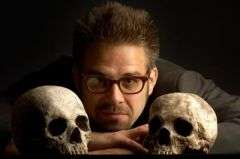
Dr. John Troyer joined the Center for Death and Society at the University of Bath in September. Credit: Nic Delves-Broughton, University of Bath

A system of presumed consent for organ donation - where people have to opt out of donating their organs when they die - is the best way to tackle a growing waiting list for transplant.

That is the opinion of Dr John Troyer, an expert in organ donation and the illegal trade of body parts, who has recently joined the University of Bath's Centre for Death & Society.

There are more than 7,500 patients in the UK currently on the waiting list for organ donations.
Whilst nearly 16 million people in the UK, a quarter of the population, are registered as organ donors, bereaved families have the final say as to whether the organs of their loved ones are used in a transplant. This can lead to delays and can sometimes mean that the deceased person's organs are not used.

Dr John Troyer, who started a RCUK fellowship at the University in September, said: "In the UK we currently have an 'opt in' system of organ donation, where donors can register their consent for their organs to be used after their death.

"I believe a better alternative to this would be an 'opt out' or so-called presumed consent system where organs are used unless the person has specified their wish otherwise. This would encourage people to talk to their loved ones about donating their organs when they die and could have a real impact on the huge waiting list."

Dr Troyer says there is currently an illegal global trade in most body parts, with teeth, nails and bones being sold on the black market to be used as pharmaceutical products and skin being used to treat burns victims.

Organs such as kidneys are also being sold by living donors for large sums of money, with organs from the third world sometimes being used for first world patients who are desperate for a life-saving operation.

Some experts are calling for the selling of organs to be regulated rather than outlawed, to try and increase organ donation and to ensure a fair price to donors and their families. However, Dr Troyer believes this would be a dangerous step to take.

He said: "The reasoning behind regulating the organ trade is that by increasing the domestic supply of organs, the trade on the black market could be reduced.

"Another suggestion is that, instead of cash, families of deceased potential donors could be offered incentives to allow organ donation such as health insurance, funeral expenses or a gift to a charity.

"I believe that organ donation should remain altruistic – like blood donation – with the choice to opt out if preferred. This would make a big difference to the number of organs available and reduce the demand on the black market. It will also reduce the exploitation of poor people who sell their organs and endanger their health because they are desperate for money."

"Currently, the US has central organ database that matches available organs to patients on the waiting list. Whilst the UK has a national register of potential donors, there is no fast and easy way for doctors to check which organs are available."

He added: "Discussing death and dying is always going to be a taboo subject. The British are typically uncomfortable discussing death – the only time people seem to want to talk about it is around Halloween!

"My father was in funeral industry so I grew up around dead bodies, which probably explains why I was drawn to studying the field I do.

"But having my background I almost feel it's my obligation to start the debate and get people thinking about the difficult issues surrounding death and dying."

Earlier this year, ministers backed proposals to overhaul the donation system, although presumed consent was not amongst the proposals. However, over the next two weeks, the Welsh Assembly is holding a series of public debates to discuss the need to introduce a system of presumed consent.

Source: University of Bath

2.5 /5 (4 votes)  

Filter


Move the slider to adjust rank threshold, so that you can hide some of the comments.


Display comments: newest first

JerryPark
Oct 31, 2008

Rank: 1 / 5 (1)
"Opt-out" and "presumed-consent' are just PC for "what you won't surrender, we will take from you".

If there is any right worth preserving it is a person's right to his/her own body and all its parts.

Opt-out proponents are thieves. We should always oppose opt-out schemes.
matelot
Oct 31, 2008

Rank: not rated yet
In the US we have opt-in via a Drivers' license checkoff, but it's worthless because MDs won't use it for approval to harvest organs. Why should a dead person "care" if organs are used to extend someone else's life?
Roj
Nov 01, 2008

Rank: 3 / 5 (1)
US MDs won't use it for approval to harvest organs


With my US drivers license at age 15, there was clear reservations against being a donor.

My early vision was of a system working for recipient imperatives, by overriding proper diagnose and treatment as officials may standby with extracting utensils waiting for donors to die.

At an early age it was president Nixon on US TV, incriminating himself in public and getting away with it, that taught me any official post was potentially lawless.
Paradox
Nov 02, 2008

Rank: 1 / 5 (1)
The "Opt Out" baloney should be against the law...
CreepyD
Nov 03, 2008

Rank: 5 / 5 (1)
Imo not allowing someone to use your organs to help them survive once you're dead is one of the most selfish acts you can possibly commit.
kazzy
Nov 08, 2008

Rank: not rated yet
I dont know if i fully agree with the opt out system. I do get cross when i hear others saying that its just the powers that be ordering us what we have to do..as this is not the case with the opt out. Whereas now you have to registrer yourself (opt in)if the opt out came into force you would then have the option to remove yourself from the list (opt out)
This is possible as everyone will know that they are automatically added onto a list so its up to them to call and remove themselves. Not all who agree with donating their organs after their death get around to registering due to busy lives etc. This way every one is added making more numbers on the register but the option is there to take yourself off....Wheres the problem??
Before anyone replies to me about rights and wrongs and what i would do if a loved one of mine was in need of an urgent transplant please just visit http://www.thelew...tion.org

This is a registered charity set up in memory of my beautiful son Lewis who was in need of an urgent heart transplant., The call we prayed for never arrived and we had to turn off our sons life support. Lewis was two years and eight months of age.
We miss him so much, we blame a system that is not set up properly, our son would now be seven and looking forward to Christmas. We know we cannot change the past, we cannot have our son back but through his name and charity we can make a difference to the future.
Just think on all of those who think o'h it will never happen to a member of my family, it does and it can. You then will be praying that someone somewhere tok the time out of their busy hectic life to register, chances are that unless a new system or a change comes about you to will not get the call you pray for.
There is no greater pain than having to sit helplessly by the side of a loved ones intensive care bed and wait, whether they are an adult or child, i know i have been there.
Talk to your family, inform them of your wishes, dont just sit back and think it wont happen to me.
Karen Prior.
Rank 2.5 /5 (4 votes)
Relevant PhysicsForums posts

More news stories

Starve a virus, feed a cure? Findings show how some cells protect themselves against HIV

A protein that protects some of our immune cells from the most common and virulent form of HIV works by starving the virus of the molecular building blocks that it needs to replicate, according to research published online ...

Medicine & Health / Research

created 10 hours ago | popularity 5 / 5 (2) | comments 0 | with audio podcast

Overeating may double risk of memory loss

New research suggests that consuming between 2,100 and 6,000 calories per day may double the risk of memory loss, or mild cognitive impairment (MCI), among people age 70 and older. The study was released today and will be ...

Medicine & Health / Neuroscience

created 6 hours ago | popularity 5 / 5 (2) | comments 0 | with audio podcast

Injured boomers beware: Know when to see doctor

(AP) -- It happened to nurse Jane Byron years after an in-line skating fall, business owner Haralee Weintraub while doing "men's" push-ups, and avid cyclist Gene Wilberg while lifting a heavy box.

Medicine & Health / Health

created 11 hours ago | popularity 5 / 5 (1) | comments 0

Declining health-care productivity in England: Who says so?

Reports that the National Health Service in England has been declining in productivity in the last decade appear to have been accepted as fact. However, a Viewpoint published Online First by The Lancet disputes this. The Vi ...

Medicine & Health / Health

created 4 hours ago | popularity not rated yet | comments 0

FDA-approved drug rapidly clears amyloid from the brain, reverses Alzheimer's symptoms in mice

Neuroscientists at Case Western Reserve University School of Medicine have made a dramatic breakthrough in their efforts to find a cure for Alzheimer's disease. The researchers' findings, published in the journal Science, show t ...

Medicine & Health / Neuroscience

created Feb 09, 2012 | popularity 4.9 / 5 (58) | comments 17 | with audio podcast


Scientists discover molecular secrets of 2,000-year-old Chinese herbal remedy

For roughly two thousand years, Chinese herbalists have treated Malaria using a root extract, commonly known as Chang Shan, from a type of hydrangea that grows in Tibet and Nepal. More recent studies suggest that halofuginone, ...

New method to examine batteries -- MRI from the inside

There is an ever-increasing need for advanced batteries for portable electronics, such as phones, cameras, and music players, but also to power electric vehicles and to facilitate the distribution and storage of energy derived ...

Google might launch Drive for cloud storage soon

(PhysOrg.com) -- Google's next big move, according to the Wall Street Journal, is a cloud storage service called Drive. Hardly first to the plate, Google is simply catching up to introducing its cloud reposi ...

A mitosis mystery solved: How chromosomes align perfectly in a dividing cell

Although the process of mitotic cell division has been studied intensely for more than 50 years, Whitehead Institute researchers have only now solved the mystery of how cells correctly align their chromosomes during symmetric ...

Lab study raises questions over nano-particle impact

Tests involving chickens have raised questions about the impact on health from engineered nano-particles, the ultra-fine grains commonly used in drugs and processed foods, scientists said on Sunday.

Researchers find extensive RNA editing in human transcriptome

In a new study published online in Nature Biotechnology, researchers from BGI, the world's largest genomics organization, reported the evidence of extensive RNA editing in a human cell line by analysis of RNA-seq data, demons ...