Software for safe bridges
November 3, 2008 Software for Safe Bridges

Enlarge

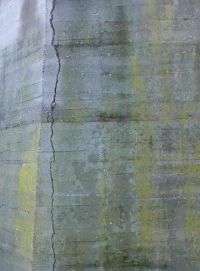
Cracks in bridges are far from unusual. A new software program can now help to identify such damage at an early stage. Credit: Fraunhofer ITWM

Spanning deep gorges, rivers and freeways, bridges are an indispensable part of the traffic network. Yet their condition in Germany is appalling: In a survey carried out by the German automobile club ADAC in 2007, one in ten bridges out of the fifty that were inspected failed the test; a total of four were rated "poor" and one was even rated "very poor". The changing effects of weather and temperature, road salt and the increasing volume of traffic all take their toll on the material – quickly causing damage such as hairline cracks, flaking concrete, and rust penetration. If the bridge engineers fail to recognize these in time, motorists, cyclists and pedestrians are endangered.

Until now, inspectors have always examined a bridge for visible damage directly on site. They cover cracks, for instance, with adhesive strips that expand if the crack gets larger. A new image processing program is set to make these inspection measures unnecessary in future.

Research scientists at the Fraunhofer Institute for Industrial Mathematics ITWM in Kaiserslautern have developed this software jointly with fellow scientists from the Italian company Infracom. "The software automatically examines the photos of a bridge for certain characteristics and irregularities, for instance marked discoloration," explains ITWM scientist Markus Rauhut. "Unlike a human, the tool doesn't miss any abnormalities – even minor damage is identified and signaled."

The challenge is that no two bridges are alike. They differ in terms of their shape, construction material and surface structure, while the color depends on the material, the dirt or fouling, and the degree of humidity. The software has to be able to handle these discrepancies. To make this possible, the researchers have extracted metrics from photographs that include the characteristically elongated shape of a hairline crack, the typical discoloration in damp places, and the structures of the material – which are different for a concrete bridge than for a steel bridge. All of this information is now stored in a database.

When the researchers load a photo into the program, the software compares the features of the new image with those of the saved images. If it detects any irregularities, it marks the respective area on the photo. The bridge inspector can now decide how serious the damage is. Does something need to be done? The faster any damage is identified and clearly categorized, the simpler and less expensive it is to repair it. The engineers have been using the new software successfully for the past six months to inspect bridges in Italy.

Source: Fraunhofer-Gesellschaft


print this article email this article download pdf blog this article bookmark this article     Stumble it Digg this share on Facebook retweet share on Reddit add to delicious
Rate this story - 4.5 /5 (2 votes)


November 3, 2008 all stories

Comments: 0

4.5 /5 (2 votes)
  • Stumble this up

  • Digg this

  • share this

  • hide
  • Related Stories

  • Chain results in 10 kidney swaps among strangers
    created Mar 11, 2009 | popularity not rated yet | comments 0
  • Engineers to investigate energy independent monitoring system for bridges
    created Feb 02, 2009 | popularity not rated yet | comments 0
  • 'Smart' shock absorbers for quake-prone structures
    created Sep 09, 2008 | popularity not rated yet | comments 0
  • Report: CIOs, Stop Squandering Your Time
    created Apr 15, 2007 | popularity not rated yet | comments 0
  • UK project discovers new knowledge about earthquakes
    created Nov 23, 2005 | popularity not rated yet | comments 0


  • hide
  • Relevant PhysicsForums posts

Other News

A system of space solar power system (SSPS)

Japan eyes solar station in space as new energy source

Technology / Energy

created Nov 08, 2009 | popularity 4.7 / 5 (14) | comments 20

It may sound like a sci-fi vision, but Japan's space agency is dead serious: by 2030 it wants to collect solar power in space and zap it down to Earth, using laser beams or microwaves.


Framed for child porn -- by a PC virus

Framed for child porn -- by a PC virus

Technology / Internet

created 16 hours ago | popularity 5 / 5 (5) | comments 2

(AP) -- Of all the sinister things that Internet viruses do, this might be the worst: They can make you an unsuspecting collector of child pornography.


Campaigners are stepping up efforts to curb online tracking

Advertisers face resistance to on-line tracking

Technology / Internet

created 23 hours ago | popularity 5 / 5 (4) | comments 0

Campaigners are stepping up efforts to curb online tracking of Internet use by firms that deliver adverts tailored to the specific interests of consumers, as polls reveal widespread unease with the practice.


Dartmouth professor finds that iconic Oswald photo was not faked

Professor finds that iconic Oswald photo was not faked (w/ Video)

Technology / Computer Sciences

created Nov 05, 2009 | popularity 3.8 / 5 (9) | comments 38

(PhysOrg.com) -- Dartmouth Computer Scientist Hany Farid has new evidence regarding a photograph of accused John F. Kennedy assassin Lee Harvey Oswald. Farid, a pioneer in the field of digital forensics, digitally ...


airpod

Car That Runs on Compressed Air Questioned by Critics (w/ Video)

Technology / Energy

created Nov 03, 2009 | popularity 3.8 / 5 (20) | comments 34

(PhysOrg.com) -- As electric cars begin breaking into the short-distance vehicle market, one French company thinks that it has an alternative to the electric vehicle: a car that runs on compressed air. Motor ...