Tackling a hard-to-treat childhood cancer by targeting epigenetic changes
A very difficult-to-treat child leukemia may benefit from the discovery of a small but potent epigenetic change that launches the cancer – but could potentially be reversed relatively easily, preventing cancer-promoting genes from being turned on. The study, led by researchers at Children's Hospital Boston and the Dana-Farber Cancer Institute, is the cover article in the November 4 issue of Cancer Cell.
While cure rates for the major types of childhood leukemia are now about 80 percent, they are much lower for patients with a subtype of acute lymphoblastic leukemia (ALL) known as MLL-AF4, which accounts for 5 percent of all ALLs but 70 percent of ALLs striking infants. Children with this form of leukemia suffer rapid relapses and have a cure rate of just under 50 percent with chemotherapy.
"MLL-AF4 leukemias are very difficult to treat and in desperate need of new therapeutic approaches," says senior investigator Scott Armstrong, MD, PhD, of Children's and Dana-Farber. Like other other leukemias, the disease leads to abnormally high numbers of immature, dysfunctional white blood cells that crowd out the bone marrow, interfering with its ability to produce healthy blood cells.
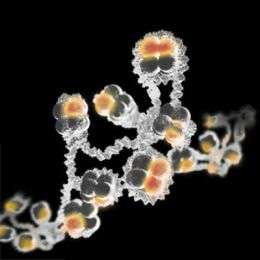
The researchers, led by Armstrong, Andrei Krivtsov, PhD and Zhaohui Feng, also of Children's and Dana-Farber, first developed a mouse model of MLL-AF4, which had eluded scientists in the past. They then showed that the abnormal "fusion" protein that characterizes the disease, also known as MLL-AF4, goes to the cell's DNA and causes abnormal modification of one of the histones, "scaffolding" proteins that give chromosomes their shape and help control gene activation. As a result of this epigenetic change, chromosome structure is altered. This jump-starts activity of a diverse group of genes, including some known to be critical in initiating leukemia.
Studying samples from children with MLL-AF4 leukemias, the team made the same observations. "The fusion protein modifies histones and turns on genes that are not supposed to be turned on, and that initiate the development of the cancer," says Armstrong. "If you could inhibit that abnormal histone modification, you might be able to reverse the tumorigenic properties of the fusion protein."
It appears this inhibition may be relatively simply to accomplish. The researchers went on to demonstrate that MLL-AF4 does its evil work by recruiting an enzyme called DOT1L, which modifies the histone H3 by attaching a methyl group to a particular amino acid. While MLL-AF4 itself would be difficult to target chemically, enzymes are generally fairly easy to target with small-molecule drugs. Simply by inhibiting DOT1L, a variety of critical genes that contribute to the malignancy could potentially be inhibited.
A pharmaceutical DOT1L inhibitor hasn't yet been found, but when the researchers suppressed DOT1L indirectly through RNA interference techniques, the abnormally activated genes were turned off.
"Based on these data, we are searching for small molecules or drugs that inhibit DOT1L," says Armstrong. "Reversal of histone modifications could be an important therapeutic approach for this and potentially other cancers."
Armstrong notes that there are already drugs in clinic that target enzymes that modify histones, namely histone deacetylase (HDAC) inhibitors, which are used to treat a kind of lymphoma and are being tested in other cancers.
Source: Children's Hospital Boston


