Forensic chemists verify human remains from fat deposits
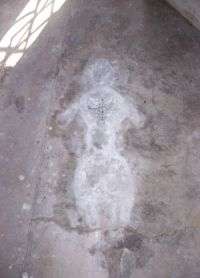
(PhysOrg.com) -- In the absence of evidence such as bones, clothing or strands of hair, forensic investigators can verify whether a body decomposed at a site indoors by looking for traces of lingering fat deposits, according to a new report.
While examining the scene of a 30-year-old death, Ohio University researcher Glen Jackson and colleagues discovered adipocere – fatty acids primarily made up of calcium salts – in a dry, airy building. Until this study, researchers had reported finding this evidence of human decomposition only in moist, anaerobic environments, such as when bodies are stored for extended periods in grave sites or submerged in water, he said.
That finding could be useful for forensic investigators looking for evidence at crime scenes, said Jackson, who published the study in the latest issue of the Journal of Forensic Sciences. He'll give a public lecture on the new study at 7 p.m. Wednesday, Nov. 5, in the Walter Hall Rotunda on the Ohio University campus.
“From a scientific perspective, I would appreciate more knowledge being developed about human decomposition, because it can only ever be more helpful and useful, such as in cases in which a body was moved,” said the researcher, an assistant professor of chemistry and biochemistry who is funded by the National Science Foundation. “Granted, that’s not a high frequency crime, but we could put more minds at ease if we could solve more crimes using this technology.”
Jackson and two Ohio University students, Carolyn Zimmermann and Ünige Laskay, conducted the study to attempt to dispel the mystery surrounding a death at a state mental hospital in Athens, Ohio. After a patient in an open ward in the facility went missing, staff conducted exhaustive searches for the woman. More than a month later, an employee discovered her body on the concrete floor near a window in an abandoned wing of the building. An autopsy revealed that she had died of natural causes and that the body had decomposed for several weeks.
Though the corpse was removed and the site was cleaned, the concrete floor where the patient was found bore a distinct white stain in the shape of a woman’s body. The odd mark has puzzled past and current custodians of the facility, which is now owned by Ohio University and used for offices, studios and an art museum. (The actual location of the stain is in an unused portion of the building and is closed to the public.)
The stain had never been chemically identified or explained – until now. Jackson conducted a new scientific analysis because the case provided a rare opportunity to determine whether forensic investigators can identify human remains at a site where no DNA or other physical evidence is present, he said.
Though research labs such as the “Body Farm” in Tennessee conduct research on how bodies decompose in various outdoor environments – underground burial, submerged in water, exposed to insects – there have been few studies performed on indoor decomposition, Jackson said. That’s because most bodies are found indoors relatively quickly, and other identifying evidence, such as bones, skin and hair samples, is often present at the crime scene.
For the recent study, Jackson and the students collected samples of residue from within the light-colored stain, a dark area immediately surrounding it, and an area of the concrete floor across the room, as a control sample. They also collected samples of a commercial bar soap, a small piece of human skin from a volunteer and a phosphoric acid-based cleaner called Franklin Blu-Lite, which custodial staff had used at least once on the stain.
After observing the samples under a microscope and conducting a mass spectrometry analysis in the lab, the researchers determined that the light-colored, human-shaped “stain” was produced by degradation of the skin or fatty tissue from the decomposed body and chemicals from the Blu-Lite cleaner. The study disputes previous claims that the stain is a sunlight-induced photographic negative of the woman’s body.
The fatty acids have a unique chemical pattern that tells researchers whether they came from a mammal, such as an animal or human, or a plant. That’s why Jackson’s study included a sample of a bar of soap, which has a fatty acid distribution unique to plants.
But forensic chemistry can’t explain everything about the mysterious stain, Jackson noted. Someone must have scrubbed the area with Blu-Lite cleaner, or other acidic compound, in the pattern of a human body for the white image to appear – a more general swab with a mop would have left a wider, more erratic patch of chemical staining on the concrete, he explained.
Provided by Ohio University


