Cancer patient genome sequenced for the first time
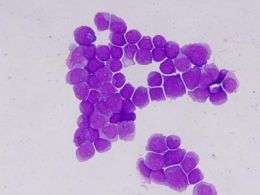
For the first time, scientists have decoded the complete DNA of a cancer patient and traced her disease - acute myelogenous leukemia - to its genetic roots. A large research team at the Genome Sequencing Center and the Siteman Cancer Center at Washington University School of Medicine in St. Louis sequenced the genome of the patient - a woman in her 50s who ultimately died of her disease - and the genome of her leukemia cells, to identify genetic changes unique to her cancer.
The study is reported in the Nov. 6 issue of the journal Nature.
The pioneering work sets the stage for using a more comprehensive, genome-wide approach to unravel the genetic basis of cancer. "Our work demonstrates the power of sequencing entire genomes to discover novel cancer-related mutations," says senior author Richard K. Wilson, Ph.D., director of Washington University's Genome Sequencing Center. "A genome-wide understanding of cancer, which is now possible with faster, less expensive DNA sequencing technology, is the foundation for developing more effective ways to diagnose and treat cancer."
The researchers discovered just 10 genetic mutations in the patient's tumor DNA that appeared to be relevant to her disease; eight of the mutations were rare and occurred in genes that had never been linked to AML. They also showed that virtually every cell in the tumor sample had nine of the mutations, and that the single genetic alteration that occurred less frequently was likely the last to be acquired. The scientists suspect that all the mutations were important to the patient's cancer.
Like most cancers, AML - a cancer of blood-forming cells in the bone marrow - arises from mutations that accumulate in people's DNA over the course of their lives. However, little is known about the precise nature of those changes and how they disrupt biological pathways to cause the uncontrolled cell growth that is the hallmark of cancer.
Previous efforts to decode individual human genomes have looked at common points of DNA variation that may be relevant for disease risk. What's striking about the new research is that the scientists were able to sift through the 3 billion pairs of chemical bases that make up the human genome to pull out the mutations that contributed to the patient's cancer.
"Until now, no one has sequenced a patient's genome to find all the mutations that are unique to that person's disease," says lead author Timothy Ley, M.D., a hematologist and the Alan A. and Edith L. Wolff Professor of Medicine. "We didn't know what we would find, but we felt that the answers to why this patient had AML had to be embedded in her DNA."
To date, scientists involved in large-scale genetic studies of cancer have not gone so far as to do a full side-by-side comparison of the genomes of normal cells and tumor cells from the same patient. Rather, most earlier studies have involved the sequencing of genes with known or suspected relationships to cancer, a method that likely misses key mutations.
"The determination of the first complete DNA sequence of a human cancer genome, and its comparison to normal tissues of the same individual, is a true landmark in cancer research," says geneticist Francis Collins, M.D., Ph.D., former director of the National Human Genome Research Institute. "In the past, cancer researchers have been 'looking under the lamppost' to find the causes of malignancy - but now the team from Washington University has lit up the whole street. This achievement ushers in a new era of comprehensive understanding of the fundamental nature of cancer, and offers great promise for the development of powerful new approaches to diagnosis, prevention and treatment."
An estimated 13,000 cases of AML will be diagnosed in the United States this year, and some 8,800 will die of the disease. It occurs most often among those age 60 or older and becomes more difficult to treat as patients age. According to the American Cancer Society, the five-year survival rate for AML is 21 percent.
Despite advances in the genetic understanding of many cancers, scientists have learned very little about the genetic basis of AML. "After years of genetic studies of AML looking at genes of interest, we were getting no closer to uncovering the molecular underpinnings of the disease," Ley says. "We felt that with new genome sequencing technology, now was the time to take a whole-genome approach."
Based on genetic testing with traditional methods at the study's outset, the patient was known to have two mutations that are common among AML patients, an indicator she had a typical subtype of the disease, and one of the many reasons why her genome was selected for sequencing.
The researchers sequenced the patient's full genome, meaning DNA from both sets of chromosomes, using genetic material obtained from a skin sample. This gave the scientists a reference DNA sequence to which they could compare genetic alterations in the patient's tumor cells, taken from a bone marrow sample that was comprised only of tumor cells. Both samples were obtained before the patient received cancer treatment, which can further damage DNA.
The scientists then looked for genetic differences - points of single base changes in the DNA - in the patient's tumor genome compared with her normal genome. Of the nearly 2.7 million single nucleotide variants in the patient's tumor genome, almost 98 percent also were detected in DNA from the patient's skin sample, thus narrowing the number of variants that required further study to about 60,000.
Using sophisticated software and analytical tools, some of which the researchers developed specifically for this project, they identified the 10 mutations (including the two previously known genetic mutations that are common to her leukemia subtype but do not directly cause the disease) by looking for single base DNA changes that altered the instructions for making proteins.
Of the eight novel mutations discovered, three were found in genes that normally act to suppress tumor growth. One of these mutations is in the PTPRT tyrosine phosphatase gene, which is frequently altered in colon cancer.
Four other mutated genes appear to be involved in molecular pathways that promote cancer growth. In particular, one mutation was found in a gene family that also is expressed in embryonic stem cells and may be involved with cell self-renewal. Interestingly, the researchers note, self-renewal is thought to be an essential feature of leukemia cells.
Another gene alteration appears to affect the transport of drugs into the cell, and may have contributed to the patient's chemotherapy resistance.
"We're still analyzing the patient's non-coding DNA and expect to find a number of additional relevant mutations in this portion of the genome," says Elaine Mardis, Ph.D., co-lead author of the study and co-director of the Genome Sequencing Center. "But the role of these non-coding mutations will be more of a challenge to elucidate because we do not yet fully understand the function of this part of the genome."
The team also looked to see if the eight novel mutations in the patient's tumor genome also occurred in the DNA of tumor samples from 187 additional AML patients. None of those tumors had any of the eight mutations.
"This suggests that there is a tremendous amount of genetic diversity in cancer, even in this one disease," Wilson says. "There are probably many, many ways to mutate a small number of genes to get the same result, and we're only looking at the tip of the iceberg in terms of identifying the combinations of genetic mutations that can lead to AML."
Based on their current understanding of cancer, the researchers suspect that the mutations occurred sequentially. The first mutation gave the cell a slight tendency toward cancer, and then one by one, the other genetic alterations were acquired, with each contributing something to the cancer. One mutation, in the FLT3 gene, was not present in all of the tumor cells, and they suspect that it was the last one to occur. "The final mutation may represent a tipping point that causes the cancer cells to become more dangerous," Ley says.
The team is now sequencing the genomes of additional patients with AML, and they are also planning to expand the whole-genome approach to breast and lung cancers.
This type of approach is exactly what is needed to understand the genetic basis of cancer, an essential first step to developing targeted therapies, says Brian Druker, M.D., whose research helped identify the targeted drug Gleevec as a promising therapy for chronic myelogenous leukemia. Druker, the director of the Oregon Health & Science University Cancer Institute and a Howard Hughes Medical Institute investigator, was not involved in the current study.
"This tour-de-force effort identified a small number of mutations in genes that no one predicted, and their uniqueness for this patient begins to give us a glimmer of the genetic complexity and diversity of this disease," he says. "Although this information doesn't yet tell us how to treat patients, it is a critical first step along that path. It sets the stage for large scale sequencing of cancer genomes and unraveling the mystery of cancer."
Source: Washington University


