Tumors grow faster without blood-supply promoting molecule
November 10, 2008 Tumors grow faster without blood-supply promoting molecule

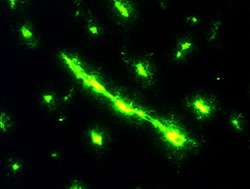
Without the growth factor, VEGF, blood vessels stay intact.

Dense networks of blood vessels thought to spur cancer's growth could actually hinder rather than promote tumor progression, according to a new study at the University of California, San Diego.

The findings partly explain why drugs designed to treat cancer by strangling its blood supply have been disappointing when used alone and why those treatments are more effective when combined with traditional chemotherapy.

Despite their rapid progression, tumors fed by more normal vascular were also more vulnerable to the effects of standard chemotherapy drugs, the team reports in this week's early online edition of the journal Nature.

Nascent tumors take off as new blood vessels invade, an event called angiogenesis that many see as key to the development of malignancy. But those pathological vessels form tangled structures that are far from normal.

"Tumor blood vessels become more chaotic, disorganized and leaky," said Randall S. Johnson, professor of molecular biology at UC San Diego who led the study. "They become dysfunctional in many ways as a blood vessel network."

Cellular secretions within tumors promote the invasion. The first drugs designed to curtail cancer's blood supply targeted one of these, called VEGF for vascular endothelial growth factor. Inflammatory cells, which infiltrate many types of tumors, provide one source of VEGF.

Johnson's team created a strain of mice in which most inflammatory cells were missing the gene for VEGF, then cross-bred them with a strain that reliably develops mammary tumors and is commonly used to study breast cancer.

"The blood vessels look more organized and less leaky in the engineered mice," said Christian Stockmann, a molecular biology postdoctoral fellow and the first author of the paper.

The blood supply to tumors in these mice was also sparse compared to mice with intact VEGF genes.

"A lot of these classic hallmarks of tumor blood vessels disappeared when the inflammatory cells couldn't make VEGF," Johnson said.

But the cancer grew faster.

All of the mice developed tumors, but at 20 weeks of age, those with low levels of VEGF from inflammatory cells had larger growths that were more likely to have progressed to a later stage of cancer.

"The tumors seemed much happier when they didn't have this chaotic vasculature," Johnson said.

The scientists also injected a cancerous cell line into normal and engineered mice and found that the introduced cells invaded normal tissues more readily without VEGF from inflammatory cells and developed more normal blood supplies.

The tumors that formed were also more susceptible to two different chemotherapy drugs in the mice lacking VEGF from inflammatory cells.

By identifying the cellular source of the critical factor for one pathology associated with cancer, the researchers say their findings may open new avenues for treatment.

Source: University of California - San Diego


print this article email this article download pdf blog this article bookmark this article     Stumble it Digg this share on Facebook retweet share on Reddit add to delicious
Rate this story - 4.5 /5 (8 votes)

Rank Filter

Move the slider to adjust rank threshold, so that you can hide some of the comments.


Display comments: newest first

  • E_L_Earnhardt - Nov 10, 2008
    • Rank: 1 / 5 (1)
    Angiogenesis is driven by electron volt elevation
    of cells undergoing accelerated mitosis. (theory Circulation of sterile water below body temp. around cells with accelerated mitosis would reduce this effect and draw off this energy!
  • gdpawel - Dec 02, 2008
    • Rank: not rated yet
    Direct anti-tumor and anti-vascular effects were studied of drugs in fresh biopsy specimens of cancer patients.

    Cell culture detection of microvascular cell death in clinical specimens of human neoplasms can identify the activity of both single drugs and combinations of drugs at the level of individual patients with individual cancers. It works by measuring drug effects (real-time) upon endothelial cells which make up blood vessels.

    Drugs like Avastin had striking anti-microvascular effects but minimal anti-tumor effects. Tarceva and Gleevec had mixed antitumor and anti-microvascular effects. Anti-microvascular effects of Tarceva and Iressa were equal to those of Sutent and Nexavar. Anti-microvascular additivity was observed between Avastin and other drugs on an individual basis.

    Conclusions of the study had shown that Tykerb has antivascular activity superior to that of Nexavar. Avastin Tykerb may be the first clinically-exploitable antivascular drug combination. High dose, intermittent 'bolus' schedules of Tykerb to coincide with Avastin administration may be clinically advantageous, even in HER2-negative tumors.

    The system utilized for the study was a functional profiling assay, which may be used to individualize anti-tumor and antivascular therapy. It can be adapted for simple, inexpensive and sensitive/specific detection of tissue and circulating microvascular cells in a variety of neoplastic and non-neoplastic conditions, for drug development, and individualized cancer treatment.

    The cell-based assay can accurately sort drugs into categories of above average probability of providing clinical benefit on one hand and below average probability of providing clinical benefit on the other hand, based both on tumor response and patient survival.

    The consistent and specific control of cancer will require a set of drugs, given in combination, targeted to patterns of normal cellular machinery related to proliferation and invasiveness. A sufficient number of independent methods of cell killing must be employed so that it is too improbable for cancer cells to evolve that can escape death or inactivation. It must examine functional aspects of every cell in the body and must do so for a prolonged period of time.

    Today, we have the ability to take a cancer specimen, analyze it, and follow those genetic changes that influence particular pathways, then use two, three, four or more targeted therapies, perhaps simultaneously, and be able to completely interrupt the flow of the cancer process.

    Functional, cell culture-based assays are vastly more informative for virtually all drugs, both as single agents and in combination with each other and with traditional cytotoxic agents, than marker-based tests, including multi-gene tests.

    Literature Citation: Weisenthal, LM, Patel, N, and Rueff-Weisenthal, C. Cell culture detection of microvascular cell death in clinical specimens of human neoplasms and peripheral blood. J Intern Med 264:275-287, September 2008

November 10, 2008 all stories

Comments: 2

4.5 /5 (8 votes)
  • Stumble this up

  • Digg this

  • share this

  • hide
  • Related Stories

  • Common pain relief medication may encourage cancer growth
    created Nov 18, 2009 | popularity not rated yet | comments 0
  • Magnetic Nanotags Spot Cancer in Mice Earlier Than Current Methods
    created Nov 17, 2009 | popularity not rated yet | comments 0
  • Wistar researchers show targeting 'normal' cells in tumors slows growth
    created Nov 16, 2009 | popularity not rated yet | comments 0
  • Researchers 'notch' a victory toward new kind of cancer drug
    created Nov 11, 2009 | popularity not rated yet | comments 0
  • New mechanism explains how the body prevents formation of blood vessels
    created Nov 11, 2009 | popularity not rated yet | comments 0


  • hide
  • Relevant PhysicsForums posts

  • Multiple Sclerosis & CCSVI
    created 20 hours ago
  • 23 Years in a Vegetative State....or not?
    created Nov 25, 2009
  • Has the H1N1 vaccine been scientifically proven to work?
    created Nov 24, 2009
  • nesfatin
    created Nov 22, 2009
  • More from Physics Forums - Medical Sciences

Other News

What a grind: Bruxism at night likely a sign of stress by day

Medicine & Health / Health

created 43 minutes ago | popularity not rated yet | comments 0

You can practically track Steve Barkley's stress by the level of activity in his temporomandibular joint, or TMJ, the hinge joint that connects the lower jaw to the temporal bone of the skull and helps one chew, talk and ...


Overeating can set stage for obesity, researchers say

Medicine & Health / Health

created 5 hours ago | popularity not rated yet | comments 0

It doesn't seem like a fair fight. In one corner loomed the Thanksgiving table, groaning with poultry, pie and mashed potatoes.


eye

Over-the-counter eye drops raise concern over antibiotic resistance

Medicine & Health / Medications

created 12 hours ago | popularity 3.5 / 5 (2) | comments 1

(PhysOrg.com) -- The use of antibiotic eye drops for conjunctivitis has increased by almost half since they became available over the counter at chemists in 2005, data obtained by Oxford University researchers ...


New tools for prediction of disease progression in acute childhood leukemia

Medicine & Health / Cancer

created 7 hours ago | popularity not rated yet | comments 0

(PhysOrg.com) -- Researchers at Uppsala University and University Children’s Hospital in Uppsala have devised powerful new tools for typing cells from children with acute lymphatic leukemia and for prediction of how children ...


Nuclear science to fight sleeping sickness

Medicine & Health / Diseases

created 9 hours ago | popularity not rated yet | comments 0

The International Atomic Energy Agency on Friday announced an agreement to help African nations battle the tsetse fly, the main carrier of parasites that causes sleeping sickness with its bites.