Can vitamins and minerals prevent hearing loss?
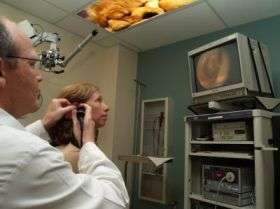
About 10 million people in the United States alone—from troops returning from war to students with music blasting through headphones—are suffering from impairing noise-induced hearing loss.
The rising trend is something that researchers and physicians at the University of Michigan Kresge Hearing Research Institute are hoping to reverse, with a cocktail of vitamins and the mineral magnesium that has shown promise as a possible way to prevent hearing loss caused by loud noises. The nutrients were successful in laboratory tests, and now researchers are testing whether humans will benefit as well.
"The prevention of noise induced hearing loss is key," says Glenn E. Green, M.D., assistant professor of otolaryngology at the U-M Health System and director of the U-M Children's Hearing Laboratory.
"When we can't prevent noise-induced hearing loss through screening programs and use of hearing protection, then we really need to come up with some way of protecting people who are still going to have noise exposure. My hope is that this medication will give people a richer, fuller life."
The combination of vitamins A, C and E, plus magnesium, is given in pill form to patients who are participating in the research. Developed at the U-M Kresge Hearing Research Institute, the medication, called AuraQuell, is designed to be taken before a person is exposed to loud noises. In earlier testing at U-M on guinea pigs, the combination of the four micronutrients blocked about 80 percent of the noise-induced hearing impairment.
Now, AuraQuell is being tested in a set of fourmultinational human clinical trials: military trials in Sweden and Spain, an industrial trial in Spain, and a trial involving students at the University of Florida who listen to music at high volumes on their iPods and other PDAs, funded by the National Institutes of Health (NIH). This is the first NIH-funded clinical trial involving the prevention of noise-induced hearing loss.
"If we can even see 50 percent of the effectiveness in humans that we saw in our animal trials, we will have an effective treatment that will very significantly reduce noise-induced hearing impairment in humans. That would be a remarkable dream," says co-lead researcher Josef M. Miller, Ph.D., the Lynn and Ruth Townsend Professor of Communication Disorders and director of the Center for Hearing Disorders at the U-M Department of Otolaryngology's Kresge Hearing Research Institute. Miller is leading the research along with colleagues at Karolinska Institute, where Miller also has an appointment; the University of Florida; and the University Castille de La Mancha.
Until a decade ago, it was thought that noise damaged hearing by intense mechanical vibrations that destroyed the delicate structures of the inner ear. There was no intervention to protect the inner ear other than reducing then intensity of sound reaching it, such as ear plugs, which are not always effective. It was then discovered that noise caused intense metabolic activity in the inner ear and the production of molecules that damage the inner ear cells; and that allowed the discovery of an intervention to prevent these effects.
The laboratory research that led to a new understanding of the mechanisms underlying noise induce hearing loss was funded by the NIH; the preclinical translational research that led to the formulation of AuraQuell as an effective preventative was funded by General Motors and the United Auto Workers.
Miller notes that the military tests in the new study could be of particular importance because of the high number of soldiers who develop hearing loss in the line of duty, due to improvised explosive devices (IEDs) and other noises.
Last year, he says, the Department of Defense spent approximately $1.5 billion in compensation for hearing impairment, and Veterans Affairs hospitals spent close to $1 billion for clinical care and treatment of hearing impairment. The most recent figures in a report by the Institute of Medicine indicated that one-third of returning soldiers fighting in Afghanistan and Iraq cannot be redeployed specifically because of hearing impairment.
"Not only is it an enormous factor in quality of life for the individual affected, in cost to society for health care and compensation," Miller says, "but it fundamentally compromises the effectiveness of our military at this time." Miller has launched a U-M startup company called OtoMedicine, which holds the license to developed the vitamin-and-magnesium pill for human application.
Hearing loss commonly occurs, Green says, when loud noises trigger the formation of molecules inside the ear and these molecules cause damage to the hair cells of the inner ear. The cells then shut down and scar, and they cannot grow back.
The U-M researchers discovered that this new combination of vitamins, when mixed with magnesium, can prevent noise-induced damage to the ears by blocking some of these complex cellular reactions. Read more about the science of hearing loss, free radicals in hearing loss, and the science behind the effectiveness of these nutrients, in this press release.
Source: University of Michigan


