Rabies 'barrier' to save rare wolf
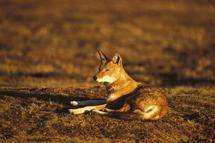
(PhysOrg.com) -- A team of Oxford University and Ethiopian conservationists are battling to save the world’s rarest wolf from a rabies outbreak by creating a ‘barrier’ of vaccinated wolf packs.
The Ethiopian wolf is on the brink of extinction with less than 500 animals surviving on a handful of Ethiopian mountains. In their stronghold in the Bale Mountains National Park wolves live in close contact with the Oromo people. Whilst this coexistence is encouraging, it places the wolves at great risk of catching the rabies virus from the dogs the Oromo use to herd livestock.
‘Despite the efforts of our veterinary team, who vaccinate thousands of dogs in Bale's villages every year, the virus has raised its ugly head again and jumped into the wolf population,’ said Dr Claudio Sillero of Oxford University’s Wildlife Conservation Unit (the WildCRU). ‘Fourteen wolves have died to date, and laboratory tests have confirmed our worst fears that we are facing another potentially devastating outbreak. If left unchecked, rabies is likely to kill over two-thirds of all wolves in Bale's Web Valley, and spread further, with wolves dying horrible deaths and numbers dwindling to perilously low levels.’
A team led by Dr Sillero from Oxford’s the WildCRU and Dr Fekadu Shiferaw from the Ethiopian Wolf Conservation Authority, devised a plan to vaccinate wolf packs to create a ‘barrier’ to prevent the virus from spreading. The researchers knew from previous outbreaks that they had to move quickly to stop the virus in its tracks so they began by vaccinating the first wolf on 20 October.
‘Tracking and vaccinating these animals is a far from easy task,’ said Dr Sillero. ‘Our veterinary team are travelling on horse-back and camping out in remote mountains above 12,000 feet with temperatures falling as low as -15°C. But the first two weeks of the intervention have gone well with the team vaccinating to date 46 wolves in ten vital packs that connect the Web Valley population with other wolves in Bale. The hope is that by securing a ‘cordon sanitaire’ of safely vaccinated wolf packs, the team may prevent the virus reaching other packs living further afield in the mountains around Bale.’
Oxford University researchers have developed a detailed knowledge of the wolves from almost 20 years of continuous study, and a sophisticated computer model of how rabies spreads, which guides their vaccination efforts.
Professor David Macdonald, Director of Oxford's WildCRU, commented ‘It is only because of years of intensive research that we have the information, and strategies, in place to mount this ambitious vaccination plan. It’s a powerful example of the importance of the science and practice of wildlife conservation combined in the effort to deliver practical solutions.’
The intervention has been endorsed by the International Union for Conservation of Nature (IUCN) Canid Specialist Group and the IUCN Wildlife Health Specialist Group, and has been sanctioned by the Ethiopian Wildlife Conservation Authority (EWCA) and Oromia Bureau of Agriculture and Rural Development.
Provided by Oxford University


