Reducing consumption key to a sustainable future
November 11, 2008 Reducing consumption key to a sustainable future

Enlarge

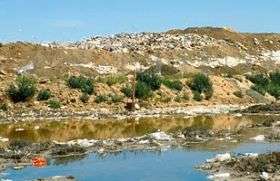
Reducing consumption is essential for environmental and economic sustainability. Image: CSIRO

(PhysOrg.com) -- Based on then ground-breaking modelling, the forecasts of global ecological and economic collapse by mid-century contained in the controversial 1972 book; The Limits to Growth, are still ‘on-track’ according to new CSIRO research.

The Limits to Growth' modelled scenarios for the future global economy and environment and recommended far reaching changes to the way we live to avoid disaster.

In a paper published in the current edition of the international journal; Global Environmental Change, CSIRO physicist Dr Graham Turner compares forecasts from the book with global data from the past 30 years.

”The real-world data basically supports The Limits to Growth model,” he says. “It shows that for the first 30 years of the model, the world has been tracking along the unsustainable trajectory of the book’s business-as-usual scenario.”

“The original modelling predicts that if we continue down that track and do not substantially reduce our consumption and increase technological progress, the global economy will collapse by the middle of this century.

“The contemporary issues of peak oil, climate change, and food and water security, resonate strongly with the overshoot and collapse displayed in the business-as-usual scenario of The Limits to Growth.”

This is the first time anyone has comprehensively tested the predictions of the first, and still one of the most comprehensive, global models linking the world economy to the environment.

“We’ve had the rare opportunity to evaluate the output of a global model against observed and independent data,” says Dr Turner.

To date, the recommendations of The Limits to Growth, which included fundamental changes of policy and behaviour for sustainability, have not been implemented.

The Limits to Growth documented the results of a Massachusetts Institute of Technology (MIT) study carried out by Meadows et al, who were commissioned by The Club of Rome to analyse the 'world problematique' using a computer model developed at MIT called World3.

The Limits to Growth became the best selling environmental book in history, selling more than 30 million copies in 30 languages.

“In the years since 1972, The Limits to Growth has provoked much criticism but our research indicates that the main claims against the modelling are false,” Dr Turner says.

CSIRO is investigating how Australia can address the challenges of economic, environmental and social sustainability facing communities across Australia.

Citation: Graham M. Turner. A Comparison of The Limits to Growth with 30 years of reality. Global Environmental Change 18 (2008) 397-411. Accepted 13 May 2008, CSIRO Sustainable Ecosystems.

Provided by CSIRO


print this article email this article download pdf blog this article bookmark this article     Stumble it Digg this share on Facebook retweet share on Reddit add to delicious
Rate this story - 3.4 /5 (14 votes)

Rank Filter

Move the slider to adjust rank threshold, so that you can hide some of the comments.


Display comments: newest first

  • dirk_bruere - Nov 12, 2008
    • Rank: 1.7 / 5 (3)
    %u201CIt shows that for the first 30 years of the model, the world has been tracking along the unsustainable trajectory of the book%u2019s business-as-usual scenario.%u201D No big surprise there then, since it is "business as usual". It's the conclusions that are in dispute. For example, as we run out of oil does the world collapse or do we just use new energy sources?
  • Velanarris - Nov 12, 2008
    • Rank: 3 / 5 (5)
    %u201CIt shows that for the first 30 years of the model, the world has been tracking along the unsustainable trajectory of the book%u2019s business-as-usual scenario.%u201D No big surprise there then, since it is "business as usual". It's the conclusions that are in dispute. For example, as we run out of oil does the world collapse or do we just use new energy sources?
    You'd have to establish an exact "when" and put that up against current world issues, comming world issues, societal trends, and technological advancement.

    20 years from now we may be completely off of oil and using coal, or nuclear, or solar, there's just no way to tell.


    But, let's say you just ran the last oil well dry yesterday. We would already be rioting in the streets and utter anarchy and chaos would ensue world wide.
  • patnclaire - Nov 12, 2008
    • Rank: 3.7 / 5 (3)
    Will the author(s) please enlighten us as to what the acronym CSIRO represents? Always define acronyms at their first use.
  • Velanarris - Nov 12, 2008
    • Rank: 3.4 / 5 (5)
    Will the author(s) please enlighten us as to what the acronym CSIRO represents? Always define acronyms at their first use.


    Commonwealth Scientific and Industrial Research Organisation. Pretty standard fare in climate and ecology research.
  • Sirussinder - Nov 12, 2008
    • Rank: 2.2 / 5 (5)

    Not going to happen...

    Consumption is the way our entire world economy works. People need to consume as much a possible and throw out old for new to keep things going...otherwise there will be lots of unemployed people. We also need to keep populations going otherwise there wont be enough people to keep the factories going...Dont you people understand this basic principle that is why we are screwed because nothing will change this path..except disaster.
  • GrayMouser - Nov 12, 2008
    • Rank: 5 / 5 (2)
    That book was never "on track". According to it we should have had our first global famines decades ago. The Earth's population is well beyond what the Club of Rome predicted as the maximum.
  • MikeB - Nov 14, 2008
    • Rank: 5 / 5 (2)
    How I wish the Club of Rome and it's recent iterations would crawl back into the shadows and take their failed prophecies with them. Now that would be the beginning of a better world.

November 11, 2008 all stories

Comments: 7

3.4 /5 (14 votes)
  • Stumble this up

  • Digg this

  • share this

  • hide
  • Related Stories


  • hide
  • Relevant PhysicsForums posts

  • Himalayan glaciers
    created 13 hours ago
  • upcoming GRL paper shows CO2 fraction is constant
    created 19 hours ago
  • Is there a point to buying organic?
    created 22 hours ago
  • cycles
    created Nov 08, 2009
  • More from Physics Forums - Earth

Other News

Exoplanets Clue to Sun's Curious Chemistry

Exoplanets Clue to Sun's Curious Chemistry

Space & Earth / Astronomy

created 13 hours ago | popularity 4.9 / 5 (14) | comments 11

(PhysOrg.com) -- A ground-breaking census of 500 stars, 70 of which are known to host planets, has successfully linked the long-standing "lithium mystery" observed in the Sun to the presence of planetary systems. ...


A bubbling ball of gas

A bubbling ball of gas (w/ Video)

Space & Earth / Space Exploration

created 14 hours ago | popularity 4.9 / 5 (15) | comments 5

The Sun is a bubbling mass. Packages of gas rise and sink, lending the sun its grainy surface structure, its granulation. Dark spots appear and disappear, clouds of matter dart up - and behind the whole thing ...


Earth's early ocean cooled more than a billion years earlier than thought: Stanford study

Earth's early ocean cooled more than a billion years earlier than thought (w/ Video)

Space & Earth / Earth Sciences

created 13 hours ago | popularity 4.9 / 5 (8) | comments 0

(PhysOrg.com) -- The scalding-hot sea that supposedly covered the early Earth may in fact never have existed, according to a new study by Stanford University researchers who analyzed isotope ratios in 3.4 ...


A Tale of Planetary Woe

A Tale of Planetary Woe (w/ Video)

Space & Earth / Space Exploration

created 10 hours ago | popularity 4.7 / 5 (7) | comments 1

Once upon a time — roughly four billion years ago — Mars was warm and wet, much like Earth. Liquid water flowed on the Martian surface in long rivers that emptied into shallow seas. A thick atmosphere blanketed ...


Researchers Discover Use for Carbon Dioxide in Conversion of Biomass Into Biofuel

Researchers Discover Use for Carbon Dioxide in Conversion of Biomass Into Biofuel

Space & Earth / Environment

created 10 hours ago | popularity 4 / 5 (9) | comments 1

(PhysOrg.com) -- Researchers at Columbia University have successfully discovered a beneficial use for carbon dioxide in the conversion of organic materials, such as grass and bark, into fuel. Their findings ...