Toward a new generation of paper-thin loudspeakers
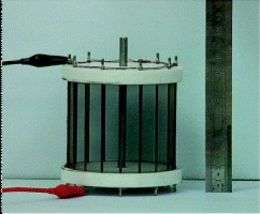
In research that may redefine ear buds, earphones, stereo loudspeakers, and other devices for producing sound, researchers in China are reporting development of flexible loudspeakers thinner than paper that might be inserted into the ears with an index finger or attached to clothing, walls, or windows. Their report on what may be the world's thinnest loudspeakers, made from transparent carbon nanotube films, is scheduled for the December 10 issue of ACS' Nano Letters.
Kaili Jiang, Shoushan Fan, and colleagues note that most of today's loudspeakers are relatively bulky, complex, and inflexible, consisting of a permanent magnet fixed to a voice coil and a cone. To meet the growing demand for smaller speakers for portable digital consumer electronics devices, manufacturers need new technology, they say.
The scientists describe the development of super-thin carbon nanotube (CNT) films—1/1,000th the width of a single human hair—that are capable of transmitting music and other sounds. In laboratory tests, the researchers mounted a thin CNT film onto two electrodes to form a simple loudspeaker. The speaker produced sound with the same excellent quality as conventional loudspeakers, but without magnets and moving components, the researchers say. They also demonstrated that the flexible film could be used just as effectively to play music from an iPod and while pasted to a flexible, waving flag.
"These CNT thin film loudspeakers are transparent, flexible, and stretchable, which can be tailored into many shapes and mounted on a variety of insulating surfaces, such as room walls, ceilings, pillars, windows , flags, and clothes without limitations. Furthermore, CNT thin films can also be made into small area devices, such as earphones and buzzers. There is no doubt that more and more applications will be developed as time goes on. This technique might open new applications of and approaches to manufacturing loudspeakers and other acoustic devices."
More information: Lin Xiao et al. Flexible, Stretchable, Transparent Carbon Nanotube Thin Film Loudspeakers, Nano Letters (2008). DOI: 10.1021/nl802750z
Provided by American Chemical Society


