New national park protects world's rarest gorilla
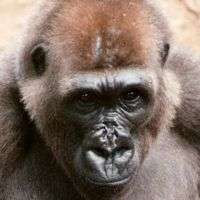
The Wildlife Conservation Society, the Government of Cameroon, and other partners have collaborated to create a new national park to help protect the world's most endangered great ape: the Cross River gorilla.
The park now forms part of an important trans-boundary protected area with Nigeria's Cross River National Park, safeguarding an estimated 115 gorillas—a third of the Cross River gorilla population—along with other rare species. Trans-boundary protected areas allow species to roam freely between countries.
The creation of Takamanda National Park represents many years of work led by WCS and the Ministry of Forestry and Wildlife in Cameroon, including: baseline surveys of gorillas and other large mammals; meetings and agreements with local communities; the formulation of recommendations for upgrading the reserve to park status; and the establishment of trans-boundary activities with the Okwangwo Division of Cross River National Park in Nigeria.
Primary support for the creation of Takamanda National Park comes from a funding partnership between the Ministry of Forestry and Wildlife and the German Development Bank (Kreditanstalt fűr Wiederaufbau Bankengruppe) as part of a 5-year funding program to protect key conservation areas in collaboration with local communities in southwest Cameroon. The initiative was also supported by the World Wildlife Fund, the German Development Service (DED) and the German Technical Cooperation (GTZ).
"The Government of Cameroon is to be commended for taking this step in saving the Cross River gorilla for future generations," said Dr. Steven E. Sanderson, President and CEO of WCS. "By forming this national park, Cameroon sends a powerful message about the importance of conservation."
"This represents a huge step in ensuring a future for the world's rarest great ape," said Dr. James Deutsch, Director of WCS-Africa. "Making this former forest reserve a national park will effectively protect these gorillas and will continue the conservation partnership between Cameroon and Nigeria."
In addition to protecting Cross River gorillas, the 676-square-kilometer (261-square-mile) Takamanda National Park will safeguard populations of forest elephants, chimpanzees, and drills—another rare primate and a close relative of the better-known mandrill.
The Cross River gorilla is the rarest of the four gorilla subspecies. Other subspecies include: western lowland gorillas, eastern lowland or "Grauer's" gorillas, restricted to eastern Democratic Republic of Congo, and mountain gorillas, made famous by Dian Fossey and George Schaller. Earlier this year, WCS scientists discovered more than 125,000 western lowland gorillas in the northern Republic of Congo. WCS is the only conservation group working to safeguard the four subspecies, all of which are classified as "critically endangered" or "endangered" by the IUCN Red List.
Habitat destruction and hunting represent the biggest threats to Cross River gorillas. Gorillas are occasionally targeted by hunters of bushmeat in the region, and genetic analysis of the population reveals a reduction in numbers over the last 200 years that is most likely due to hunting. The fragmentation of their forest habitat is caused by farming, road-building, and the burning of forests by pastoralists.
Cameroon is one of seven African nations supported by the Congo Basin Forest Partnership (CBFP) and the Central African Regional Program for the Environment (CARPE). The U.S. government acting through the Department of State and the U.S. Agency for International Development (USAID) has invested more than $60 million in biodiversity conservation in the Congo Basin. Together, this support has augmented funds for great apes conservation in the region through the U.S. Fish and Wildlife Service administered Great Apes Conservation Fund. Since 2001, the U.S. Fish and Wildlife Service has invested more than $13 million for the conservation of gorillas, chimpanzees, and other great apes and has leveraged more than $17 million in private donations and matching funds. The Great Apes Conservation Fund Act, which authorizes this fund, expires in 2010. WCS will continue to educate the U.S. Congress about the need for increased support for great ape conservation in the upcoming months.
WCS has had a long history in Cameroon which began with WCS scientists being appointed technical advisors at the Korup National Park in 1988. In partnership with the Cameroon Ministry of Forestry and Wildlife and CAMRAIL (the Cameroon Railways), WCS continues to play a critical role in enforcing regulations that ban transportation of bushmeat or any other wildlife products from remote locations to urban markets by local trains. This effort in part has helped Cameroon uphold its obligations as a member nation of the Convention on International Trade in Endangered Species of Wild Fauna and Flora (CITES) and the Convention on Biological Diversity (CBD).
Source: Wildlife Conservation Society


