Brain's magnetic fields reveal language delays in autism
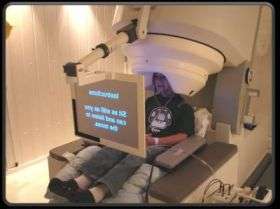
Faint magnetic signals from brain activity in children with autism show that those children process sound and language differently from non-autistic children. Identifying and classifying these brain response patterns may allow researchers to more accurately diagnose autism and possibly aid in developing more effective treatments for the developmental disorder.
Timing appears to be crucial. "Children with autism respond a fraction of a second more slowly than healthy children to vowel sounds and tones," said study leader Timothy Roberts, Ph.D., vice chair of radiology research and holder of the Oberkircher Family Endowed Chair in Pediatric Radiology at The Children's Hospital of Philadelphia. Roberts used a technology called magnetoencephalography (MEG), which detects magnetic fields in the brain, just as electroencephalography (EEG) detects electrical fields.
Roberts presented his findings today at the annual meeting of the Radiological Society of North America in Chicago. "The brain's electrical signals generate tiny magnetic fields, which change with each sensation, and with communication among different locations in the brain," he added.
Roberts is working to develop "neural signatures" that can link recorded brain activity to particular behaviors in children with autistic spectrum disorders (ASDs), which are characterized by impaired development in communications and social functioning. "Our hypothesis is that speech and other sounds come in too fast for children with ASDs, and their difficulties in processing sound may impair their language and communication skills," said Roberts.
Physicians already use MEG to map the locations of abnormal brain activity in epilepsy, but the technology Roberts used is one of the few MEG machines available in a dedicated pediatric facility. In the current study, the researchers evaluated 64 children aged six to 15 at The Children's Hospital of Philadelphia. Thirty children had ASDs, the rest were age-matched, typically developing control subjects.
The MEG machine has a helmet that surrounds the child's head. The researchers presented a series of recorded beeps, vowels and sentences. As the child's brain responded to each sound, noninvasive magnetic detectors in the machine analyzed the brain's changing magnetic fields.
When sounds were presented, the MEG recorded a delay of 20 milliseconds (1/50 of a second) in the brain's response for children with ASDs, when compared with healthy control subjects. "This delay indicates that auditory processing is abnormal in children with autism, and may lead to a cascade of delay and overload in further processing of sound and speech," said Roberts. "Further research may shed light on how this delay in processing sounds may be related to interconnections among parts of the brain." Other testing, measuring a response to mismatched or changed sounds, found longer delays, up to 50 milliseconds (1/20 of a second).
Because autism disorders range across a spectrum of functional abilities, explained Roberts, neural signatures based on brain responses may allow clinicians to more accurately diagnose which subtype of ASD an individual patient has. Such diagnoses may be possible at an earlier age if future studies show that such signatures are detectable in infancy—at younger ages than in the children involved in the current study. "Earlier diagnosis of ASDs may allow clinicians to intervene earlier with possible treatments," said Roberts.
Furthermore, added Roberts, if a patient's neural signature overlaps with that found in another neurological condition, such as epilepsy or attention-deficit hyperactivity disorder, for which a treatment exists, that patient may benefit from such a treatment.
Source: Children's Hospital of Philadelphia


