Discovery of virus in lemur could shed light on AIDS
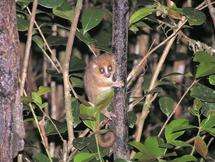
The genome of a squirrel-sized, saucer-eyed lemur from Madagascar may help scientists understand how HIV-like viruses coevolved with primates, according to new research from the Stanford University School of Medicine. The discovery, to be published online on Dec. 1 in the Proceedings of the National Academy of Sciences, could provide insight into why non-human primates don't get AIDS and lead to treatments for humans.
Scientists have long believed that lentiviruses — the family of viruses that includes HIV — started infecting primates within the past million years. In fact, said Rob Gifford, PhD, former postdoctoral researcher in infectious diseases and geographical medicine and lead author of the new study, lentiviruses may have been present in ancestral primates as long as 85 million years ago.
A type of retrovirus, lentiviruses replicate by inserting their RNA into a cell's DNA. Some retroviruses have been known to infect cells that mature into sperm or eggs, incorporating viral DNA into the genome of the host. Until last year, when Gifford discovered Rabbit Endogenous Lentivirus type K among the DNA of the European rabbit, no one knew lentiviruses could be inherited in this way.
"It allows us to put a timeline on the evolution of primate lentiviruses," said Robert Shafer, MD, associate professor (research) of infectious diseases and geographical medicine and senior author of the paper.
Gifford began computer-based screening of the DNA of 21 primates for which at least partial genome sequencing was available. He searched each species for strings of nucleotides that matched the modern lentivirus genome and found one lurking in the DNA of the tiny gray mouse lemur.
Ancestors of the modern lemur colonized Madagascar about 75 million years ago, and since then, lemurs and their lentivirus-carrying African cousins have been evolving separately. Four hundred kilometers of ocean divide the two branches, giving mainland primates limited opportunities to swap germs with lemurs. And the last of the occasional land bridges between the two disappeared beneath the sea 14 million years ago, suggesting that lentiviruses are likely at least that old, say the researchers.
High-end estimates of the age of this lentivirus, called pSIVgml, could range back 85 million years, when the primate family that includes lemurs split from the evolutionary branch that would eventually give rise to monkeys, apes and humans. "Lentiviruses could be very ancient indeed," Gifford said.
Gifford remains cautious about overestimating the virus's age, warning that the virus could have been spread within the last 14 million years by something that could cross the ocean, such as a bat. But Shafer says that sort of cross-species transmission is unlikely, because bats and primates are very distant relatives. The leap from primate to bat and back would be difficult for a lentivirus to make.
Gifford's find suggests lentiviruses could be discovered in other places they've never been seen, like Asian and New World monkeys. "As far as we're aware, nobody's really looked that hard," said Gifford. He is one of few researchers using genome databases to search for retroviruses.
Finding widespread lentivirus-primate interaction might open doors for HIV/AIDS research. Primates infected with the simian version of HIV are protected from developing AIDS by several genes which code for proteins in the immune system that slow or block retroviral reproduction. Previous research suggests these genes evolved in response to millions of years of retrovirus infection.
Until now, scientists thought lentiviruses were too young to have participated in this evolutionary back-and-forth. But if Gifford and his colleagues find more evidence that lentiviruses and primates have been in each other's genetic business for many millions of years, they could turn that assumption on its head. In the process, they might lead the way to a deeper understanding of the evolution of ancient innate immune defenses against retroviruses, which could have implications for HIV treatments or vaccines.
The research "raises a bunch of interesting questions about how mammals have dealt with these types of viruses over a minimum of 14 million years, what kind of defenses they have developed, and why some mammal species have lost these type of viruses," said Beatrice Hahn, PhD, a professor in the department of medicine at the University of Alabama at Birmingham who studies human retroviruses. She hopes to see more research into the presence of lentiviruses in mammal genomes. "This is molecular archaeology," she said. "There may be a lot of gold in these sequences that hasn't been mined yet."
Source: Stanford University Medical Center


