High tunnels yield healthier, prettier produce and longer growing seasons
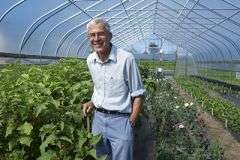
(PhysOrg.com) -- Fred Forsburg's tomatoes are perfect -- tough to do in a certified organic operation where no pesticides, herbicides or fungicides are used. The Livonia farmer's secret: growing tomatoes in high tunnels.
The tunnels are 20-by-100-foot unheated movable plastic structures that each can cover 300 plants. "People eat with their eyes -- when we go to market with tomatoes that look like jewels, they flock to them," says Forsburg of his pink, red, orange, green, yellow and purple tomatoes.
But beauty isn't the only market advantage to high tunnel technology. It can also protect against such devastating diseases as late blight by keeping plants dry, so the fungus can't take root. When it rained almost every day in summer 2004, Forsburg lost all the fruit on his 600 plants … except those in the high polyethylene-covered tunnels.
"I'll never grow a tomato outside the tunnel again," Forsburg says.
High tunnels also produce higher-yielding crops and expand the growing season, says Chris Wien, Cornell professor of horticulture and the leader of high tunnel research projects funded through the New York Farm Viability Institute.
In the six years since New York growers began adopting high tunnels, tomatoes (heat-loving plants that can be trellised vertically and bear continuously) have been the most commercially successful. A 25-pound box of U.S. #1 top-grade tomatoes sells for $40 to $50 wholesale, while field-grown tomatoes (with their unavoidable cracks and slight blemishes) may bring a grower only $5. Wien says he expects the use of high tunnels in New York to return a gain of $500,000 per year in the farm-gate value of the state's horticultural crops by 2010.
Furthermore, when tomatoes are ripe at the same time as strawberries, they can be sold at a premium because people buy them when they see them next to the strawberries they want, says Judson Reid, an extension associate with the Cornell Vegetable Program. Reid assists farmers across the state who want to adopt the technology and has a half-dozen high tunnel vegetable research projects on farms in multiple counties.
These projects are part of a high tunnel project funded by the New York Farm Viability Institute, in which six extension specialists around the state work with 11 growers producing high tunnel vegetables.
"We want to be sure that there's a sustainable system in place by which high tunnel technology is easy to come by, and there's a knowledgeable extension staff available to help," says Wien, who has worked with growers producing diverse crops, including tomatoes, watermelon, cantaloupe, cabbage and onions, using high tunnels up to 300 feet long.
Additional high tunnel research is being conducted by Marvin Pritts, chair of Cornell's horticulture department, who has published the online booklet, "High-Tunnel Raspberries and Blackberries," while Cornell colleagues are starting to study cherries in high tunnels.
The team is also investigating the most profitable sequence of plantings to keep the tunnels on farms full, so customers can return to farm stands and markets all season. Crop rotation keeps the ground healthy; such early bearing crops as cucumbers might perhaps be followed by lettuce or cold-tolerant spinach.
By next winter, Wien expects to have their findings as well as economic data available on a Web site. "Growers who might want to pay for a specific type of high tunnel for growing tomatoes, for example, will be able to go to the Web site and -- before taking any action -- find out how many pounds of fruit they'll need to produce, the price they'll need to get for it, when they'll need to first plant, how late to continue harvesting and more," says Wien.
Provided by Cornell University


