Protein could prevent blocked arteries
December 9, 2008 Protein could prevent blocked arteries

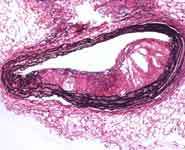
A soluable N-cadherin plaque with more stable phenotype features.

(PhysOrg.com) -- For the first time, researchers have found that a modified form of a naturally occurring protein, N-cadherin, could prevent blocked arteries. Blocked arteries are a major cause of heart attacks and strokes.

The thickening of the artery wall, which occurs due to the build-up of fat and cells in the artery wall leads to the formation of an atherosclerotic plaque. Plaques can eventually break open, or rupture, leading to the formation of a blood clot that can block the artery and possibly lead to a heart attack or stroke. Doctors Cressida Lyon and Sarah George at the Bristol Heart Institute (BHI) have found by making a modified form of cadherin they can stabilise the plaques and prevent them from rupturing.

In this University of Bristol study, published in Arteriosclerosis, Thrombosis and Vascular Biology and funded by the British Heart Foundation (BHF), Dr Lyon investigated the effects of a protein – called N-cadherin – that is produced by cells in the plaque. This protein helps neighbouring cells stick tightly together.

The researchers designed a smaller, soluble, form of N-cadherin that could be transported in the blood stream. They found that soluble cadherin stabilised the plaques, making them less likely to rupture.

Drs Lyon and George said: “This study is the first demonstration that reduction of cell death with soluble N-cadherin can reduce the likelihood of plaque rupture. It highlights soluble N-cadherin as a potential therapeutic for blocked arteries and thereby heart attack and stroke.”

The cellular composition of the plaque is an important factor in the likelihood of plaque rupture. There are two main cell types involved – smooth muscle cells, and inflammatory ‘bad’ white blood cells, called macrophages. Stable plaques contain high numbers of smooth muscle cells while unstable plaques container fewer smooth muscle cells. The smooth muscle cells form a protective cap over the top of the plaque and provide strength to prevent ruptures from occurring. Smooth muscle cell death, which occurs during unstable plaque development, causes a weaker cap and increases the likelihood of rupture. Death of macrophages leads to the attraction of further inflammatory cells, which increases the incidence of plaque rupture.

The researchers found soluble N-cadherin reduced the death of both smooth muscle cells and macrophages in culture and in a model of atherosclerotic plaque formation. This reduction in cell death protected the plaques from rupture and caused a more stable plaque type; the size of the smooth muscle cell-rich cap was increased and fewer macrophages were present.

Dr George added: “Further studies are of course essential, and therefore we and our colleagues are performing longer term experiments and attempting to reduce the size of the molecule to make it more suitable for clinical use.”

The paper: Soluble N-cadherin over-expression reduces features of atherosclerotic plaque instability; Lyon, C.B., Johnson, J.L., Williams, H., Sala-Newby, G.B., and George, S.J, Arteriosclerosis, Thrombosis, and Vascular Biology 2008; (epub). Published online before print November 13, 2008.

Provided by University of Bristol


print this article email this article download pdf blog this article bookmark this article     Stumble it Digg this share on Facebook retweet share on Reddit add to delicious
Rate this story - 4.6 /5 (28 votes)


December 9, 2008 all stories

Comments: 0

4.6 /5 (28 votes)
  • Stumble this up

  • Digg this

  • share this

  • hide
  • Related Stories

  • New strategies for reperfusion therapy
    created Aug 31, 2009 | popularity not rated yet | comments 0
  • Get the world on its feet: The role of exercise training
    created Aug 31, 2009 | popularity not rated yet | comments 0
  • Joslin study identifies protein that produces 'good' fat
    created Aug 20, 2008 | popularity not rated yet | comments 0
  • Study in Circulation provides detail on how low blood flow promotes vascular disease
    created Jun 23, 2008 | popularity not rated yet | comments 0
  • New potential drug target for the treatment of atherosclerosis
    created Mar 04, 2008 | popularity not rated yet | comments 0


  • hide
  • Relevant PhysicsForums posts

  • nesfatin
    created 21 hours ago
  • Obsessive Compulsive Disorder
    created Nov 20, 2009
  • West's zone 2 starling resistor respiratory physiology
    created Nov 18, 2009
  • 50-0-50 rule
    created Nov 18, 2009
  • More from Physics Forums - Medical Sciences

Other News

Systems biology approach provides insulin resistance insights

Systems biology approach provides insulin resistance insights

Medicine & Health / Research

created 17 minutes ago | popularity not rated yet | comments 0

Researchers from the University of California, San Diego recently offered the sharpest-yet picture of how core biochemical pathways in skeletal muscle cells and fat cells are altered in people who suffer from ...


New discovery about the formation of new brain cells

Medicine & Health / Research

created 14 minutes ago | popularity 5 / 5 (1) | comments 0

The generation of new nerve cells in the brain is regulated by a peptide known as C3a, which directly affects the stem cells' maturation into nerve cells and is also important for the migration of new nerve cells through ...


Research reveals exactly how coughing is triggered by environmental irritants

Medicine & Health / Research

created 26 minutes ago | popularity not rated yet | comments 0

Scientists have revealed how environmental irritants such as air pollution and cigarette smoke cause people to cough, in research published today in the American Journal of Respiratory and Critical Care Medicine. The author ...


Diabetics show alarming increase in morbid obesity

Medicine & Health / Health

created 14 minutes ago | popularity not rated yet | comments 0

A Loyola University Health System study has found that one out of five Type 2 diabetics is morbidly obese -- approximately 100 pounds or more overweight.


popcorn

Popcorn at the movies still an unhealthy treat

Medicine & Health / Health

created 2 hours ago | popularity 4 / 5 (1) | comments 1

(PhysOrg.com) -- A study carried out in 1994 by advocacy group CSPI (Center for Science in the Public Interest) found that popcorn being sold by cinema chains in the US was high in saturated fat and calories, ...