Controlling the building blocks of life
December 10, 2008 Controlling the building blocks of life

(PhysOrg.com) -- A simple and reliable method for converting one of the simplest chemical entities into one of the most difficult-to-make molecular building blocks of life, with complete control over its shape, is reported by scientists at the University of Bristol in this week's Nature [11 December].

It will have major implications for the synthesis of drugs and agrochemicals.

Many important molecules required for life exist in two forms that are mirror images of each other – like our left and right hands. This property is called ‘chirality’, from the Greek word for hand, and the two forms are called ‘enantiomers’, from the Greek word for opposite.

The classic example of the drug thalidomide illustrates the difference in biological response to chiral molecules: one of the two enantiomers caused devastating birth defects, whereas its mirror image had the desired sedative properties that doctors’ prescribed it for.

Since this catastrophe, and the subsequent recognition of the importance of the relationship between a small molecule (for example a drug) and its site of action (for example a protein), it has become necessary to test individual enantiomers and not mixtures of the two forms. But a mixture of enantiomers can be very difficult to separate.

Professor Varindar Aggarwal at the University of Bristol has now developed a simple and reliable method for converting one of the simplest chemical entities into one of the most difficult-to-make molecular building blocks of life, with complete control over its shape.

Professor Aggarwal explained the importance of this work: “We live in a chiral world. Indeed, chirality and life are so inextricably linked that the detection of chirality outside our planet is used as a test for extraterrestrial life.

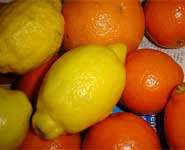
“It is the shape and function of a molecule that gives rise to its properties. For example, the different smell of oranges and lemons comes from two molecules, identical except for their three-dimensional spatial arrangement. Thus being able to control the shape and function of enantiomers is critical to the many applications of organic chemical synthesis.”

This work is likely to find broad application in the synthesis of complex organic molecules, particularly in pharmaceuticals and agrochemicals where such difficult shapes are often encountered.

Aggarwal and colleagues have developed a two-step process that can be used to convert readily available secondary alcohols into single mirror image forms of tertiary alcohols that contain a quaternary stereogenic centre (a carbon atom with four different non-hydrogen substituents). Either mirror image of the tertiary alcohol can be made with very high levels of control over its shape.

Provided by University of Bristol


print this article email this article download pdf blog this article bookmark this article     Stumble it Digg this share on Facebook retweet share on Reddit add to delicious
Rate this story - 4.4 /5 (17 votes)


December 10, 2008 all stories

Comments: 0

4.4 /5 (17 votes)
  • Stumble this up

  • Digg this

  • share this

  • hide
  • Related Stories

  • Babies' language learning starts from the womb
    created Nov 05, 2009 | popularity not rated yet | comments 0
  • New rechargeable zinc-air batteries coming soon
    created Oct 29, 2009 | popularity not rated yet | comments 0
  • Physical scientists will apply laws of physics in cancer fight
    created Oct 26, 2009 | popularity not rated yet | comments 0
  • Calling All Smokers: Cell Phones Could Help You Quit
    created Oct 07, 2009 | popularity not rated yet | comments 0
  • Social background weighs heavily on teenage diet
    created Sep 25, 2009 | popularity not rated yet | comments 0


Other News

Toward home-brewed electricity with 'personalized solar energy'

Toward home-brewed electricity with 'personalized solar energy'

Chemistry / Materials Science

created Nov 04, 2009 | popularity 3.4 / 5 (9) | comments 4

New scientific discoveries are moving society toward the era of "personalized solar energy," in which the focus of electricity production shifts from huge central generating stations to individuals in their ...


Scientists Reproduce a Building Block of Life in Laboratory

Scientists Reproduce a Building Block of Life in Laboratory

Chemistry / Biochemistry

created Nov 06, 2009 | popularity 4.8 / 5 (23) | comments 0

(PhysOrg.com) -- NASA scientists studying the origin of life have reproduced uracil, a key component of our hereditary material, in the laboratory.


Newly Discovered Fat Molecule: An Undersea Killer with an Upside

Newly Discovered Fat Molecule: An Undersea Killer with an Upside

Chemistry / Biochemistry

created Nov 05, 2009 | popularity 4.8 / 5 (10) | comments 0

(PhysOrg.com) -- A chemical culprit responsible for the rapid, mysterious death of phytoplankton in the North Atlantic Ocean has been found by collaborating scientists at Rutgers University and the Woods Hole ...


CU-Boulder map of human bacterial diversity shows wide interpersonal differences

Map of Human Bacterial Diversity Shows Wide Interpersonal Differences

Chemistry / Biochemistry

created Nov 05, 2009 | popularity 4.7 / 5 (11) | comments 0

(PhysOrg.com) -- A University of Colorado at Boulder team has developed the first atlas of bacterial diversity across the human body, charting wide variations in microbe populations that live in different ...


Mimicking nature, scientists can now extend redox potentials

Mimicking nature, scientists can now extend redox potentials

Chemistry / Biochemistry

created Nov 04, 2009 | popularity 4.8 / 5 (5) | comments 0

(PhysOrg.com) -- New insight into how nature handles some fundamental processes is guiding researchers in the design of tailor-made proteins for applications such as artificial photosynthetic centers, long-range ...