Researchers discover new way men can transmit HIV to women
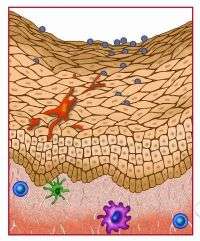
Researchers at Northwestern University have discovered a critical new way a man can transmit the HIV virus to a woman.
Scientists had long believed that the normal lining of the female vaginal tract was an effective barrier to invasion of the HIV virus during sexual intercourse. They thought the large HIV virus couldn't penetrate the tissue.
But new research from Northwestern University's Feinberg School of Medicine has shown for the first time that the HIV virus does indeed penetrate a woman's normal, healthy genital tissue to a depth were it can gain access to its immune cell targets.
"This is an unexpected and important result," said Thomas Hope, principle investigator and professor of cell and molecular biology at the Feinberg School. "We have a new understanding of how HIV can invade the female vaginal tract."
"Until now, science has really had no idea about the details of how sexual transmission of HIV actually works," Hope added. "The mechanism was all very murky."
Hope, his Northwestern colleagues, and collaborators at Tulane University discovered that interior vaginal skin is vulnerable to HIV invasion at the level where it naturally sheds and replaces skin cells, a point where the cells are not as tightly bound together. He will present his findings December 16 at the American Society for Cell Biology 48th annual meeting in San Francisco.
Women and female adolescents now account for 26 percent of all new HIV cases in the U.S., according to the Centers for Disease Control. Based on its most recent analysis of 2005 data, the CDC estimated that there were 56,300 new HIV infections that year and traced 31 percent of the total to high-risk heterosexual contact. More than half of the new cases of HIV infection worldwide are in women.
Hope said he hopes his findings, if confirmed by future studies, will provide information to help develop microbicides and vaccines to protect against HIV.
"We urgently need new prevention strategies or therapeutics to block the entry of HIV through a woman's genital skin," Hope said. While condoms are 100% effective in blocking the virus, "people don't always use them for cultural and other reasons," he noted.
By labeling the HIV viruses with photo-activated fluorescent tags, Northwestern researchers were able to view the virus as it penetrated the outermost lining of the female genital tract, called the squamous epithelium, in female human tissue obtained from a hysterectomy and in animal models.
Researchers found that HIV penetrated the genital skin barrier primarily by moving quickly -- in just four hours -- between skin cells to reach 50 microns beneath the skin, a depth similar to the width of a human hair. This is the depth at which some of the immune cells targeted by HIV are located.
HIV penetration was more common in the outermost superficial layers of skin and likely occurred during the normal turnover and shedding of skin cells. In the shedding process, the skin cells are no longer as tightly bound together so water -- and HIV -- can easily enter.
"As pieces of the skin flake off, that's the loose point in the system where the virus can get in," Hope said.
Previously, scientists thought that the HIV virus invaded a woman's immune system through the single layer of skin cells that line her cervical canal. "That was always thought to be the weak point in the system," Hope said.
However, a previous trial in Africa in which women used a diaphragm to block the cervix did not reduce transmission. Nor are women who have had hysterectomies less vulnerable to contracting HIV through sex.
Hope said researchers had also believed the only way HIV could enter the vaginal tract was if a woman had an open lesion on her skin, for example caused by the herpes virus. When breaks are present in the skin it should be easier for HIV to enter the skin and bind to and infect immune cells. But in studies where women were given anti-herpes drugs to decrease their lesions, there was no decrease in transmission. In light of the new results, it is possible that HIV can enter the vaginal tissue and initiate infection without any physical breaks.
"A big mistake in this field is the idea that transmission only takes place one way," Hope said. "Our perspective is the viruses can infect people in more than one way. We say one of those ways that needs to be in the equation is that the virus can be transmitted directly through the skin."
The next step will be to prove that the virus actually infects the immune cells in the vaginal tract. "A key experiment in the future is to identify the first cells to get infected in the epithelium, which is not necessarily where people would have looked for them before," Hope said.
Source: Northwestern University


