Eyes on the prize
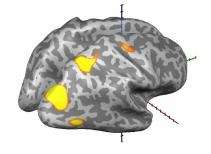
Dollar signs for eyes - cartoonists have been drawing them for years, and the artists, while whimsical, may have been onto something. According to new research from UC San Diego, areas of the brain responsible for vision respond more strongly to objects of value.
Led by John Serences, assistant professor of psychology and head of the Perception and Cognition Lab at UC San Diego, the study is published in the Dec. 26 issue of the Cell Press journal Neuron.
Past rewards influence how humans (and other animals) make decisions. We've known about that for a long time, said Serences - through day-to-day experience as well as the numerous experiments of economists and cognitive psychologists. Though more and more research is looking into it, little is known about how rewards affect the way the brain processes incoming sensory information, specifically as it relates to vision. Could it be that we see things differently if they have paid off before?
Serences examined how value affects visual processing with functional magnetic resonance imaging (fMRI), a brain-scanning technique that indirectly measures neural activity. The brain activity of subjects was recorded as they chose between red and green targets that varied in value across the experiment. Selecting a target might yield 10 cents or nothing, potentially earning subjects making the "right" choices 10 dollars. The fMRI scans were conducted at UC Irvine.
Analysis revealed that rewards altered neural activation in many areas of the human visual system, including the very first visually responsive region of the brain, the area of the cortex known as "V1," which is associated with representing basic features such as edge orientations and color.
"When a target had been valuable in the past - if selecting it had had paid off with money- the visual system represented it more strongly," Serences said. "Rewards affected information processing not just at a high level of cognitive function but right from the get-go."
"Though it is too early to say how this relates to perception," said Serences, "it raises the intriguing possibility that we see things we value more clearly - much like the way the brain responds to a bright object versus a dimly lit one."
Interestingly, changes in neural activity were better associated with the reward history of the red/green targets than with self-reported estimates of value: "It's as if the visual system is telling you how valuable something has been to you in the past," Serences said, "and telling it to you like it is, even though you can't consciously identify it."
The study also found activation in the frontal and parietal regions of the brain previously implicated in anticipating and tracking rewards. These areas were very active when one choice was much more valuable than the other, suggesting, Serences said, that these regions may provide signals to bias visual processing and so have a greater impact on decision-making and behavior.
Further research on how the brain represents the value of different objects, Serences said, could someday help us better understand how addictions influence information processing in the brain. The mere sight of drugs or particular foods, for example, may have a larger impact on the psyches of some people. Their eyes may be on the wrong prize.
Source: University of California - San Diego


