Tequila boom triggers social, environmental hangover in Mexico
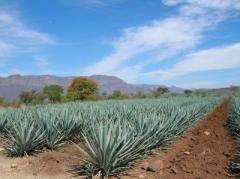
New North Carolina State University research shows that tequila's surge in popularity over the past 15 years has been a boon for industry, but is triggering a significant hangover of social and environmental problems in the region of Mexico where the once-notorious liquor is produced.
Tequila is distilled from the blue agave plant and, according to Mexican law, can only be produced in an area encompassing the state of Jalisco and parts of four other Mexican states. This sort of distinction, known as a "geographical indication" (GI), conveys the geographical origin of a product, as well as its cultural and historical identity. Tequila and other GIs, such as Champagne and Napa Valley wine, are protected by a complicated set of organizations, agreements and laws worldwide that tie production to a specific place - making it impossible to outsource. But the new study, co-authored by NC State's Dr. Sarah Bowen, shows that the tequila GI is neither socially nor ecologically sustainable, and may serve as a lesson for other regions in Asia and the Americas that are currently trying to establish GIs.
The tequila industry has expanded considerably since the early 1990s, more than doubling its production between 1995 and 2005 alone. But a series of factors, including pest and disease infestations and the fact that it takes at least six years for a blue agave plant to progress from planting to harvest, have contributed to significant instabilities in the supply of agave. The supply problems, coupled with a surge in demand, have resulted in companies planting their own agave - rather than relying on independent farmers. This also means that agave is now being grown in areas that are within the tequila GI "zone," but that have not previously been used for agave cultivation. These changes have contributed to a loss of traditional farming practices, such as the practice of pruning agave plants to control for pests. Instead, there has been a significant increase in the use of pesticides and other chemicals.
"Many of these changes are marginalizing independent agave farmers and workers," Bowen says, "undermining the social foundation of the region that relies on the agave and tequila industries." Furthermore, the study shows that the norms that define tequila production do little to preserve traditional tequila production methods. As a result, the social and environmental resources in the Amatitán-Tequila Valley, where tequila production originated over 400 years ago, are under threat.
The study is significant because it provides a case study of how the lack of socioeconomic and ecological sustainability can create a vicious cycle where social concerns exacerbate environmental problems and vice versa. But it also provides some guidance for moving forward. For example, Bowen says, if GIs want to make real contributions to rural development and long-term environmental health, sustainable production practices should be incorporated into the legal framework of the GI itself.
The study, "Geographical indications, terroir, and socioeconomic and ecological sustainability: The case of tequila," was published in the January issue of the Journal of Rural Studies.
Source: North Carolina State University


