Free Exercise and Nutrition Program in Brazil Could Serve as Model in United States
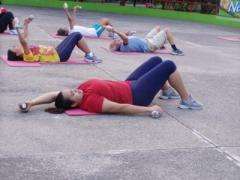
What if free exercise classes were offered in public spaces such as parks, beaches and recreation centers? When a city government in Brazil tried such a program, it greatly increased physical activity among community members. A group of health researchers who studied the program believes it could also work in U.S. cities with warm climates.
"This is the first thorough evaluation of a program of its kind and highlights the importance of renewing public spaces and providing physical activity classes," says Ross C. Brownson, Ph.D., senior author of the study and a professor at the George Warren Brown School of Social Work at Washington University in St. Louis. "This program could serve as a public health model in the United States, particularly across Sun Belt states."
In Recife, the fifth largest city in Brazil, an initiative developed and managed by the city encourages physical activity in 21 public spaces. Physical education instructors teach free calisthenic and dance classes, lead walking groups and provide nutrition information. These activities are offered free of charge each day from 5 - 9 a.m. and from 5 - 9 p.m.
Since 2002, the program, called the Academia de Cidade program (ACP), has enrolled more than 10,000 residents per year and taught 888,000 exercise classes. In the study of the program, researchers found that current and past participants were three times as likely to exercise than residents who had never participated.
The findings are published in the January 2009 issue of the American Journal of Public Health.
The study was a collaboration of Washington University, the U.S. Centers for Disease Control and Prevention (CDC), Brazil's Health Ministry, the Universidade Federal de São Paulo and other Brazilian partners.
Researchers randomly surveyed 2,046 Recife residents by phone about leisure-time physical activity and walking or biking to destinations. They also observed participation and level of physical activity at ACP exercise sites. Additionally, researchers evaluated factors related to exposure to one of the exercise sites, such as living near a site, hearing about or seeing the exercise activities and participating in activities. Rates of moderate-to high-level leisure-time physical activity were 19 percent overall, 26 percent among men and 14 percent among women.
"We think this project is an effective strategy to stimulate life-long exercise," says Eduardo J. Simoes, M.D., first author of the paper and director of the CDC's Prevention Research Centers Program. "Coupled with healthy eating, physical activity can help prevent and control diabetes, hypertension, and heart disease, resulting in improved quality of life and health."
Brownson, also a faculty scholar of Washington University's Institute for Public Health and a professor at the School of Medicine, says he hopes local governments in the United States will someday consider similar programs. "We've seen that providing free, accessible exercise and nutrition programs in an urban setting can benefit thousands of people," he says. "We could take related steps to increase exercise and improve Americans' overall health."
Source: Washington University School of Medicine


