Breakthrough in treating premature babies
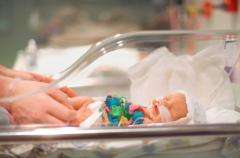
January 14, 2009 premature baby

(PhysOrg.com) -- Adelaide researchers have made a world breakthrough in treating premature babies at risk of developmental disorders.

A six-year study led by Dr Maria Makrides from the Women's and Children's Health Research Institute and Professor Bob Gibson from the University of Adelaide has demonstrated that high doses of fatty acids administered to pre-term infants via their mother's breast milk or infant formula can help their mental development.

The findings were published today in the Journal of the American Medical Association (JAMA).

Researchers found that a major lipid in the brain - the omega-3 fatty acid known as Docosahexaenoic acid (DHA) - is not developed sufficiently in babies born before 33 weeks' gestation, leading to possible impaired mental development.

To counter this, increased doses of DHA (1000mg per day) were administered to lactating mothers with pre-term infants, in the form of tuna oil capsules. If required, infants were given supplementary formula with matching DHA levels.

Of 657 premature babies tested in a trial involving five Australian hospitals, about 50% fewer infants on high-DHA diets had significantly delayed mental development compared with low DHA diets.

Premature girls in particular who were exposed to DHA-rich diets showed much better mental development than girls fed the low DHA diet.

Professor Gibson said his team was at a loss to explain why premature male babies - who are more susceptible to cognitive problems - did not respond to the same extent, with no obvious differences in mental development between the control group and those administered high doses of DHA.

"Boys may have a faster metabolic rate than girls and need higher doses of DHA to make a difference," he said. "We need to do a lot more work in this area to find out why."

Infants weighing less than 1250gm (about a third of a full-term baby's weight) who were fed a high-DHA diet also scored better on the mental development scale, with a 40% reduction in the incidence of mild mental delay.

Provided by University of Adelaide


print this article email this article download pdf blog this article bookmark this article     Stumble it Digg this share on Facebook retweet share on Reddit add to delicious
Rate this story - 4.5 /5 (4 votes)


January 14, 2009 all stories

Comments: 0

4.5 /5 (4 votes)
  • Stumble this up

  • Digg this

  • share this

  • hide
  • Related Stories


  • hide
  • Relevant PhysicsForums posts

  • How to prevent another stroke?
    created Nov 11, 2009
  • Swine flu vaccination
    created Nov 10, 2009
  • Improving the brain through chemistry
    created Nov 07, 2009
  • Sleep / REM Sleep and homeostasis
    created Nov 07, 2009
  • More from Physics Forums - Medical Sciences

Other News

Under Pressure: The Impact of Stress on Decision Making

Medicine & Health / Psychology & Psychiatry

created 15 minutes ago | popularity not rated yet | comments 0

(PhysOrg.com) -- We are faced with making decisions all the time. Often, we will carefully deliberate the pros and cons of each item, taking into consideration past experiences with similar situations before making our ultimate ...


Enhanced plasma shortens time off for injured athletes

Medicine & Health / Other

created 24 minutes ago | popularity not rated yet | comments 0

(PhysOrg.com) -- Injured athletes who have their own enriched plasma injected into their bodies are healing faster and spending less time on the bench or on the disabled list.


A child sleeping (Sleep)

Dreams may have an important physiological function

Medicine & Health / Neuroscience

created 8 hours ago | popularity 3.9 / 5 (10) | comments 7

(PhysOrg.com) -- Dreams have long been assumed to have psychological functions such as consolidating emotional memories and processing experiences or problems, but according to a Harvard psychiatrist and sleep ...


baby mice

Early life stress has effects at the molecular level

Medicine & Health / Neuroscience

created 10 hours ago | popularity 4.8 / 5 (4) | comments 0

(PhysOrg.com) -- A new study of mice suggests that stress and trauma in early life can have an impact on the genes and result in behavioral problems later in life.


Surgeon 'gluing' the breastbone together after open-heart surgery

Surgeon 'gluing' the breastbone together after open-heart surgery

Medicine & Health / Other

created 3 hours ago | popularity not rated yet | comments 0

An innovative method is being used to repair the breastbone after it is intentionally broken to provide access to the heart during open-heart surgery. The technique uses a state-of-the-art adhesive that rapidly ...