The Human Factor: Understanding the Sources of Rising Carbon Dioxide
(PhysOrg.com) -- Every time we get into our car, turn the key and drive somewhere, we burn gasoline, a fossil fuel derived from crude oil. The burning of the organic materials in fossil fuels produces energy and releases carbon dioxide and other compounds into Earth's atmosphere. Greenhouse gases such as carbon dioxide trap heat in our atmosphere, warming it and disturbing Earth's climate.
Scientists agree that human activities have been the primary source for the observed rise in atmospheric carbon dioxide since the beginning of the fossil fuel era in the 1860s. Eighty-five percent of all human-produced carbon dioxide emissions come from the burning of fossil fuels like coal, natural gas and oil, including gasoline. The remainder results from the clearing of forests and other land use, as well as some industrial processes such as cement manufacturing. The use of fossil fuels has grown rapidly, especially since the end of World War II and continues to increase exponentially. In fact, more than half of all fossil fuels ever used by humans have been consumed in just the last 20 years.
Human activities add a worldwide average of almost 1.4 metric tons of carbon per person per year to the atmosphere. Before industrialization, the concentration of carbon dioxide in the atmosphere was about 280 parts per million. By 1958, the concentration of carbon dioxide had increased to around 315 parts per million, and by 2007, it had risen to about 383 parts per million. These increases were due almost entirely to human activity.
While we are able to accurately measure the amount of carbon dioxide in the atmosphere, much about the processes that govern its atmospheric concentration remains a mystery. Scientists still do not know precisely where all the carbon dioxide in our atmosphere comes from and where it goes. They want to learn more about the magnitudes and distributions of carbon dioxide's sources and the places it is absorbed (sinks). This knowledge will help improve critical forecasts of atmospheric carbon dioxide increases as fossil fuel use and other human activities continue. Such information is crucial to understanding the impact of human activities on climate and for evaluating options for mitigating or adapting to climate change.
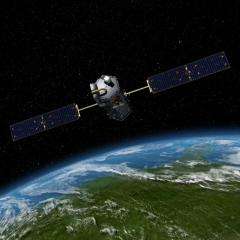
Scientists soon expect to get some answers to these and other compelling carbon questions, thanks to the Orbiting Carbon Observatory, a new Earth-orbiting NASA satellite set to launch in early 2009. The new mission will allow scientists to record, for the first time, detailed daily measurements of carbon dioxide, making more than 100,000 measurements around the world each day. The new data will provide valuable new insights into where this important greenhouse gas is coming from and where it is being stored.
Before humans began emitting significant amounts of carbon dioxide into the atmosphere, the atmospheric uptake and loss of carbon dioxide was approximately in balance. "Carbon dioxide in the atmosphere remained pretty stable during the pre-industrial period," said Gregg Marland of Oak Ridge National Laboratory in Oak Ridge, Tenn. "Carbon dioxide generated by human activity amounts to only about four percent of yearly atmospheric uptake or loss of carbon dioxide, but the result is that the concentration of carbon dioxide in the atmosphere has been growing, on average, by four-tenths of one percent each year for the last 40 years. Though this may not seem like much of an influence, humans have essentially tipped the balance of the global cycling of carbon. Our emissions add significant weight to one side of the balance between carbon being added to the atmosphere and carbon being removed from the atmosphere.
"Plant life and geochemical processes on land and in the ocean 'inhale' large amounts of carbon dioxide through photosynthesis and then 'exhale' most of it back into the atmosphere," Marland continued. "Humans, however, have altered the carbon cycle over the last couple of centuries, through the burning of fossil fuels that enable us to live more productively. Now that humans are acknowledging the environmental effects of our dependence on fossil fuels and other carbon dioxide-emitting activities, our goal is to analyze the sources and sinks of this carbon dioxide and to find better ways to manage it."
Current estimates of human-produced carbon dioxide emissions into the atmosphere are based on inventories and estimates of where fossil fuels are burned and where other carbon dioxide-producing human activities are occurring. However, the availability and precision of this information is not uniform around the world, not even from within developed countries like the United States.
The Orbiting Carbon Observatory's highly sensitive instrument will measure the distribution of carbon dioxide, sampling information around the globe from its space-based orbit. Though the instrument will not directly measure the carbon dioxide emissions from every individual smokestack, tailpipe or forest fire, scientists will incorporate the observatory's global measurements of varying carbon dioxide concentrations into computer-based models. The models will infer where and when the sources are emitting carbon dioxide into the atmosphere.
"The Orbiting Carbon Observatory data differ from that of other missions like the Atmospheric Infrared Sounder instrument on NASA's Aqua satellite by having a relatively small measurement 'footprint,'" said Kevin Gurney, associate director of the Climate Change Research Center at Purdue University in West Lafayette, Ind. "Rather than getting an average amount of carbon dioxide over a large physical area like a state or country, the mission will capture measurements over scales as small as a medium-sized city. This allows it to more accurately distinguish movements of carbon dioxide from natural sources versus from fossil fuel-based activities."
"Essentially, if you visualize a column of air that stretches from Earth's surface to the top of the atmosphere, the Orbiting Carbon Observatory will identify how much of that vertical column is carbon dioxide, with an understanding that most is emitted at the surface," said Marland. "Simply, it will act like a plane observing the smoke from forest fires down below, with the task of assessing where the fires are and how big they are. Compare that aerial capability with sending a lot of people into the forest looking for fires. In this vein, the observatory will use its vantage point from space to peer down and capture a picture of where the sources and sinks of carbon dioxide are, rather than our cobbling data together from multiple sources with less frequency, reliability and detail."
Gurney believes the Orbiting Carbon Observatory will also complement a NASA/U.S. Department of Energy jointly-funded project he is currently leading called Vulcan.
"Vulcan estimates the movement of carbon dioxide through the combustion of fossil fuels at very small scales. Vulcan and the Orbiting Carbon Observatory together will act like partners in closing the carbon budget, with Vulcan estimating movements in the atmosphere from the bottom-up and the Orbiting Carbon Observatory estimating sources from the top-down," he said. "By tackling the problem from both perspectives, we'll stand to achieve an independent, mutually-compatible view of the carbon cycle. And the insight gained by combining these top-down and bottom-up approaches might take on special significance in the near future as our policymakers consider options for regulating carbon dioxide across the entire globe."
For more information on this topic, see: www.nasa.gov/oco .
Provided by Jet Propulsion Laboratory


