Keeping cool using the summer heat
January 23, 2009 Keeping cool using the summer heat

Enlarge

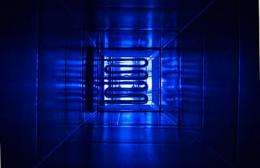
Internal heating element from CSIRO designed Climate Testing Rig. Image: CSIRO

(PhysOrg.com) -- While most Australians are taking care to shield themselves from the harsh summer heat, scientists from the CSIRO Energy Transformed Flagship are working on ways to harness the sun’s warmth to cool our homes and offices.

The leader of the Flagship’s solar cooling research project, Dr Stephen White, says significant greenhouse gas savings can be achieved in air conditioning by using energy from the sun.

“Solar cooling utilises heat from solar thermal collectors to generate cooling for building air-conditioning,” he says.

“Most conventional mechanical air conditioners use high-emission electricity derived from fossil fuels to provide the energy to compress a refrigerant and cool a building. This typically accounts for 20-30 per cent of building energy consumption and greenhouse gas emissions.”

Solar cooling consumes less electricity when compared to a conventional mechanical air conditioner and lower electricity consumption results in lower greenhouse gas emissions.

“The solar cooling technology we are developing directly uses the natural heat from the sun to power a thermally-driven cooling process,” he says.

“While using heat to cool sounds like a strange concept, the technology we are developing is able use that heat in conjunction with an absorbent material - or desiccant - to dehumidify and cool air. This new type of desiccant cooling promises to be simpler and more cost effective than absorption chillers.”

Sunshine is perhaps the nation’s most abundant renewable resource with Australia experiencing the highest incidence of solar radiation in the world. Coincidentally, on those days when the sun is shining the brightest, demand for air conditioning is at its highest.

“In this way, solar cooling has the potential to reduce peak demand on the electricity grid by reducing the amount of electricity that is required to meet those air conditioning demands on the hottest days of the Australian summer,” Dr White says.

“Solar cooling technology is uniquely suited to our climate and as the technology develops, it is likely to make an important contribution to the development of future zero-emissions buildings.”

Provided by CSIRO


print this article email this article download pdf blog this article bookmark this article     Stumble it Digg this share on Facebook retweet share on Reddit add to delicious
Rate this story - 3.8 /5 (6 votes)

Rank Filter

Move the slider to adjust rank threshold, so that you can hide some of the comments.


Display comments: newest first

  • jonnyboy - Jan 24, 2009
    • Rank: 5 / 5 (2)
    High on propaganda

    Low on details
  • DGBEACH - Jan 24, 2009
    • Rank: not rated yet
    Why not use a sterling engine to compress the coolant instead of electricity? Sterling engines LOVE the sun :)
  • Royale - Aug 15, 2009
    • Rank: not rated yet
    Tis a neat idea.. I hope they make something out of it.. heat is so easy to create, it's the absence of heat that's the problem..

January 23, 2009 all stories

Comments: 3

3.8 /5 (6 votes)
  • Stumble this up

  • Digg this

  • share this

  • hide
  • Related Stories

  • Color-changing roof tiles absorb heat in winter, reflect it in summer
    created Oct 08, 2009 | popularity not rated yet | comments 0
  • Reducing demand can lower electric bills, lessen chance of blackouts
    created Jun 09, 2008 | popularity not rated yet | comments 0
  • Environmental program helps companies save energy
    created Jun 15, 2009 | popularity not rated yet | comments 0
  • Researchers closer to the ultimate green 'fridge magnet'
    created May 15, 2009 | popularity not rated yet | comments 0
  • For Refrigeration Problems, a Magnetically Attractive Solution
    created Jan 28, 2009 | popularity not rated yet | comments 0


  • hide
  • Relevant PhysicsForums posts

  • Control System
    created Nov 24, 2009
  • Base Isolation Systems in Skyscrapers?
    created Nov 23, 2009
  • Need to interview a Computer Hardware Engineer for school project
    created Nov 23, 2009
  • transient heat transfer
    created Nov 23, 2009
  • More from Physics Forums - General Engineering

Other News

Internet activists push for greater democracy

Technology / Internet

created 49 minutes ago | popularity not rated yet | comments 0

(AP) -- The Internet can be a powerful medium for politicians to get their message across but it is also a vital means for civilians to have a say in what politicians do, participants in a political conference say.


Time Inc., Conde Nast and Hearst are preparing to launch an online newsstand described as an "iTunes for magazines"

Magazine publishers creating 'iTunes for magazines': reports

Technology / Internet

created 29 minutes ago | popularity not rated yet | comments 0

US magazine publishers Time Inc., Conde Nast and Hearst are preparing to launch an online newsstand described as an "iTunes for magazines," according to published reports.


ORNL 'deep retrofits' can cut home energy bills in half

ORNL 'deep retrofits' can cut home energy bills in half

Technology / Energy

created 1hour ago | popularity 5 / 5 (1) | comments 0

(PhysOrg.com) -- Oak Ridge National Laboratory has announced plans to conduct a series of deep energy retrofit research projects with the potential to improve the energy efficiency in selected homes by as ...


Design chosen for British 1,000 mph car

Design chosen for British 1,000 mph car (w/ Video)

Technology / Engineering

created 10 hours ago | popularity 4 / 5 (4) | comments 5

(PhysOrg.com) -- A British team hoping to be the first to get a car to 1,000 mph (1,610 km/h) has made its final design selection. The six-tonne car, known as the Bloodhound, will be powered by a Eurofighter ...


Time Warner Cable asks help on rising program fees

Technology / Business

created 1hour ago | popularity 5 / 5 (1) | comments 0

(AP) -- Time Warner Cable Inc. is asking the public for help as it tries to curtail increases in the programming fees it has to pay to carry cable channels and broadcast stations on its systems.