First Gene Discovered for Most Common Form of Epilepsy
(PhysOrg.com) -- An international team of researchers, led by investigators at Columbia University Medical Center, has uncovered the first gene linked to the most common type of epilepsy, called Rolandic epilepsy. One out of every five children with epilepsy is diagnosed with this form, which is associated with seizures starting in one part of the brain.
Results of the study were published in an advance online issue of the European Journal of Human Genetics on January 28, 2009.
The finding is the first step in unlocking the causes of common childhood epilepsies and developing more effective treatments. Children with Rolandic and other types of epilepsies are usually treated with drugs that prevent seizures by suppressing electrical activity in the entire brain.
"Epilepsy medications are effective for many children but there is concern that some of the cognitive and behavioral problems that children with epilepsy often suffer might be attributable in part to these drugs," says the study's senior author, pediatric neurologist Deb Pal, M.D., Ph.D., Columbia University research scientist in the Department of Psychiatry at the College of Physicians & Surgeons and at the Mailman School of Public Health and in the Division of Epidemiology at the New York State Psychiatric Institute. "Most epilepsies have a genetic influence, much of which has yet to be discovered. If we knew the actual genetic causes, then we could try to stop or reverse the processes that lead to seizures and other neurological impairments. This finding will hopefully help lead us to the right intervention."
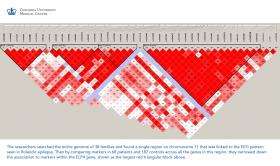
In the study, the researchers searched the entire genome of 38 families and found a region on chromosome 11 that was linked with Rolandic epilepsy. Then, by comparing this region in people with Rolandic epilepsy to unaffected controls (255 people in total), the researchers pinpointed the gene, called ELP4.
The finding was replicated in a completely different set of patients and controls collected by the team's Canadian members, with the same result. Though Dr. Pal says an outside group still needs to replicate the findings, the two independent experiments provide strong evidence that ELP4 is truly linked to Rolandic epilepsy.
ELP4 has never before been linked to a human disease but is related to a group of genes (transcriptional regulators) that recently have been associated with other common forms of epilepsy. All these genes appear to influence the organization of brain circuits during development.
The discovery of genes like ELP4 are slowly altering the prevailing view of the cause of common epilepsies. Instead of stemming from changes in the brain's ion channels, as previously thought, the disorders likely stem from the way the brain's neurons connect to each other during development, researchers now believe.
With that perspective, it is not surprising that children with epilepsy often have other learning and behavior problems. "We shouldn't think of epilepsy as just about the seizures, but also about all the other brain impairments we see, like a delay in speaking, reading difficulties, and attention problems," Dr. Pal says. "Seizures are one, but not the only, consequence of these children's slightly altered brain development."
The findings also offer possible insights into the causes of attention deficit hyperactivity disorder (ADHD), speech dyspraxia (a speech disorder in which a person has a delay in speech development due to motor coordination difficulties), and developmental coordination disorder (DCD). Children with these developmental disorders often have the same spiky brainwave pattern that is present in children with Rolandic epilepsy. Understanding how the ELP4 gene is related to the brainwave pattern may help researchers uncover the causes of these disorders.
Rolandic epilepsy, named for the region of the brain affected by the seizures, begins almost exclusively in children between the ages of 3 and 12. Seizures typically start in the morning just after the child wakes up and cause a loss of muscle tone in the face and a loss of speech. Seizures stop on their own after several minutes. Most children grow out of the disorder by adolescence.
Provided by Columbia University


