Hard times bring on ‘Lipstick Effect’
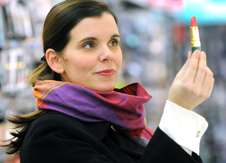
(PhysOrg.com) -- Lipstick and takeout food are not a panacea for dwindling retirement accounts and the anxiety of global economic woes.
But they can serve as mood enhancers for consumers in today’s down economy, said assistant marketing professor Nancy Upton, an expert in the effects of mood on consumer behavior. This is has been the case during other periods of economic strain, including the Great Depression, as well.
Upton says consumers under pressure still want to feel good, so they buoy their spirits in little ways. They eschew the major purchases, like automobiles, homes, and luxury items. Instead, they buy quick pick-me-ups, like lipstick or takeout food, or spend their money on practical items that can be justified, she says.
“During the Depression, we saw something referred to as the ‘Lipstick Effect,’ which showed an increase in the consumer purchase of cosmetics, especially lipstick,” she says. “What we saw was a consumer trying to make themselves feel better through small, indulgent, hedonic consumption.”
Today, some similar patterns can be observed, she adds.
L’Oreal cosmetics continues to report strong sales, as do fast-food restaurants like McDonalds, she says. And justifiable expenses for “risk averse” consumers have driven the purchase of snow blowers to record highs, she adds. “Recession makes people more risk averse,” she says. “We’re seeing the purchase of snow blowers is off the charts right now. People are buying so many $2,000 snow blowers that I understand Home Depot is running out of stock.”
Unlike a luxury good, a snow blower is a justified expense, one that plays into increased nesting trends that also occur during recessions, she adds. “If you’ve lost your job, there’s a tendency to spend more time at home. We tend to see an increase in home-related purchases, which could include kitchen goods, and in-home craft items,” she notes.
Also entering the consumer mix is a wealthy segment of the population that has been unaffected by the economic downturn. Upton notes that Ferrari is having a good year.
And locally, one high-end retail store reported to her that same-store sales figures have stayed the same. Although there are fewer shoppers, they’re buying more.
The lion’s share of shoppers is striking a compromise with their purchases, she says. Rather than go to a high-end restaurant, they may grab takeout on their way home from work. “They know it’s cheaper to eat at home, but they’re driving home at 7 o’clock at night because they had to work late, and they’re looking for a way to pick up their mood,” Upton says. With the Lipstick Effect of the Great Depression, a woman would attempt to mood regulate by stopping off at a drug store and picking up a red lipstick, she says.
Upton, who joined Northeastern’s faculty in 2007, has authored several papers on consumer mood and behaviors. They include, “Should I stay or should I go? Mood congruity, self-monitoring and retail context preference,” published in 2007 in the Journal of Business Research, and “Putting Your Best Face Forward: The Impact of Customer Mood on Salesperson Evaluation,” published in 2006 in Journal of Consumer Psychology.
Forthcoming is “Customer Experience Management in Retailing: Understanding the Buying Process,” in Journal of Retailing.
Upton, who earned her doctorate at Harvard, says moods that drive consumer spending are not always intuitive or rational. “The Wall Street Journal had a big article on consumer spending and noted that it dropped long before there was any economic evidence that there was going to be a problem,” Upton says. “Some consumers have an irrational risk-aversion behavior because they’re anticipating a drop in their own economic status, whether it’s real or not.”
Provided by Northeastern University


