Biodiversity passes the taste test and is healthier too
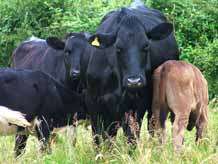
(PhysOrg.com) -- Cattle and sheep grazed on natural grasslands help maintain biodiversity and produce tastier, healthier meat, according to a study by the University of Exeter. The research concludes that pasture-based farming is good for the environment, the consumer and the producer but needs stronger support from British policy makers if it is to realise its full potential.
Funded by the Economic and Social Research Council (ESRC), the research is part of the Rural Economy and Land Use (RELU) programme which draws together the social and natural science.
Detailed analysis of the nutritional qualities of the plant species present on the natural grasslands showed that they provided grazing animals with a richer more diverse diet than the improved pastures used for more intensive farming. And this richer diet translated into tastier meat.
The taste panels rated biodiverse beef from cattle breeds such as Longhorn - a traditional breed particularly well adapted to unimproved grassland environments - to be more tender and more flavour intense than meat from conventional breeds.
Chemical analysis showed that the meat from animals with a more biodiverse diet was healthier too. Meat from wild-grazed lambs, particularly those grazed on heather, had higher levels of the natural antioxidant, vitamin E, than meat from animals grazed on improved grass land. It also had higher levels of healthy fatty acids including the long chain omega 3 fatty acid, DHA, thought to play a key role in brain development and to protect against heart disease. And higher levels of the anti-carcinogenic compound, conjugated linoleic acid (CLA) were found in meat from lambs grazed on moorland and Longhorn cattle grazed on unimproved pastures than in control meat.
The study was inspired by observations of French rural communities where there is a long standing tradition of associating the ecological quality of the land with the quality of the food produced on it. Professor Henry Buller of the University of Exeter’s School of Geography, Archaeology and Earth Resources, leader of the research team, explains: “Many French farmers actively maintain the biodiversity of their grasslands in order to protect the future of the high quality food produced from it. We wanted to know if this approach could provide a model for more sustainable farming in the UK.”
Although intensive agriculture dominates the British countryside, a growing number of farms are using natural and species-rich grasslands such as salt marshes, heather and moorland to graze cattle, sheep and lambs.
Professor Buller points out that the French have a long history of linking the qualities of a particular area with high value produce through such schemes as the Appellation d’Origine Controlée and more recently through the Protected Food Names legislation introduced in 1993 by the European Union.
The findings from the focus groups in this study showed clearly that consumers are increasingly willing to pay for food with links to natural sounding places. But Britain has been very slow to take advantage of place-based labelling schemes - while France has 52 protected designations for meat products, the UK has only eight.
According to Professor Buller both producers and policy makers should give serious attention to the way we label and promote local foods in the UK. There should be targeted support to help groups of farmers to work together to link the natural qualities of biodiverse grasslands to areas larger than individual farms: “The British notion of local has become far too fixed on distance. Locality should be about the quality of the place and the relationship between the agricultural and ecological landscape,” he says.
Provided by University of Exeter


