Decoding funny faces to detect disease
Like Russell Crowe's character in A Beautiful Mind, life is often difficult for the 2.4 million Americans with schizophrenia. A late or incorrect diagnosis and the lack of effective treatment options can destroy a sufferer's quality of life.
Schizophrenia usually emerges between the ages of 18 and 30, but diagnosis before the disease manifests could be the key to developing more successful treatments, says Prof. Talma Hendler, of Tel Aviv University's Department of Psychology.
Until now, detecting mental illness before symptoms appear has been nearly impossible. Building on her groundbreaking work on facial recognition and brain imaging, Prof. Hendler is hoping to make early diagnosis a reality by identifying the physical markers of mental illness — particularly schizophrenia — inside the brain.
"With better diagnosis, plus earlier and more disease-specific treatment, we can make a real difference in the lives of these patients," Prof. Hendler says.
Mapping The Brain
For years, the mechanism behind the abnormal social behavior that characterizes many schizophrenic patients has been a mystery. To study the physical manifestation of schizophrenia, Prof. Hendler used brain imaging to illustrate differences between the brain activity of schizophrenic patients and healthy adults. Her work is part of the Functional Human Brain Mapping project at Tel Aviv University, Prof. Hendler's findings, published recently in the journal Human Brain Mapping, showed that when presented with photographs of emotional faces with "bizarre" characteristics, the brains of schizophrenic patients were much less reactive than established norms.
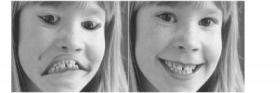
In her previous research published in the journal Neuron, when shown a bizarre "funny face", healthy minds respond with selective activity within the brain, sounding the alarm that there is something disturbing about the image. Prof Hendler then posited that although this selective response is found in visual areas, it has distributed effects in the brain; "The visual areas of the brain are highly connected to other areas, including the prefrontal cortex and the amygdala, but in schizophrenic patients, there is a diminished connection between the various parts, leading to disturbed integration of information — and thus to distorted experiences," she says.
Developing Early Screening Processes and Better Treatments
"Recognizing facial emotions is a very early process, so young children could be screened for a predisposition to mental disease by measuring their brain connectivity while detecting emotional cues," Prof. Hendler explains. An objective early marker of the disease would be especially useful for those already considered high risk, such as children with an immediate family member with the disease. With early diagnosis to guide individually tailored treatment, it may be possible to reduce the effect of the disease and, in some cases, even prevent its outbreak.
By identifying the physical characteristics of a mental disorder, Prof. Hendler is also paving the way for new types of treatment. "Current drugs treat the abnormal behavior, not the brain disorder that is causing the behavior," she says, "We want to be able to develop more specific treatments based on objective brain markers, which are the actual characteristics of the disease."
Prof. Hendler's work has been published in leading journals in the field of cognitive neuroscience such as the Journal of Neuroscience and the Journal of Cognitive Neuroscience Neuroimage and Neuron. She is currently also working on using brain imaging to characterize and identify predispositions for post-traumatic stress disorder in soldiers.
Future work with "funny faces" will also look at basic human emotions such as shame, envy and guilt. Having a neural marker for these emotions might give clinicians an early-detection tool to spot abnormalities in social interactions. Problems in socializing are a hallmark of schizophrenia.
Source: American Friends of Tel Aviv University


