Discovery could lead to better rice yields
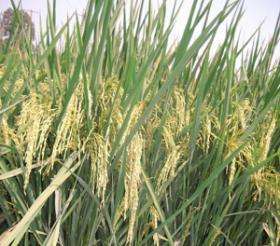
(PhysOrg.com) -- Building on plant virus research started more than 20 years ago, a biologist at Washington University in St. Louis and his a colleague at the Donald Danforth Plant Science Center in St. Louis have discovered a technology that reduces infection by the virus that causes Rice Tungro Disease, a limiting factor of rice production in Asia.
Roger N. Beachy, Ph.D., WUSTL professor of biology in Arts & Sciences and president of the Donald Danforth Plant Science Center, and Danforth Center research scientist Shunhong Dai, Ph.D., demonstrated that transgenic rice plants that overexpress either of two rice proteins are tolerant to infection caused by the rice tungro bacilliform virus (RTVB), which is largely responsible for the symptoms associated with Rice Tungro disease.
The two proteins, RF2a and RF2b were discovered in Beachy's lab several years ago and are transcription factors known to be important for plant development; the new data suggest that they may be involved in regulating defense mechanisms that protect against virus infection. The discovery, published in the December 22, 2008 issue of the Proceedings of the National Academy of Sciences, may open new avenues in the search for disease resistance genes and pathways in plants and other organisms.
Plant viral diseases cause serious economic losses in agriculture, second only to those caused by fungal diseases. Rice Tungro disease is prevalent primarily in south and southeast Asia and accounts for nearly $1.5 billion annual loss in rice production worldwide. Preventing the occurrence and spread of this virus could result in increased yields ranging from five and 10 per cent annually in affected areas.
"Rice Tungro disease is complex and requires interactions between two different viruses, an insect vector and the host. It has taken a great deal of research effort through the years to gain sufficient information and knowledge about the virus and the host to come to the point of developing a type of resistance to the disease. Hopefully, the results of these studies will lead to improved yields of rice in areas of the world most affected by the disease," said Beachy,
Beachy and Dai's research laboratory and greenhouse findings conducted in St. Louis were confirmed in a greenhouse trial conducted in partnership with the Philippine Rice Research Institute. This breakthrough provides a clearer understanding of how these two specific transcription factors 'turn on' specific genes in rice plants as well as which proteins help the virus complete the cycle of infection. Understanding the development of disease symptoms is critical for engineering plants that can resist the biological effects of viral pathogen infection.
Virus infections alter gene expression and physiological status in the host, resulting in disease symptoms. Although viruses are relatively simple genetically speaking, little is known about the mechanisms that underlie the development of disease symptoms caused by viral pathogens.
A major challenge for the treatment or prevention of viral infections is the identification of specific factors in host organisms that contribute to disease susceptibility and symptoms. Some of these factors include genetic and biochemical pathways and gene expression that influence multiple aspects of host biology.
In this case of Rice Tungro disease, viral infection is commonly transmitted by the green leafhopper. Combining genes that overexpress RF2a and RF2b with genes that provide resistance to the insect vector could generate new rice varieties with significantly improved resistance to Rice Tungro disease in vulnerable regions in the world.
Source: Washington University in St. Louis


