Dangerous laser printer particles identified
February 11, 2009
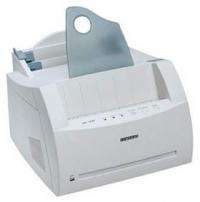
Laser printer

The identity and origin of tiny, potentially hazardous particles emitted from common laser printers have been revealed by a new study at Queensland University of Technology.

Professor Lidia Morawska from QUT's International Laboratory for Air Quality and Health lead the study to answer questions raised by earlier findings that almost one third of popular laser printers emitted large numbers of ultrafine particles.

These tiny particles are potentially dangerous to human health because they can penetrate deep into the lungs.

Professor Morawska said the latest study found that the ultrafine particles formed from vapours produced when the printed image is fused to the paper.

"In the printing process, toner is melted and when it is hot, certain compounds evaporate and those vapours then nucleate or condense in the air, forming ultrafine particles." she said

"The material is the result of the condensation of organic compounds which originate from both the paper and hot toner."

The study compared a high emitting printer with a low emitting printer and found that there were two ways in which printers contributed to the formation of these particles.

"The hotter the printer gets, the higher the likelihood of these particles forming, but the rate of change of the temperature also contributes," Professor Morawska said.

"The high emitting printer operated at a lower average temperature, but had rapid changes in temperature, which resulted in more condensable vapour being emitted from the printer.

"The printer with better temperature control emitted fewer particles"

Professor Morawska said this research provided information which would help consumers better understand the risks of laser printers and would help the printer industry to design low or no emission printers.

More information: An Investigation into the Characteristics and Formation Mechanisms of Particles Originating from the Operation of Laser Printers, Environ. Sci. Technol., Article ASAP, DOI: 10.1021/es802193n, http://pubs.acs.or … 21/es802193n

Source: Queensland University of Technology

4.7 /5 (14 votes)  

Filter


Move the slider to adjust rank threshold, so that you can hide some of the comments.


Display comments: newest first

zbarlici
Feb 11, 2009

Rank: 5 / 5 (1)
wow... imagine how many corporate offices have laser printers installed...
googleplex
Feb 12, 2009

Rank: not rated yet
Most organizations have a print center. In the USA we have Kinko's which are retail print centers. I would imagine that the particulate count is very high in these locations. One would expect the morbidity (sick) rate of workers in these places to be high. I imagine that once these particles enter the lungs they are not filtered and enter the blood stream.
I have noticed an increase in research on nano polution e.g. diesel smog, candle smoke and laser printer emmissions. The problem with all these is that the nano particles are not filtered by the lungs as it is too fine. Therefore it enters the blood stream and permiates the host. The last line of defense is then the phospholipid bilayer that encapsulates most cells.
Rank 4.7 /5 (14 votes)
Related Stories
Relevant PhysicsForums posts

More news stories

Study finds that anti-diabetic medication can prevent the long-term effects of maternal obesity

In a study to be presented today at the Society for Maternal-Fetal Medicine's annual meeting, The Pregnancy Meeting, in Dallas, Texas, researchers will report findings that show that short therapy with the anti-diabetic medication ...

Medicine & Health / Health

created 23 hours ago | popularity 5 / 5 (1) | comments 1

FDA-approved drug rapidly clears amyloid from the brain, reverses Alzheimer's symptoms in mice

Neuroscientists at Case Western Reserve University School of Medicine have made a dramatic breakthrough in their efforts to find a cure for Alzheimer's disease. The researchers' findings, published in the journal Science, show t ...

Medicine & Health / Neuroscience

created Feb 09, 2012 | popularity 4.9 / 5 (53) | comments 21 | with audio podcast

Green tea found to reduce disability in the elderly

(Medical Xpress) -- A lot of research has been done over the past several years looking into the health benefits of green tea. As a result, scientists have found that regular consumption of the beverage leads ...

Medicine & Health / Health

created Feb 07, 2012 | popularity 4.4 / 5 (14) | comments 11 | with audio podcast report

Teen school drop-outs three times as likely to be on benefits in later life

Teen school drop-outs are almost three times as likely to be on benefits in later life as their peers who complete their schooling, indicates research published online in the Journal of Epidemiology and Community Health.

Medicine & Health / Health

created Feb 06, 2012 | popularity not rated yet | comments 12

To perform with less effort, practice beyond perfection

Whether you are an athlete, a musician or a stroke patient learning to walk again, practice can make perfect, but more practice may make you more efficient, according to a surprising new University of Colorado Boulder study.

Medicine & Health / Neuroscience

created Feb 09, 2012 | popularity 4.4 / 5 (15) | comments 6 | with audio podcast


Google might launch Drive for cloud storage soon

(PhysOrg.com) -- Google's next big move, according to the Wall Street Journal, is a cloud storage service called Drive. Hardly first to the plate, Google is simply catching up to introducing its cloud reposi ...

Latin America mining boom clashes with conservation

Latin America is experiencing a mining boom as prices rise fuelled by a hike in global demand, but the region is also being hit by a wave of violent protests, strikes and rallies by environmentalists.

Walney offshore wind farm is world's biggest (for now)

(PhysOrg.com) -- The Walney wind farm on the Irish Sea--characterized by high tides, waves and windy weather--officially opened this week. The farm is treated in the press as a very big deal as the Walney ...

Love a click away in Indonesia's Twitter Republic

He was a geeky kid from Yogyakarta, she a glamorous city girl in Jakarta. In a country with one of the world's most vibrant social networking scenes they fell in love on Twitter.

GPS court ruling leaves US phone tracking unclear

A US Supreme Court decision requiring a warrant to place a GPS device on the car of a criminal suspect leaves unresolved the bigger issue of police tracking using mobile phones, legal experts say.

Europeans protest controversial Internet pact

Tens of thousands of people marched in protests in more than a dozen European cities Saturday against a controversial anti-online piracy pact that critics say could curtail Internet freedom.