Diagnosis of 'war-zone disorder' to help stroke victims
The recovery of some stroke victims, those who suffer brain haemorrhage, could be vastly improved if they were tested and treated for post-traumatic stress disorder, a distressing psychological condition more commonly known to affect soldiers who have fought in war zones.
A study of over 100 brain haemorrhage survivors, led by Durham University and funded by the Clarke Lister Brain Haemorrhage Foundation, found more than one third tested positive for the disorder, displaying symptoms such as painful memories and flashbacks of their haemorrhage, extreme anxiety and chronic fatigue.
Researchers found that post-traumatic stress disorder impacted greatly on the stroke patients' recovery and their ability to resume a normal life, even if the actual brain damage caused by their type of stroke, called subarachnoid haemorrhage, was minor.
Subarachnoid haemorrhage affects about 8,000 people in the UK each year and is a sudden leak of blood over the surface of the brain.
The scientists say this type of stroke has a high cost for society because it afflicts much younger people than other types of stroke - most patients are around 55 - and a large proportion of these do not return to work following the haemorrhage.
Tests for post-traumatic stress disorder are currently not part of the usual care of subarachnoid haemorrhage victims.
But researchers say the findings of the study, published in the academic journal Neurosurgery, point to the need for greater awareness of the condition following a haemorrhage and early testing using simple questionnaires.
The findings could lead to significant improvements in the recovery of subarachnoid haemorrhage patients, according to the research team. They say doctors can identify those stroke victims most at risk by assessing how they deal with stress, with denial, self-distraction and self-blame as some of the key signs of 'poor' coping. These patients could be offered pre-emptive treatment to teach them effective coping strategies, say the scientists.
The team from Durham and Newcastle University, James Cook University Hospital in Middlesbrough and Newcastle General Hospital twice examined 105 patients who had suffered a subarachnoid haemorrhage, three months and thirteen months after their episode. Thirty seven per cent of the participants were diagnosed with post-traumatic stress disorder. This is four times higher than the rate normally found in the general population and a similar level to that found in soldiers returning from war zones and amongst victims of sexual assault, say the scientists.
Post-traumatic stress disorder is a psychiatric condition that follows experience of a traumatic event which poses a threat to someone's life or their physical integrity. In the case of subarachnoid bleeding, the researchers believe that many patients struggle to cope with the harrowing nature of their type of stroke - such as its spontaneous and extremely painful onset, the need to undergo invasive medical examinations, such as brain scans, lumbar puncture and surgery to the brain, as well as dealing with the fact that they have had a life-threatening illness.
Lead author Mr Adam Noble, a research assistant in Durham University's Psychology Department said: "This is the first study to show the profound consequences which post-traumatic stress disorder has for patients who have suffered from a subarachnoid brain haemorrhage.
"It highlights a need to address this through more tailored treatment such as group therapy and, where possible, prevention through teaching patients more appropriate stress-coping strategies after they suffer a stroke.
"The findings could have wider implications for the treatment of neurological diseases in general. Brain damage is often seen as the cause of difficulties after a neurological illness but for all these conditions, psychological problems may well be a vital element in the patients' poor recovery. This is something which needs further research."
The research was commissioned by the Clarke Lister Brain Haemorrhage Foundation following the tragedy and sudden death of ten year old Clarke Lister, who died of a subarachnoid haemorrhage in June 1996. Based in Peterlee, County Durham, his parents Carole and Brian Lister, and sister Michelle vowed to raise funds for research.
Carole Lister, founder of the charity, said: "After Clarke died we met many survivors of this very serious brain injury as well as their families and soon learned of the difficulties that they had to face daily. We realised then, as parents, that had Clarke lived we would have had these problems too. We made a promise to these families, and to Clarke, that we would get a better understanding of this condition through research, and a much clearer pathway to help improve their quality of life."
Co-author Professor David Mendelow is a professor of neurosurgery at Newcastle University and a consultant neurosurgeon at Newcastle General Hospital. He commented: "The study highlights the need for a multidisciplinary approach that begins with the early recognition of the warning signs of stroke, or 'brain attack', and extends throughout the acute care environment and back into the community with ongoing support for patients and their carers.
"The Clarke Lister Brain Haemorrhage Foundation recognised the importance of the whole stroke pathway and the trustees are to be thanked and congratulated for their support of research into haemorrhagic stroke."
Newcastle United goalkeeper Steve Harper, who is a patron of the Clarke Lister Foundation, has seen the effects of subarachnoid brain haemorrhage among some of his close family and friends. He said: "I am delighted that this research into the recovery of haemorrhage patients is now complete and I hope the knowledge we have from it will benefit survivors and their families. I am proud to be patron of the charity and will continue to fully support the work they do."
Case study - Peter Chapman from Hartlepool
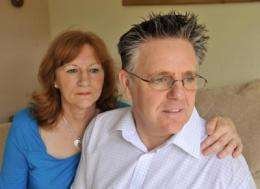
Peter Chapman, who is married with three grown-up children, suffered a subarachnoid brain haemorrhage at the age of 45 in 2001. Before discharge from hospital, he was not tested for post-traumatic stress disorder. Peter was psychologically very ill after his haemorrhage and he was finally diagnosed with post-traumatic stress disorder in 2003, two years after he had the brain haemorrhage.
Peter returned to work part-time three years after his haemorrhage and now runs his own mortgage advice company. He remains on medication to keep his psychiatric disorder under control.
Peter said: "The haemorrhage happened at home and I just felt this sudden rush of blood to my head. I then lost consciousness and was violently sick. Luckily, my wife was there at the time.
"Before I was sent home from hospital, I wasn't given any real idea of what might happen. The first six months were the worst and I lost over four stone. I was so worried that it might happen again and I have never shed as many tears in my life.
"It was only looking for help myself and finding it in the Clarke Lister Foundation that got me to where I am today. Simply being able to share my experiences with others in the same situation really helped me and improved my condition tremendously.
"But if I had been tested and treated for post-traumatic stress disorder right from the beginning, my life would have been 500 per cent better than what it has been, and would have made the world of difference to my recovery. The information that has come out of this research is so important for the recovery of haemorrhage patients."
Source: Durham University


