Termite killer lingers as a potent greenhouse gas
Sulfuryl fluoride (SO2F2), a gas commonly used to rid buildings of termites and other pests, is a greenhouse gas that remains in the atmosphere about 36 years, six to 10 times longer than previously thought, according to a research team led by Jens Mühle, an atmospheric chemist at Scripps Institution of Oceanography, UC San Diego.
The team found that the concentration of the gas rose at a rate of 4 to 6 percent per year between 1978 and 2007, to a global atmospheric abundance by the end of 2007 of about 1.5 parts per trillion. Its actual emissions into the atmosphere over this period were about one third less than estimated from industrial production data.
"It's extremely important to have independent verification of emissions," said Mühle. "You can't have regulation without verification, and you can't have verification without measurements."
The team will report the results of the first-ever measurements of SO2F2 in the Journal of Geophysical Research on March 12.
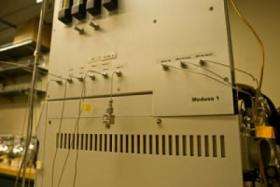
Mühle said he started detecting an unknown compound in air samples taken in early 2004 at the Scripps pier with a newly developed measurement instrument. He identified the compound as SO2F2 and concluded that the large fluctuations seen at the pier were likely related to the fumigation of local buildings. The team expanded the analysis to air samples routinely collected around the world at stations of the NASA-funded Advanced Global Atmospheric Gases Experiment (AGAGE) network and to old air samples archived in metal cylinders.
With the help of atmospheric computer models, the Scripps team and colleagues at the Massachusetts Institute of Technology (MIT) determined that the most important removal process of sulfuryl fluoride is dissolution into the ocean, where it is decomposed by chemical reactions. NOAA researchers working with the Scripps team calculated that one kilogram of SO2F2 emitted into the atmosphere has a global warming potential approximately 4,800 times greater than one kilogram of carbon dioxide. However, amounts of sulfuryl fluoride released into the atmosphere (about 2,000 metric tons per year) are far lower than those of carbon dioxide (about 30 billion metric tons per year) and thus the absolute effect of present SO2F2 emissions on global warming is comparably small.
Widespread use of sulfuryl fluoride began in the 1990s following the Montreal Protocol, an international treaty ratified in 1987 to protect the ozone layer by reducing the production of ozone-depleting chemicals. The protocol ordered the gradual discontinuation of methyl bromide, which has strong ozone-depleting characteristics, and sulfuryl fluoride became a preferred replacement for structural fumigation. Sulfuryl fluoride is regulated as a toxic substance but not currently as a greenhouse gas.
"Such fumigants are very important for controlling pests in the agricultural and building sectors," said Ron Prinn, director of MIT's Center for Global Change Science and a co-author on the new paper. But with methyl bromide being phased out, "industry had to find alternatives, so sulfuryl fluoride has evolved to fill the role."
"Unfortunately, it turns out that sulfuryl fluoride is a greenhouse gas with a longer lifetime than previously assumed," added Mühle. "This has to be taken into account before large amounts are emitted into the atmosphere."
Mühle credited the assistance of the chief manufacturer of sulfuryl fluoride in the United States, Dow AgroSciences, in the study.
"They've been very cooperative in sharing with us their estimates of global industrial sulfuryl fluoride production," he said.
The team's report follows closely on the announcement of a similar finding about the greater-than-expected prevalence of nitrogen trifluoride, a gas used as a cleaning agent during the manufacture of thin-film solar cells, flat panel monitors and other electronics. The first measurements of nitrogen trifluoride, reported in October, has led to calls for it to be included in the list of greenhouse gases whose emissions are regulated by international treaties. Similar discussions are underway for sulfuryl fluoride. Scripps geochemistry professor Ray Weiss and Scripps researchers Peter Salameh and Christina Harth contributed to the nitrogen trifluoride finding as well as the sulfuryl fluoride research.
Source: University of California - San Diego


