Discovery to launch Wednesday as Florida braces for end of shuttle era
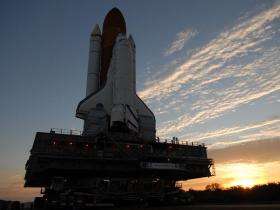
Shuttle Discovery is set to launch from Kennedy Space Center at about 9:20 p.m. Wednesday, leaving only eight more scheduled missions before NASA retires the fleet in 2010 - and devastates the Space Coast economy.
Figures released by NASA this week predict the retirement of the shuttle will result in the loss of at least 3,500 jobs at KSC. Some industry officials say the number could be as high as 10,000. The best-case scenario would result in the loss of 9,870 other jobs in the surrounding community; the worst-case number is 28,000.
But the one Floridian in Washington who has the most stature and clout to fight to keep that from happening - U.S. Sen. Bill Nelson, a Democrat who once flew aboard the shuttle - has been able to do little to prevent the looming economic disaster.
His critics say he has failed, and even a former NASA ally in Congress says he has not done enough.
"Right now, NASA needs an angel in the House or Senate. And that's a role that we were hoping Bill Nelson would step up to," said former U.S. Rep. Dave Weldon, a Republican who retired in 2008.
Weldon said Nelson - though a "nice guy" - hasn't been up to the task.
"I have been, at times, disappointed that he has not been able to do more, but I know that he has tried," said Weldon, who fought for KSC while serving on the powerful House Appropriations Committee.
Nelson vigorously defended his record. "I live with this issue every hour," he said.
He said he convinced President Barack Obama - then a candidate - to drop a plan that would have diverted money from NASA to education reform. He also took credit for winning Obama's assurances that NASA would return to the moon, which is vital to future KSC operations.
"I took it upon myself the responsibility to counsel with candidate Obama, who first came out with a disaster with his space program (plan)," Nelson said.
Nelson blames former President George W. Bush for not giving NASA enough money to simultaneously fly the space shuttle and build a new spacecraft without a long gap between programs.
"You can't undo decisions made years ago by the Bush administration," he said.
But promises that Nelson thought he had won from NASA to help offset shuttle job losses are unraveling.
On Tuesday, KSC associate director Michael Wetmore told a space industry lunch that NASA has dropped plans to require that the proposed Altair lunar lander be assembled in Florida. Instead, he said, it will be up to the winning bidder to decide where it will be built.
The announcement is a huge blow to Florida and an even bigger hit to Nelson's reputation as the defender of space program jobs at KSC. "I hadn't heard that," the senator said Tuesday of the Altair change.
Nelson won the promise for work on Altair - the spiderlike ship that is to land on the moon in 2020 - from former NASA chief Mike Griffin last summer.
Griffin also told Nelson that NASA would send new engineering work to KSC. That, along with programs such as Altair, would cut job losses from an initial NASA forecast of 6,400 to just 3,500.
However, a total of 14,500 people work on the shuttle, and shuttle contractors have predicted the total job loss would be 10,000. According to a NASA report released Tuesday, every NASA job at KSC creates 2.8 other jobs in the community.
Many of those jobs already look set to leave. Last week, the Orlando Sentinel reported that the shuttle's prime contractor was negotiating to transfer the most-skilled workers to positions at the Missile Defense Agency in Huntsville, Ala.
Some in the industry said Nelson blew an opportunity to help KSC during debate last month on the economic stimulus bill. Rather than focus on the jobs NASA would create - the whole point of the aid package - Nelson emphasized the agency's benefits for education and technological advancements.
Nelson also appears unable to capitalize on his support for Obama. Nelson brought candidate Obama to the Space Coast last year in what was seen as a coup for the senator, who hails from Melbourne.
At his appearance in Titusville, Obama promised to keep the space program strong and provide more money. But much of the $1 billion awarded to NASA in the $787 billion stimulus package is for science and aerospace programs that do little for KSC workers.
The funds allocated for human spaceflight also are not enough to help NASA close the gap between the end of the shuttle program in 2010 and the first flight of the next-generation Constellation program, now planned for 2015 at the earliest.
Obama also recently signaled that he would not delay the shuttle's retirement, despite efforts by Nelson and others to add at least one more mission to ferry a physics experiment to the international space station. That mission, if it happens, must occur before 2010 ends - and only if it can be done affordably and safely.
Nelson is limited in how he can directly help KSC because he does not sit on the Senate subcommittee that doles out NASA's dollars.
The senior Republican on that subcommittee, Sen. Richard Shelby of Alabama, secured nearly $4 million in earmarks for Marshall Space Flight Center in Huntsville in the latest spending bill. He also netted $30 million for a science and engineering corridor connected with the University of Alabama.
The senior Democrat, Barbara Mikulski of Maryland, snared $2.5 million in earmarks - including $500,000 for digital classrooms in Maryland - in NASA's budget.
Nelson did not get a single dollar in earmarks for KSC, although more than $100 million in earmarks in the $410 billion spending plan were attributed all or in part to Nelson, according to a database kept by Taxpayers for Common Sense, a Washington-based watchdog group.
___
(Block from Cape Canaveral, Matthews from Washington.)
___
(c) 2009, The Orlando Sentinel (Fla.).
Visit the Sentinel on the World Wide Web at www.orlandosentinel.com/
Distributed by McClatchy-Tribune Information Services.


