Researchers identify cause for severe pediatric epilepsy disorder
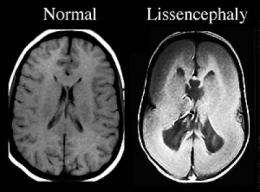
Researchers at the University of California, San Diego School of Medicine have discovered that convulsive seizures in a form of severe epilepsy are generated, not on the brain's surface as expected, but from within the memory-forming hippocampus. The scientists hope that their findings - based on a mouse model of severe epilepsy - may someday pave the way for improved treatments of childhood epilepsy, which affects more than two percent of children worldwide. Their study will be published online by the Proceedings of the National Academy of Science (PNAS) the week of March 16.
"A parent of an epileptic child will tell you that they think their child is going to die during their attacks," said senior author Joseph Gleeson, MD, director of the Neurogenetics Laboratory at the UC San Diego School of Medicine, professor in the department of neurosciences and Howard Hughes Medical Institute Investigator. "Parents of children with epilepsy, especially the most severe types of epilepsy, are desperate for a deeper understanding of the causes of the problems and for the development of new treatments."
One of the major causes of epilepsy in children is an alteration in the development of the cerebral cortex. The cerebral cortex is the main folded part of the brain, containing a large percentage of brain cells, and is integral to purposeful actions and thoughts. However, this complex structure is subject to all kinds of defects in development, many of them due to defective genes and many associated with epilepsy.
Cortical dysplasia, meaning disordered development of the cerebral cortex, is identified in 25 to 40 percent of children with the most severe and difficult-to-treat forms of epilepsy. These children often come to the attention of specialists due to stagnation in the acquisition of language and balance skills and accompanying epilepsy. The symptoms displayed by these children can range from very subtle - such as small muscle jerks or eyelid fluttering - to dramatic whole body, tonic-clonic spasms (a series of contractions and relaxations of the muscle) that can affect basic bodily function.
The Gleeson team, led by researchers Geraldine Kerjan, PhD and Hiroyuki Koizumi, PhD, has been studying a disorder called "lissencephaly." (In Greek, leios means smooth, and kephale means brain or head.) Children with lissencephaly have a smooth brain surface that lacks the normal hills and valleys that are characteristic of the human brain. The researchers were recently successful in developing a mouse model that showed some of the features of this disorder, usually the first step toward understanding the cause of a genetic disorder. But the severe epilepsy that is associated with lissencephaly was never displayed in any of the previous animals, so the team kept removing gene after gene until they hit upon a strain that showed epilepsy.
"We study the gene "doublecortin," which is defective in some forms of epilepsy and mental retardation in humans," said Kerjan, lead author of the study. "However, only after we removed a combination of two of the genes in the doublecortin family did we uncover epilepsy."
According to Gleeson, the findings were dramatic, as almost none of the mice in this strain survived to adulthood. Thinking that the deaths might be due to epilepsy, the scientists recorded electroencephalograms, which measure electrical activity produced by the firing of neurons in the brain, and found severe epilepsy in all of the mice tested. Even more surprising was the site of the epileptic focus - or site from which the seizures were generated - which was located beneath the surface of the brain, in the hippocampus.
"Researchers had thought that the cause of the seizures in this disease must be the brain surface, since this is the part that looks the most abnormal on brain MRI scans," said Gleeson. "However, we found that the epilepsy focus was actually deeper in the brain, within the hippocampus, the main memory-forming site."
The research team intends to continue studying in studying the mice, to explore potential mechanisms and utilize this model to test new treatments.
Source: University of California - San Diego (news : web)


