Goodbye needle, hello smoothie (w/Video)
(PhysOrg.com) -- Instead of a dreaded injection with a needle, someday getting vaccinated against disease may be as pleasant as drinking a yogurt smoothie.
A researcher from the Northwestern University Feinberg School of Medicine has developed a new oral vaccine using probiotics, the healthy bacteria that are found in dairy products like yogurt and cheese. He has successfully used the approach in a preclinical study to create immunity to anthrax exposure. He also is using the method to develop a breast cancer vaccine and vaccines for various infectious diseases.
This new generation vaccine has big benefits beyond eliminating the "Ouch!" factor. Delivering the vaccine to the gut -- rather than injecting it into a muscle -- harnesses the full power of the body's primary immune force, which is located in the small intestine.
"This is potentially a great advance in the way we give vaccines to people," said Mansour Mohamadzadeh, the lead author and an associate professor of medicine in gastroenterology at the Feinberg School.
"You swallow the vaccine, and the bacteria colonize your intestine and start to produce the vaccine in your gut," Mohamadzadeh said. "Then it's quickly dispatched throughout your body. If you can activate the immune system in your gut, you get a much more powerful immune response than by injecting it. The pathogenic bacteria will be eliminated faster."
Most vaccines consist of protein and won't maintain their effectiveness after being digested by the stomach. However, the lactobacillus protects the vaccine until it is in the small intestine.
The Northwestern study was reported in a recent issue of the Proceedings of the National Academy of Science.
There are other advantages to the new oral vaccine. Probiotics, which are natural immune stimulators, eliminate the need for a chemical in traditional vaccines that inflames the immune system and triggers a local immune response. The chemical, called an adjuant, may cause side effects such as dizziness, arm swelling and vomiting. Probiotic vaccines also are inexpensive to produce.
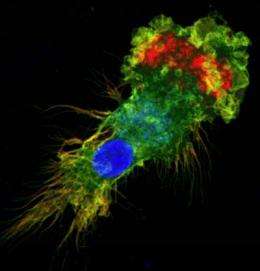
The specially engineered vaccine gives more immune bang for the buck than an injected one because it induces a local and a systemic immune response. The vaccine targets the first line of gut immune cells called dendritic cells -- the commanders-in-chiefs of the immune system. They engulf the vaccine then instruct the immune system's foot soldiers -- killer T-cells and B-cells -- to seek out and destroy any cells in the body infected with a particular bacterium or virus.
In the study, Mohamadzadeh fed mice the new oral anthrax vaccine, and then exposed them to anthrax bacteria. Eighty percent of the mice survived, which is comparable to the results when mice were injected with anthrax vaccine, he said.
"Their immune response was higher and more robust than with the injected vaccine," Mohamadzadeh said. The mice generated a much higher T and B immunity against the pathogenic bacteria.
Mohamadzadeh's vaccine technology can be applied to many other diseases. He is developing an oral vaccine for breast cancer using probiotics. The vaccine would use the Her2/neu breast cancer antigen, a protein highly produced by breast tumor cells, and train the immune system to destroy any cells producing Her2/neu, he said.
In addition, Mohamadzadeh has developed a "multi-tasking" cancer vaccine against breast, colon and pancreatic cancer that soon will be tested in mouse models.
The technology also can be used to develop a probiotic vaccine for HIV, hepatitis C and the flu, he said.
Terrence Barrrett, M.D., chief and professor of gastroenterology at the Feinberg School, said delivering a vaccine to the gut is the most logical route.
"Nature isn't used to seeing antigens injected into a muscle," said Barrett, who also is a physician at Northwestern Memorial Hospital. "The place where your immune system is designed to encounter and mount a defense against antigens is your gut."
Source: Northwestern University (news : web)


