Inhaling a heart attack: How air pollution can cause heart disease
We are used to thinking of heart disease as a product of genetic factors or lifestyle choices, such as what we eat and how much we exercise. There is another road to heart disease: breathing.
Accumulating evidence indicates that an increase in particulate air pollution is associated with an increase in heart attacks and deaths. Research has begun in the relatively new field of environmental cardiology -- a field that examines the relationship between air pollution and heart disease.
Aruni Bhatnagar of the University of Louisville and Robert Brook of the University of Michigan have organized a symposium Environmental Factors in Heart Disease, to take place April 21 at the Experimental Biology conference in New Orleans. The American Physiological Society is one of the sponsors of the annual conference. Dr. Bhatnagar will speak on Environmental aldehydes exposure and cardiovascular disease, while Dr. Brook will give a talk on Environmental pollution and hypertension. In addition, Araujo Jesus of UCLA will speak on Exacerbation of experimental atherogenesis by ultrafine air pollution, and Murray Mittleman of the Harvard School of Public Health will speak on Air pollution and stroke.
There have been a number of studies connecting pollution with heart disease:
• A study of six U.S. cities found that people died earlier when they lived in cities with higher pollution levels. A majority of these deaths were due to heart disease.
vA study of 250 metropolitan areas around the world found a spike in air pollution is followed by a spike in heart attacks.
• study in Salt Lake City found that when a nearby steel mill shut down for a period of months, there was a 4-6% drop in mortality. The mortality rose to previous levels when the steel mill reopened.
The people who seem to be most susceptible to environmental pollutants are the people who are already vulnerable, including the elderly and people with coronary artery disease. There is also some evidence that diabetics, women and people who are obese may be at greater risk.
Identifying harmful pollutants
Researchers are trying to find out which pollutants are harmful and how the harmful pollutants work to damage the cardiovascular system. They have focused on smaller, microscopic particles that can get into the lungs and may gain entrance to the blood stream. (The upper airway filters out larger particles that are in smog and other air pollutants before they can cause a problem.)
In addition, researchers have focused on air pollutants, including:
• ozone
• nitrates
• sulfates
• metals
• aldehydes
One intriguing statistic is that the risk of heart attack increases in parallel with time spent in traffic the previous day. In animal experiments, Dr. Bhatnagar has found that aldehydes -- a toxic class of chemicals found in most forms of smoke, including cigarette smoke and car exhaust -- increase blood cholesterol levels and activate enzymes that cause plaque in the blood vessels to rupture. When plaque ruptures, it can cause a blood clot, which may block an artery and lead to a heart attack.
Much of Robert Brook's research has centered on the relationship between air pollution and hypertension. Fine- and ultra-fine particles that get into the lung may make their way into the blood vessels. Within 15 minutes of inhaling pollutants, there is a very rapid increase in blood pressure, he said.
Blood vessels react to the pollutants by producing an inflammatory response to attack the foreign matter. However, the inflammatory response itself can set off a complex physiological reaction that is harmful to the blood vessels, Dr. Brook said.
Lessons learned
If you live in an area where pollution levels may be high, you can take steps to reduce the risk of air pollution, Dr. Brook said. During times when air quality is unhealthy, exercise indoors, because indoor air is filtered. If you exercise outdoors, particularly if you're at risk for heart disease, do it when pollutants are at lower levels. Avoid peak traffic times.
The work in environmental cardiology goes on and these researchers, and others, will gather together at Experimental Biology to share their ideas and research findings and plan the next steps in fighting environmental heart disease.
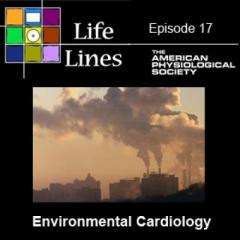
More information: A fuller audio interview is available in Episode 17 of the APS podcast, Life Lines, at: media.libsyn.com/media/lifelin … ental_Cardiology.mp3 . You can also find out more about the symposium at: www.the-aps.org/meetings/eb09/ … bs/cvs-bhatnager.htm .
Source: American Physiological Society (news : web)


