Cause of mussel poisoning identified
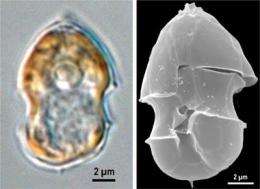
The origin of the neurotoxin azaspiracid has finally been identified after a search for more than a decade. The azaspiracid toxin group can cause severe poisoning in human consumers of mussels after being enriched in the shellfish tissues. The scientific periodical European Journal of Phycology reports in its current issue (Vol. 44/1: p. 63-79) that a tiny algal species, the dinoflagellate Azadinium spinosum, is responsible.
Researchers from the Alfred Wegener Institute for Polar and Marine Research in the Helmholtz Association have isolated and described the hitherto unknown organism as a new genus and species of dinoflagellate. They successfully isolated the organism and multiplied it in pure laboratory cultures, subsequently identifying it as the producer of azaspiracid toxin.
Eating mussels is a special treat for many people, although it is not completely without danger. It has been known for a long time that consumption of mussels and other bivalve shellfish can cause poisoning in humans, with symptoms ranging from diarrhea, nausea, and vomiting to neurotoxicological effects, including paralysis and even death in extreme cases. Although "shellfish poisoning" can also be caused by pathogenic viruses and bacteria, many cases are due to gastrointestinal toxins and/or neurotoxins produced by certain marine microscopic plankton, the so-called "toxic algae". Mussels can filter a high amount of these toxic microorganisms from the seawater column, and after ingestion they retain the toxins and accumulate them in their edible flesh.
Azaspiracids comprise one group of these microalgal toxins The first known azaspiracid poisonings occurred in the Netherlands in 1995 after consumption of mussels from Ireland. While the toxin itself has been quite well investigated, the question of the origin remained inconclusive until now despite intensive research. According to published investigations by Irish researchers, the dinoflagellate species Protoperidinium crassipes (previously regarded as harmless) has been blamed as the origin of the toxins since 2003. Researchers from the Working Group on Ecological Chemistry, particularly the biologist Dr. Urban Tillmann and the chemist Dr. Bernd Krock from the Alfred Wegener Institute for Polar and Marine Research were able to show that Protoperidinium is only the vector and not the producer of the toxins, just like other voracious protozoa and mussels. They isolated a small alga from the North Sea off the Scottish east coast and described it as a new dinoflagellate species Azadinium spinosum while providing evidence of its azaspiracid production in the laboratory.
"We are able to produce so-called gene probes from our laboratory cultures with the help of molecular techniques", explains Tillmann. "These gene probes prove the existence of the toxin-producing algae in seawater samples and they offer an effective future early warning system for mussel farms", Tillmann continues. Apart from these applied aspects, the researchers are interested in quite fundamental questions: why does the alga produce these azaspiracid toxins and what are their ecological functions? The researchers have already planned the next expedition in order to further pursue these questions - they will head out into the North Sea with RV Heincke at the end of April 2009.
Source: Helmholtz Association of German Research Centres


