Asteroid Impact Helps Trace Meteorite Origins
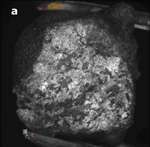
(PhysOrg.com) -- The car-sized asteroid that exploded above the Nubian Desert last October was small compared to the dinosaur-killing, civilization-ending objects that still orbit the sun. But that didn't stop it from having a huge impact among scientists. This was the first instance of an asteroid spotted in space before falling to Earth. Researchers rushed to collect the resulting meteorite debris, and a new paper in Nature reports on this first-ever opportunity to calibrate telescopic observations of a known asteroid with laboratory analyses of its fragments.
"Any number of meteorites have been observed as fireballs and smoking meteor trails as they come through the atmosphere," says Douglas Rumble of the Carnegie Institution's Geophysical Laboratory, a co-author of the paper. "It's been happening for years. But to actually see this object before it gets to the Earth's atmosphere and then to follow it in - that's the unique thing."
The chemical compositions of asteroids can be studied from Earth by analyzing the spectra of sunlight reflected from their surfaces. This provides enough information to divide asteroids into broad categories, but does not yield detailed information on their compositions. On the other hand, meteorites recovered on Earth can be analyzed directly for chemical composition, but researchers generally have no direct information on what type of asteroid they came from.
The asteroid, known as 2008 TC3, was first sighted October 6, 2008, by telescopes of the automated Catalina Sky Survey near Tucson Arizona. Numerous observatories followed its trajectory and took spectrographic measurements before it disappeared into the Earth's shadow the following day. A recovery team led by Peter Jenniskens of the SETI Institute in California and Muawia Shaddad of the University of Khartoum then searched for meteorites along the projected approach path in northern Sudan. They recovered 47 fragments, one of which was selected for preliminary analysis by laboratories, including the Carnegie Institution's Geophysical Laboratory.
"This asteroid was made of a particularly fragile material that caused it to explode at a high 37 kilometer altitude, before it was significantly slowed down, so that the few surviving fragments scattered over a large area," explains Jenniskens, the lead author of the Nature paper. "The recovered meteorites were unlike anything in our meteorite collections up to that point."
Carnegie's Andrew Steele studied the meteorite's carbon content, which showed signs that at some point in its past the meteorite had been subjected to very high temperatures. "Without a doubt, of all the meteorites that we've ever studied, the carbon in this one has been cooked to the greatest extent," says Steele. "Very cooked, graphite-like carbon is the main constituent of the carbon in this meteorite." Another form of carbon Steele found in the meteorite, nanodiamonds, may give clues as to whether the heating was caused by impacts on the parent asteroid, or by some other process.
Oxygen isotopes in the meteorite give other information about its parent body. Each source of meteorites in the solar system, including planets such as Mars, has a distinctive signature of the three isotopes 16O, 17O, and 18O. This signature can be recognized even when other variables, such as chemical composition or rock type, differ. "Oxygen isotopes represent the single most decisive measurement in determining the parental or family groupings of meteorites," says Rumble who performed the analysis.
According to Rumble's analysis, 2008 TC3 falls into a category of very rare meteorites called ureilites, all of which may have originally come from the same parent body. "Where that is, we don't know," says Rumble. But because astronomers took spectral measurements of 2008 TC3 before it hit the Earth, and can compare those measurements with the laboratory analyses, scientists will be better able to recognize ureilite asteroids in space. One known asteroid with a similar spectrum, the 2.6 kilometer-sized asteroid 1998 KU2, has already been identified by researchers as a possible source for 2008 TC3.
Provided by Carnegie Institution


