Pilgrims' progress: Genetic data from 1630s backs health benefits of cancer screening
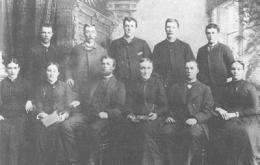
In the 1630s, the Fry family came to the New World with more than just dreams of prosperity and freedom — they also came with a genetic mutation that increased the likelihood of colon cancer in hundreds, if not thousands, of their descendants. The scientists who traced that gene back almost 370 years are now reporting that routine screening and education can prevent people with the mutated gene from developing cancer.
Their new report on Mr. and Mrs. George Fry, who likely arrived in Massachusetts colony aboard the William & Mary, was presented today at the 237th National Meeting of the American Chemical Society (ACS).
Deb Neklason, Ph.D., and colleagues explained how they used cancer records and a massive genealogic archive known as the Utah Population Database (UPDB) to trace the genetic condition to a Utah pioneer family and their 7,000 descendents. A New York family with the same genetic condition was also linked to the Utah group, which helped trace the two families back 16 generations to the Frys. The gene mutation causes a condition known as attenuated familial adenomatous polyposis (AFAP). AFAP causes the growth of colorectal polyps that have the potential to become cancerous.
People with the AFAP mutation have about a two in three risk of getting colon cancer, compared to about one in 24 for the general population. Once aware they have inherited the gene, these individuals usually follow a regimen of periodic screening for the polyps with colonoscopy, and removal of suspicious growths, in an effort to avoid cancer.
Neklason described how the findings have already helped living relatives of the Frys avoid colon cancer. Their genetic detective work enabled the researchers to identify individuals at risk and notify them.
"Our work demonstrates that colon cancer can be prevented with proper screening and care. Aggressive education and clinical intervention over a seven-year window in the Utah family has already prevented seven colon cancers," says Neklason.
Through molecular testing, Neklason was able to find 15 families with the identical genetic change who appeared to be related. According to Neklason, this might be just the tip of the iceberg. She suggests that there may be thousands more people at risk from inheriting the mutated gene.
Colon cancer is the third most common cancer in the United States, with more than 150,000 cases diagnosed in the United States each year. Most cases do not result from any known inherited mutations. For those carrying the AFAP mutation, a higher susceptibility to polyps means early diagnosis could be difference between life and death.
"It could have an impact on a lot of people out there. We ran some numbers and if this mutation accounted for just 0.1 percent of all of the colon cancers in the U.S. that would equal 150 cases a year and cost about $7.5 million per year to treat," says Neklason. "And that's a conservative estimate."
The researchers studied approximately 200 of the Frys' descendants with the genetic mutation from two different families in Utah and New York State, identifying genetic and lifestyle differences that increased the likelihood of polyps. The group identified a gene known as NAT1 that may influence polyp growth.
Using an extensive diet questionnaire, they also found that a high fat diet and obesity lends itself to more polyps. On the other hand, fish fats, bananas, calcium, aspirin and caffeine demonstrated some protective effects. Neklason suggests that this information extends to general colon cancer risk.
The newest aspect of the University of Utah's team's work is a chemoprevention study that could make polyps shrink or recede entirely. She says the next step is to find out how many more people have the AFAP mutation and help them prevent colon cancer.
"One of the big things we're trying to do is figure out how common this mutation is in the United States. It's a public health issue… It's really powerful to know that information," says Neklason.
Source: American Chemical Society (news : web)


