Long-term effects of the Human Volunteer Programme at Porton Down
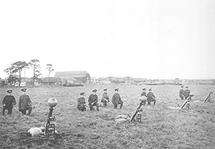
(PhysOrg.com) -- Oxford researchers have reported results from a study of death and cancer rates in military veterans who took part in the Ministry of Defence’s Human Volunteer Programme at Porton Down between 1941 and 1989.
The Human Volunteer Programme tested the effects of exposure to chemical warfare agents on people, and the protective potential of respirators or clothing against these chemicals.
This is the first time information on the long-term health of veterans included in these tests has been assembled and published, and the independent scientific study appears in two papers in this week’s British Medical Journal. A detailed paper on exposures at Porton Down was also published recently in Annals of Occupational Hygiene.
Over the course of the study, 18,276 men were identified as having taken part in experimental tests at Porton Down and followed up for an average of 40 years between 1941 and 2004.
Porton Down veterans had a slightly higher death rate than a similar group of 17,600 veterans who did not participate. This increase was estimated to be 6% and means more men died over the average 40-year follow up in the Porton Down veterans group than in the comparison group of veterans.
Twelve groups of cause of death were examined in the analysis. When compared to non-Porton Down veterans, there were more deaths among the Porton Down veterans attributed to infectious or parasitic diseases, genitourinary diseases, circulatory diseases, and external causes.
In the Porton Down veterans group there were also more deaths overseas. No difference in rates of cancer between the two groups of veterans was found. However, cancers that could not be easily defined were more common in the Porton Down Veterans group.
Overall rates of death in each group of veterans were lower than in the general UK population - a common finding in occupational groups. Overall rates of cancer were also lower than in the general UK population.
Provided by
The research team for the study was based at the University of Oxford and led by Oxford academics Dr Katherine Venables and Dr Lucy Carpenter, with co-investigators from the University of London.
The research team did not have access to information on potentially influential factors like whether or not veterans smoked or how long they spent in overseas postings. As a result, they could not attribute their findings to participation in the Human Volunteer Programme at Porton Down, or to the effects of other factors.
Dr Katherine Venables said: ‘This is the first time that the long-term effects of participation by members of the armed forces in experimental tests at Porton Down has been studied. We aimed to include every veteran who participated in tests at Porton Down between the 1940s and the 1980s. This has enabled us to build as clear a picture as possible of the overall impact that taking part in tests at Porton Down has had on their long-term health.’
Co-investigator Dr Lucy Carpenter continued: ‘We have found a small increase in overall death rates in the Porton Down veterans when compared with other veterans but no increase in overall cancer rates. Many of the Porton Down veterans have concerns about the effect that taking part in experimental tests will have had on their health. We hope the results of this independent study may help to answer some of their questions.’
The Human Volunteer Programme started at the Ministry of Defence’s Chemical Defence Establishment at Porton Down following the first world war. The type of chemicals tested varied over time. Almost 500 different chemicals were identified as being used in tests on veterans over the study period from 1941 to 1989. 16,686 Porton Down veterans were recorded as included in chemical tests; 58% in tests with vesicants or blistering agents (eg sulphur mustard), 20% with nerve agents (eg sarin) and 67% other chemicals. The latter group included riot control agents such as CS and CR, and pharmaceuticals such as pralidoxime and atropine which are used to counteract the effects of nerve agents. Veterans were often tested wearing respirator or protective clothing, so actual exposures to the body might have been very low.
The comprehensive study required assembly of data from three sources: the MoD historical archive held at Porton Down that contains details of the Human Volunteer Programme; MoD personnel files held in military archives; and death certificates and cancer registration files held by the Office for National Statistics.
The study compared Porton Down veterans with a similar group of veterans who did not participate in the Human Volunteer Programme (the ‘non-Porton Down veterans’). In both groups identical health information was sought on each individual. This included whether a person had died or had been diagnosed with cancer during the follow-up period.
The Ministry of Defence (MoD) provided funding for the assembly, analysis, and interpretation of data.
The MoD took advice on formulating the questions for the research team from the Medical Research Council, which set up a liaison group independent of the MoD which oversaw the progress of the research by having regular contact with the investigators.
Provided by Oxford University


