Cholesterol crystals linked to cardiovascular attacks
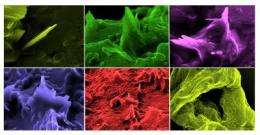
For the first time ever, a Michigan State University researcher has shown cholesterol crystals can disrupt plaque in a patient's cardiovascular system, causing a heart attack or stroke.
The findings by a team led by George Abela, chief of the cardiology division in MSU's College of Human Medicine, could dramatically shift the way doctors and researchers approach cardiovascular attacks. Abela's findings appear in the April issue of the American Journal of Cardiology.
"Any time there is something completely new or unique in medical research, it is met with healthy skepticism," said Abela, who has been working with cholesterol crystals since 2001. "But we have found something that can help dramatically change how we treat heart disease."
What Abela and his team found is that as cholesterol builds up along the wall of an artery, it crystallizes from a liquid to a solid state and then expands.
"As the cholesterol crystallizes, two things can happen," Abela said. "If it's a big pool of cholesterol, it will expand, causing the 'cap' of the deposit to tear off in the arterial wall. Or the crystals, which are sharp, needle-like structures, poke their way through the cap covering the cholesterol deposit, like nails through wood."
The crystals then work their way into the bloodstream. It is the presence of this material, as well as damage to an artery, that disrupts plaque and puts the body's natural defense mechanism -- clotting -- into action, which can lead to dangerous, if not fatal, clots.
Abela and his team studied coronary arteries and carotid plaques from patients who died of cardiovascular attacks. When comparing their findings against a control group, they found evidence of cholesterol crystals disrupting plaque.
The breakthrough in discovering the crystals' impact came after Abela and colleagues found a new way to preserve tissue after an autopsy, using a vacuum dry method instead of an alcohol solution. The previous method would dissolve the crystals and prevent researchers and doctors from seeing the impact.
Abela also has found that cholesterol crystals released in the bloodstream during a cardiac attack or stroke can damage artery linings much further away from the site of the attack, leaving survivors at even greater risk. The research means health care providers now have another weapon in their arsenal against cardiovascular diseases.
"So far, treatments have not been focused on this process," Abela said. "Now we have a target to attack with the various novel approaches. In the past, we've treated the various stages that lead to this final stage, rather than preventing or treating this final stage of the condition."
In separate research published in the March edition of medical journal Atherosclerosis, Abela and colleagues looked at the physical triggers that can cause cholesterol crystallization. They found that physical conditions such as temperature can play a role in how quickly cholesterol crystallizes and potentially causes a rupture.
Source: Michigan State University (news : web)


